

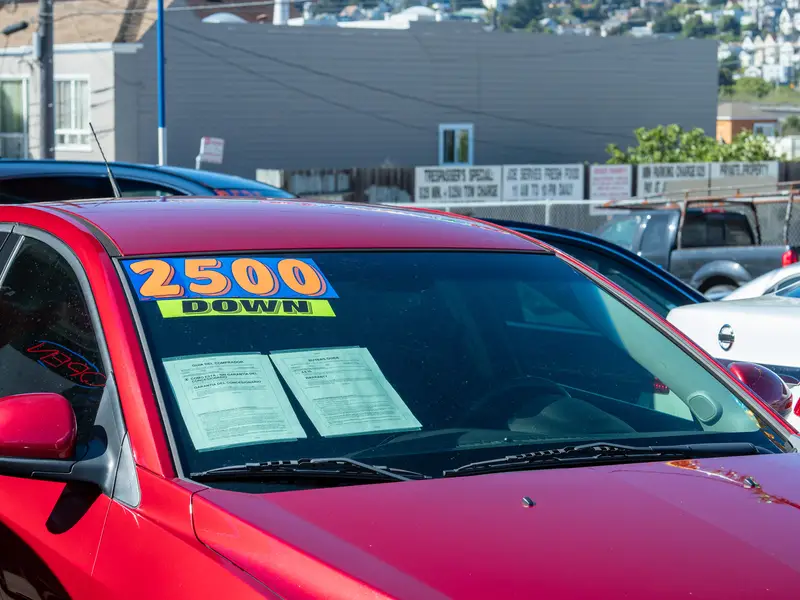
Walk onto a dealer lot on the third of the month and you will meet the most relaxed salesperson in America. The board just reset. Nobody is behind on anything yet, and the manager at the desk has three and a half weeks to make his number.
Dealerships are sales-driven operations built around monthly quotas, and at the start of the cycle everyone is optimistic, convinced this is the month they beat the last one. Low offers do not get carried back to the desk. They get smiled at.
Which makes the first week of the month the worst window on the calendar to sign anything, and the worst version of that week lands in spring, when tax refunds are already doing the dealer’s job for him. Here is how the month ranks, from the days that hand the dealer every card to the ones that hand them to you.
1. The First Week of the Month
Nothing is pressing on anyone yet. Manufacturer incentive money is paid out on monthly volume, so on day three there is no bonus in sight, no volume target within reach, and no reason to shave margin off a car that a different customer will pay full price for on Saturday. The slate is fresh and dealers hold the line.
Stack that on top of spring and it gets uglier. This is peak car-buying season: tax refund money hits bank accounts, the weather turns, and showroom traffic climbs without anybody discounting a thing. High demand plus a clean monthly board is maximum dealer leverage and minimum yours. If you can only avoid one week of the year, make it the first week of April.
2. Saturday Afternoon, Whatever the Date
Weekends are when showrooms fill up, and Saturday afternoon is when every dealership in the country is at peak load. The finance office is backed up, the sales manager is juggling four desks, and your salesperson has customers waiting behind you. The numbers do not change on a busy Saturday. The patience does.
Saturday morning is barely better. The negotiating leverage that comes from being the only serious buyer in the building evaporates the moment the lot fills up, and no amount of clever timing elsewhere in the month rescues a deal attempted at noon on a weekend.
3. Early June and the Fourth of July, If You Want Used
Used-car shoppers get a different calendar entirely, and summer is where it collapses. An iSeeCars analysis of more than 40 million used sales from 2024 through October 2025 found June to be the worst month of the year for deals, with 22.8% fewer than average. The Fourth of July is the worst holiday, at 22.4% fewer.
The baseline matters here. Across the year, iSeeCars puts the average chance of finding a good deal at 13.7%, defining a good deal as at least 10% off, or $2,689 below the $26,889 average used price. May, July, Father’s Day, Juneteenth and Memorial Day all sit near the bottom too. Warm weather sells cars on its own.
4. The Middle of the Month
Days 10 through 20 are the dead zone. The optimism of the first week has worn off, but the panic of the last week has not arrived, and none of the pressure levers that produce real discounts are pulling yet. The dealer is neither safely past his target nor visibly short of it.
Mid-month is not a catastrophe like the first week, but it is a wasted opportunity. The last three to five days of any month consistently beat the opening stretch, and waiting out the middle costs you nothing but a couple of weeks.
5. Presidents’ Day and the Mid-Month Promo Weekends
New-car buyers get oversold on these. Presidents’ Day is heavy on advertising and light on guaranteed manufacturer cash, worth showing up for only if you already know the exact car and the dealer is sitting on a pile of them.
Used buyers should read that completely backward. Presidents’ Day is one of the strongest used-car days of the year in the iSeeCars data, at 47% more deals than average, and February overall runs 36.2% above. Same weekend, opposite answer, depending on which side of the lot you are shopping.
6. Memorial Day and Labor Day Weekends
The spring and fall holiday events are real, and for new cars they are the best of the promotional weekends. Manufacturers stack cash with private-offer programs, and because Memorial Day falls in the last week of May, it collides with end-of-month volume targets. Labor Day is nearly as strong and comes with better selection, since outgoing-model-year clearance is under way as the new model year lands.
The same weekends are among the worst of the year for used shoppers. Memorial Day runs 18.0% below average for used deals, and Mother’s Day 9.2% below. Holiday promotions are a new-car instrument. Nobody is clearing used inventory because it is a long weekend.
7. Sunday Evening at the End of the Month
After about 4 p.m. on a Sunday, the weekend rush is thinning, managers are looking at the day’s tally, and every unsold car on the floor is about to roll into Monday. That combination of fatigue and arithmetic is genuinely useful, and it improves the closer the date gets to the 30th.
It is the second-best window of the week for a reason: you are the last live customer of the busiest stretch, and the desk would rather book you than explain a flat weekend on Monday morning.
8. The 25th Through the 30th, Midweek
This is the practical sweet spot, and it is the one timing move almost anybody can execute. Salespeople chase individual quotas, managers chase department targets, and the dealership chases a manufacturer volume number. A dealer who needs five more sales to qualify for a volume bonus will approve deals at razor-thin margins, because the bonus paid across every car sold that month dwarfs what he gives up on the last few.
There is a supply angle too. Some manufacturers run a system called “turn and earn,” allocating future stock of popular models based on how many a dealer moved the previous month, so hitting the number protects next month’s inventory as well as this month’s bonus. The end of the month, as RealCarTips founder Gregg Fidan puts it, is “the best time to weed out the desperate and hungry dealers who are willing to sell you a car (sometimes at a loss) in order to hit their sales goals.”
Aim for the 25th through the 30th rather than the last day itself, which carries the same volume math with a crowded showroom. Go Tuesday, Wednesday or Thursday morning, when the sales manager actually has time to negotiate and the finance office is not drowning. Ask in writing whether any manufacturer incentive closes on the last day of the month, because nobody volunteers it.
9. The Final Days of a Quarter
March, June, September and December carry everything the end of a normal month carries, plus a much bigger prize. Manufacturer volume bonuses are often structured quarterly, and the sums are large enough to rewrite the math on an individual car: a dealer ten cars short of a $100,000 quarterly bonus can give up $1,000 of margin per car and still collect $10,000 per car.
September 30 is the pick of the three non-December quarter ends, because it lands inside model-year clearance. Outgoing models carry manufacturer rebates, and discounts on previous-year new cars can run to several thousand dollars once the next model year is arriving. A car that has sat on the lot since spring is the one with the most room in it.
10. December 26 Through 31
The last week of December is the best time of year to buy a new car, for the simple reason that it is the end of the month with everything else piled on top of it. Monthly quota, quarter-end bonus, annual target, manufacturer fiscal-year inventory clearance and holiday incentive money all land in the same five days. December discounts average around 6% off MSRP and run deeper on slow sellers, and the stretch between Christmas and New Year’s Eve is historically the single best time to sign.
The trade-off is selection. By late December the leftovers are picked over, so this window rewards buyers who do not care much about color or trim and punishes anyone hunting a specific configuration. Skip it entirely if you want a first-year redesign, which rarely gets discounted in its first several months on sale.
Used buyers get the better end of the deal anyway. New Year’s Eve and New Year’s Day deliver 58.6% more used-car deals than average, January is the strongest month of the year at 55.6%, and Martin Luther King Jr. Day is the single best day on the calendar at 65.5% above average. Buy new in the last week of December, buy used in the first three weeks of January, and never, under any circumstances, start negotiating on the fourth of the month in April.

