

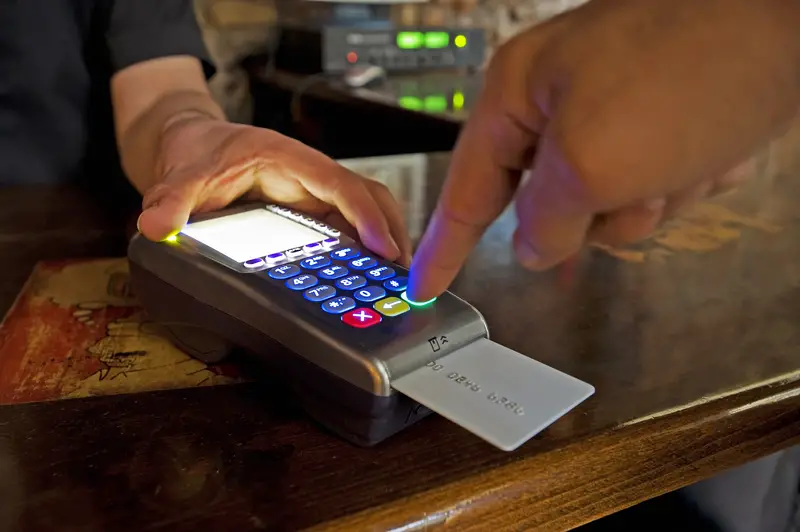
We’ve all been there. You’re standing in line at Target, the cashier has already scanned everything, there’s a person behind you with a full cart, and your card gets declined. Your face gets hot. Your brain scrambles. And then you do the one thing you absolutely should not do.
You try it again. And again. And maybe one more time for good measure.
That’s the mistake. And it can actually make your situation significantly worse. Here’s why — and a bunch of other stuff about declined cards that most people have no idea about.
Swiping Again and Again Can Lock You Out Completely
When your card is declined, the natural impulse is to try again immediately. Maybe it was a glitch. Maybe the chip didn’t read right. One more try can’t hurt, right?
Actually, it can. According to financial reporting, after multiple failed attempts, your card issuer may become suspicious of fraud and block your card entirely. So you went from a declined transaction — which might have been a simple misread of the chip — to a full-on frozen account. Now you can’t use that card anywhere, not just at this register.
Think about that for a second. You were trying to fix the problem, and you turned a hiccup into a lockout. The card issuer’s fraud detection system sees repeated failed swipes and thinks someone stole your card and is frantically trying to use it. Which, to be fair, is exactly what a thief would do.
The smarter move? Try once more, max. If it doesn’t work, put the card away. Use a backup payment method. Then call the number on the back of your card later to find out what happened.
Almost Half of All Declines Have Nothing to Do With Your Balance
Here’s the thing most people assume when their card is declined: I must be broke. That wave of embarrassment? It’s built on a false assumption.
An Ethoca study found that insufficient funds account for about 44% of card declines. That means more than half the time, money isn’t even the problem. And a 2022 Digital Economy Payments survey found that for debit cards specifically, insufficient funds only caused the decline about 26% of the time.
So what’s happening the other 56-74% of the time? Fraud detection flags. Incorrect data entry. Expired cards. Damaged chips. Holds from hotels or rental car companies. Technical glitches between the payment terminal and the processor. The list is long, and “you’re poor” is often not on it.
One in five declines happen simply because someone mistyped their card number, expiration date, or CVV during an online purchase. That’s 20% of all declines caused by fat fingers. Not bankruptcy. Not fraud. Just a typo.
Paying a Hotel Bill With a Different Card Can Haunt You for Two Weeks
This one is wild and almost nobody knows about it. When you check into a hotel or rent a car, the company puts a hold — sometimes called a block — on your card. This reserves a chunk of your available credit or checking balance to make sure you can pay the final bill.
If you pay that final bill with the same card you used to check in, the hold typically drops off within a day or two. The final charge replaces the hold. Clean and simple.
But if you pay with a different card, or with cash, or a check? That original hold can stay on your account for up to 15 days. Two full weeks of your credit or cash being tied up — because the original card issuer has no idea you paid another way. They’re just sitting there, holding your money hostage, waiting for a charge that’s never coming.
This can absolutely wreck you if you’re near your credit limit or have a tight checking balance. You might try to buy groceries the next day and get declined — not because you don’t have money, but because a Marriott in Cleveland is still squatting on $300 of your available balance.
Your Card Issuer Might Have Quietly Closed Your Account
Got a credit card you haven’t used in a while? Maybe it’s a backup you keep in a drawer for emergencies. Bad news: it might not work when you actually need it.
Credit card issuers can close your account without telling you if you haven’t used the card in an extended period. They don’t always send a big announcement. You might get a letter buried in your junk mail, or you might find out the hard way at a checkout counter during an actual emergency.
The fix is simple but easy to forget: use every card you own for at least one small purchase each month. A Netflix subscription. A Spotify charge. Something that keeps the account active without requiring you to think about it. Set it and forget it — but don’t literally forget the card exists, or the issuer will forget about you too.
Paying Your Bill Doesn’t Immediately Free Up Your Credit
This catches people off guard constantly. You max out your card, make a payment through your banking app, and then confidently try to use the card an hour later. Declined.
The reason? Your payment hasn’t actually posted yet. It’s pending. And your available credit doesn’t get replenished until the payment fully processes, which can take one to two days — sometimes longer depending on the issuer and the day of the week.
So you did the responsible thing. You paid your bill. And the system punished you for it anyway. This is especially brutal for people with low credit limits. If you’ve got a secured card with a $200 limit — which is common for people building or rebuilding their credit — you can burn through that in a single trip to the gas station and Walmart. Making a payment doesn’t instantly reload it like a prepaid debit card. There’s a lag, and during that lag, you’re stuck.
You Might Not Need to Call About Travel Anymore (But Maybe You Should Anyway)
For years, every financial advice column in America told you the same thing: call your credit card company before you travel. Let them know you’ll be in Cancún or Paris or wherever, so they don’t freeze your card when a charge pops up from Mexico City.
That advice is getting outdated. Both Chase and Capital One have publicly stated they no longer recommend setting travel notifications because their fraud detection systems have gotten sophisticated enough to handle it. They’re using your phone’s location, spending patterns, and other data points to determine whether a transaction is legitimate.
That said, not every bank is this advanced. Smaller banks and credit unions may still need the heads-up. And even with the big issuers, “more sophisticated” doesn’t mean “perfect.” Getting stranded without a working card in a foreign country is a miserable experience. I’d still set the travel notice, even if Chase says I don’t have to. The two minutes it takes are worth the peace of mind.
Being Removed as an Authorized User Can Blindside You
If you’re an authorized user on someone else’s credit card — a parent’s card, a spouse’s card — you’re at the mercy of the primary cardholder. If they remove you from the account, report the card lost or stolen, or close the account entirely, your card stops working. No warning. No notification to you. Just a decline at the register and a very awkward phone call to make.
This happens more often than people think, especially during divorces, family disagreements, or when parents decide to cut off a college student’s spending. The authorized user often has no idea until they’re standing in a checkout line somewhere, card in hand, getting that dreaded red screen.
The lesson: always carry your own backup. A debit card linked to your own account, a credit card in your own name, or even just some cash. Relying entirely on someone else’s account is a risk most people don’t think about until it bites them.
Your Old Card Can Still Cause Problems After You Get a New One
When you get a replacement credit card — whether because your old one expired, was lost, or was compromised — the new card often comes with a new number, expiration date, and CVV. And if you haven’t activated it, it won’t work at all.
But here’s the part people miss: all those automatic payments you set up? Your gym membership, streaming services, insurance, phone bill? They’re still trying to charge the old card. Every single one of those is going to fail until you update the payment information. And some of those services will cancel your account or charge you a late fee when the payment doesn’t go through.
A smart move is to request your replacement card about a month before the old one expires. That gives you time to swap out the payment info on all your accounts without anything lapsing. Keep a list somewhere — your phone’s notes app, a spreadsheet, anywhere — of every service that auto-charges your card. When the new card arrives, go down the list. It takes 20 minutes and saves you weeks of headaches.
Card declines are one of those small, everyday embarrassments that feel way worse than they actually are. But the real damage isn’t the awkward moment at the register — it’s the panicked decisions you make right after. Don’t mash that card into the reader five more times. Don’t assume you’re broke. And definitely don’t switch payment methods at a hotel without understanding what that hold is going to do to your account. A little knowledge here goes a surprisingly long way.

