

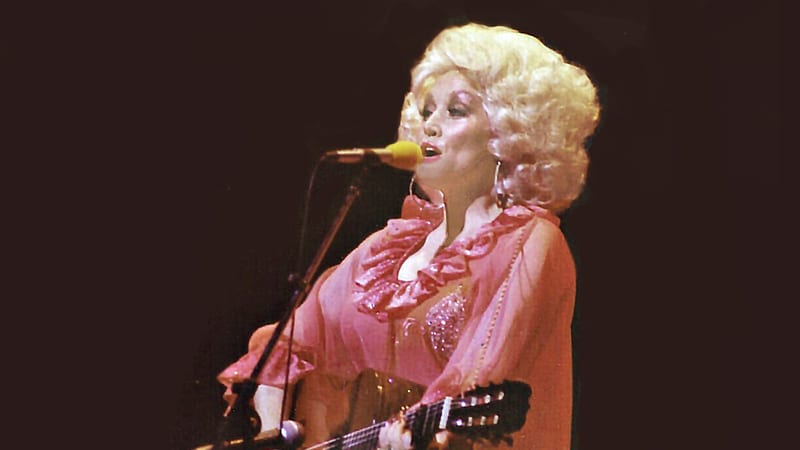
The session was booked. An arrangement had been worked up, Dolly Parton had an invitation to come stand in the studio and watch, and she had already told everyone she knew that Elvis Presley was about to sing her song. Then the phone rang the night before. Colonel Tom Parker, Presley’s manager, explained the one condition nobody had mentioned: Elvis did not cut a record unless his side got the publishing, or at least half of it. Parton said no. The session was canceled, she cried until morning, and eighteen years later that refusal turned into one of the most valuable copyrights any American songwriter has ever held onto.
The song was a goodbye letter to her boss
“I Will Always Love You” was never written about a boyfriend. Parton wrote it in the early 1970s while she was working up the nerve to leave “The Porter Wagoner Show.” Wagoner had given her a national break in 1967, hired her as the show’s “girl singer,” produced her records and sang on 21 hit duets with her, including “Just Someone I Used to Know” and “If Teardrops Were Pennies.” He did not want her to go.
Rather than have the argument again, she went home and wrote a song, then sang it to him privately. Wagoner reportedly cried. The record went to No. 1 on the country chart in 1974.
The warm goodbye did not stop the lawyers. In 1979, Wagoner sued Parton for breach of contract, asking for $3 million. She settled for roughly $1 million rather than fight it out in court.
She only had the power to refuse because of a company she started in 1966
Most Nashville songwriters of that era did not own their own work. Parton did, because eight years before Parker ever called her, she had co-founded her own music publishing company, Owe-Par, with her uncle Bill Owens. That was unusual for a singer at her level in 1966. It meant the copyright to “I Will Always Love You” was hers to keep or hers to trade, and nobody else got a vote.
Publishing is the part of the music business nobody explains on television. The person who holds it collects money every time the song is sold, played on the radio, streamed or licensed into a movie, no matter who is singing it. Giving Parker half would have handed the Presley side 50 percent of that income stream permanently. Elvis had not written a word of it.
Parker’s demand was not personal, it was his standing policy
Parker figured out early that publishing, not record sales, was where the real money sat. Knowing how badly writers wanted an Elvis cover, he made half the publishing the price of admission. Plenty of writers took it, because half of an Elvis record usually beat all of somebody else’s. Presley’s name even ended up in the writing credits on songs he did not write, including “Heartbreak Hotel” and “All Shook Up.”
Parton was careful about this for the rest of her life. She never framed the story as turning down Elvis Presley. “It didn’t have anything to do with Elvis. I loved Elvis,” she said on Reba McEntire’s podcast, in an episode titled “Forging Your Own Path.” She even gave Parker his due as a manager, saying he did all right by his client.
What was actually said on that phone call
By Parton’s account, Parker’s line was blunt: “You know, we don’t record anything with Elvis unless we have the publishing, or at least half the publishing.” Her answer was just as plain. She told him that threw a new light on things, that it was the most important copyright she owned, and that she intended to leave it to her family. Parker told her that in that case, they could not do it.
Then she went home and fell apart. She has said she cried all night picturing Elvis singing it. People around her told her she had lost her mind, that it was Elvis Presley, that anyone else would have handed over the whole song.
Telling the story to W Magazine in 2021, she put it simply: “I’m sorry, but I can’t give you the publishing.” The part that mattered came after. “But I had to keep that copyright in my pocket,” she said.
Then 1992 happened
For almost two decades the Elvis decision sat there as a music business curiosity. Then Whitney Houston recorded the song for “The Bodyguard.” Her version spent 14 weeks at No. 1 on the Billboard Hot 100, topped the charts in the UK and became one of the best selling singles ever made, earning a Diamond certification from the RIAA for 10 million units in America alone.
Parton owned all of it. She collected the songwriter money and the publisher money, with no split going to the Presley estate. Forbes has reported she earned around $10 million from the Houston version in the early 1990s alone, before decades of additional royalties piled up on top.
She joked later that the song made her enough money to buy Graceland. Some of the Houston windfall went into a strip of buildings in Nashville’s 12 South area, then a mostly Black part of town, which she connected back to Whitney as the right place for that money to land.
Elvis sang it anyway, just never on tape
No Presley recording of “I Will Always Love You” exists. But Parton said that years afterward, Priscilla Presley told her Elvis used to sing it to her, including as they left the courthouse the day their divorce was finalized. Parton has repeated that detail as the part of the story that still got to her.
She got the last word on it in 2023, when she released a track called “I Dreamed About Elvis,” with Ronnie McDowell singing Presley’s part. The song is built as an imaginary conversation between the two of them about the cover that never happened, with the dream version of Elvis blaming the Colonel for blowing it.
The business mind behind the wigs
Parton spent sixty years letting people underestimate her. She joked about the hair, the outfits and the surgery, and famously pointed out that it costs a lot of money to look that cheap. As she told W Magazine, when it comes to business, she looks like a woman but thinks like a man.
The pattern repeated everywhere. In the 1980s she partnered with the Herschend family to turn an existing Tennessee park into Dollywood rather than rent out her name for a licensing check, and the operation grew into a water park, resorts and other attractions. She made her film debut in 1980 in “9 to 5” alongside Jane Fonda and Lily Tomlin and wrote the title song. She played the Sunday legends slot on the Pyramid stage at Glastonbury in 2014. She cut a rock album, “Rockstar,” in 2023 with Paul McCartney and Elton John on it.
She grew up one of 12 children in the Great Smoky Mountains, with a father who farmed tobacco and worked construction, and she moved to Nashville the day after she graduated high school. At her death her fortune was estimated by Forbes at $450 million.
Songwriters still get the same phone call
Parker lost that negotiation, but his model won. Asking a writer to give up a slice of publishing or credit in exchange for a big artist recording the song is now routine, and in 2021 a group of well known songwriters started a short-lived coalition called The Pact to push back against it.
Erin McAnally, executive director of the advocacy group Songwriters of North America and a writer who worked with Parton and Kenny Rogers, says the refusal was not luck. “It’s scary to say no regardless of who you are, and people are faced with that decision all the time,” she told The Hollywood Reporter.
Lucas Keller, who founded the songwriter management company Milk & Honey, puts the modern squeeze in one line: a songwriter’s practical leverage usually depends on being willing to lose the opportunity. Streaming pays working writers less than record sales once did, and pop credits now get split among long lists of names, so walking away costs more than it did in 1974.
Parton died on Aug. 25, 2026, at 80, and the Elvis story led a lot of the tributes. The reason it keeps getting retold is not that she was brave on the phone. It is that she had built the thing that let her be brave eight years earlier, before there was anything worth protecting. Courage is cheap without the paperwork behind it. She had both.

