

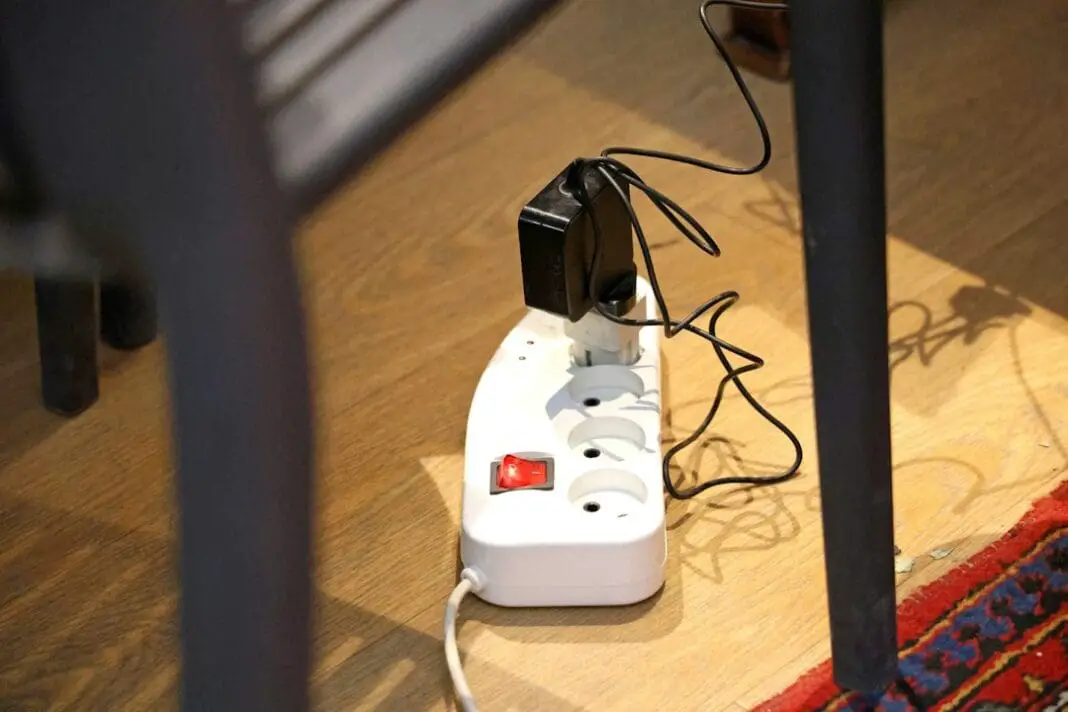
The only free outlet is behind the dresser, the bedroom is cold, and the little ceramic heater came with a power cord about four feet long. So out comes the orange extension cord from the garage, and nobody thinks about it again until spring. Federal safety officials have a blunt word for that habit. The Consumer Product Safety Commission counted an average of 1,700 fires a year involving portable heaters from 2017 through 2019, with about 70 deaths a year, and it tells people to plug a space heater straight into a wall outlet, never into an extension cord or power strip. Of everything in an American home, the space heater is the one appliance that should never meet an extension cord, not even for a night.
Thousands of Home Fires a Year Start at the Cord
By the Consumer Product Safety Commission’s estimate, about 3,300 home fires a year start in extension cords, killing about 50 people and injuring about 270.
Overheating does not always announce itself. It can show up at the plug, inside the wall socket, or anywhere along the length of the cable. A plug or outlet that feels warm to the touch means the connection has gone bad or the cord is carrying more current than it was built for. Damage to the copper inside the jacket is invisible from the outside, which is exactly why these things catch people by surprise.
One Lamp Can Tip the Whole Thing Over
A plain indoor extension cord might cap out near 1,625 watts. A single space heater usually pulls 1,500 watts all by itself. Do that math and the cord has almost nothing left. Plug a reading lamp into the second socket on the same cord and the system is running right at the edge.
That is the part people get wrong. They assume a cord fails because somebody plugged in six things. It usually fails because somebody plugged in one very hungry thing and then added something small on top.
A Longer Cord Is a Weaker Cord
Length matters more than almost anyone realizes. Every extension cord adds a little resistance to the circuit, and resistance grows with distance. The farther the electricity has to travel, the lower the voltage measured at the appliance. A motor that gets too little voltage pulls more current to keep up, which heats the cord it is already straining.
Put numbers on it and the drop is steep. A 16-gauge cord running 25 to 50 feet tops out around 1,625 watts. Stretch that same gauge out to 100 feet and cord makers rate it closer to 1,250 watts. The cord did not change. The physics did.
The Gauge Number Runs Backwards
Gauge measures the thickness of the conductor wires inside the cable, and the scale is upside down from what you would expect. Smaller numbers mean thicker wire and better current handling. A 10 gauge cord is built for power-hungry gear. An 18 gauge cord is not. The 14 gauge cord that sells by the mile at hardware stores handles up to 1,800 watts, which is 15 amps, the same as a standard wall outlet in an American house.
The National Electrical Code, the rulebook electricians and inspectors work from, is blunt about this. Flexible cords are not a substitute for permanent wiring, and under NEC Article 400 they can’t run through walls, ceilings, floors, doorways or windows, or be fastened to the house. Buy cords with a UL or ETL listing mark, and treat them as temporary. The cord stapled along your baseboard since 2019 is not a wiring solution.
A Low-Watt Slow Cooker Is Sneakier Than a Toaster
Wattage is only half the story. Runtime is the other half, and it is the half that gets ignored. A standard slow cooker pulls a couple hundred watts, which sounds harmless, except a single batch of chili sits on that cord for hours while nobody is watching it. Same with the refrigerator. Fridges draw roughly 300 to 800 watts, not a scary number, but they run all night and most of the day, and that constant load is what cooks a cord from the inside.
A modest appliance that never shuts off is a bigger problem than a loud one that runs for ninety seconds. Gauge rating does not change that, which is why a fridge belongs in the wall no matter how beefy the cord looks.
The Small Counter Appliances Are the Greediest
Size tells you nothing about appetite. Toasters and toaster ovens, two of the smallest things on a kitchen counter, run at 1,200 to 1,400 watts. Air fryers commonly draw 1,500 to 1,800 watts, more than many cords on the shelf can carry. A microwave sold as 800 to 1,000 watts actually pulls more like 1,100 to 1,500 from the wall, because the number on the box is cooking power, not draw.
Run a microwave through a cord and you can taste the difference. A Tom’s Guide writer who moved an 1,100 watt countertop microwave off a multi-tap extension cord and into a wall outlet called the difference in cook times night and day. Voltage drop is not an abstraction. It shows up in a cold burrito.
Motors Spike the Instant They Kick On
Anything with a compressor or a motor has a startup surge. Refrigerators, freezers, window air conditioners and dishwashers all pull a hard jolt of current the moment they switch on, well above what they use while running. A cord that was barely coping with the running load gets slammed by that spike, and the results range from a tripped breaker to melted insulation.
Air conditioners are the worst of the bunch because they combine the surge with long hours. A small window unit sized for a 150 square foot room pulls around 500 watts, bigger units pull far more, and in August any of them may run all day. Electricians keep making the same point about big appliances: they belong on dedicated outlets tied to the breakers in your main panel. The breaker in your panel is sized for the wall wiring, not for a thinner cord, so the cord can overheat long before anything trips. Electric stoves, ovens and dishwashers should never be on a cord at all.
The Offenders Nobody Thinks About
Hair dryers surprise people the most. Full-size dryers commonly draw up to 1,875 watts, which is more than most cords can carry, and they get used every single morning. Electric kettles heat fast, and fast heat means big amps. High-powered blenders and food processors can also run past what a cord can handle.
The list keeps going into places you would not guess. Treadmills and ellipticals have motors strong enough to overheat a cord. Table saws, drills and air compressors pull huge startup currents. Welders need heavy duty supply that no standard cord provides. Electric vehicle chargers require dedicated, grounded circuits. If you are charging a car off a cord strung across the garage floor, stop.
Never Plug a Cord Into Another Cord
Daisy chaining, the habit of linking two extension cords together or running one into a power strip, is its own category of bad idea. Every plug, connector and joint adds resistance, and resistance makes heat under load. Chain three cords and you have built three weak points into one circuit. Use a single cord that is long enough and rated for the job instead.
Coiling is the other quiet mistake. When a cord is wound up while it is carrying a load, the heat concentrates in one spot instead of spreading out along the cable, and overheated plastic casing can melt and ignite whatever it is sitting on. Cords tucked under rugs or behind the couch have the same problem, with the added bonus that you will never see the damage until it is smoke.
The Rule That Covers Almost Everything
If it makes heat or it has a motor, it goes in the wall. That single sentence covers the heater, the toaster oven, the air fryer, the hair dryer, the kettle, the fridge, the window AC, the washing machine and the shop vac, and it saves you from doing wattage arithmetic in the hardware aisle.
When you genuinely have no other option for a short stretch, the rules tighten rather than loosen. Pick a cord that is short and thick, rated above the appliance’s draw, uncoiled, in the open, and inspect it for frayed jacket or cracked insulation first. Replace any cord with visible wear. Then feel the plug after ten minutes, because warm is the warning you get before anything else happens.
The real fix is not a better cord. It is more outlets. A few hundred dollars for an electrician to add a receptacle where you actually need one beats permanently wiring your bedroom with a $12 orange cable from the garage, and it is the only version of this that ends with nobody checking the plug every night.

