

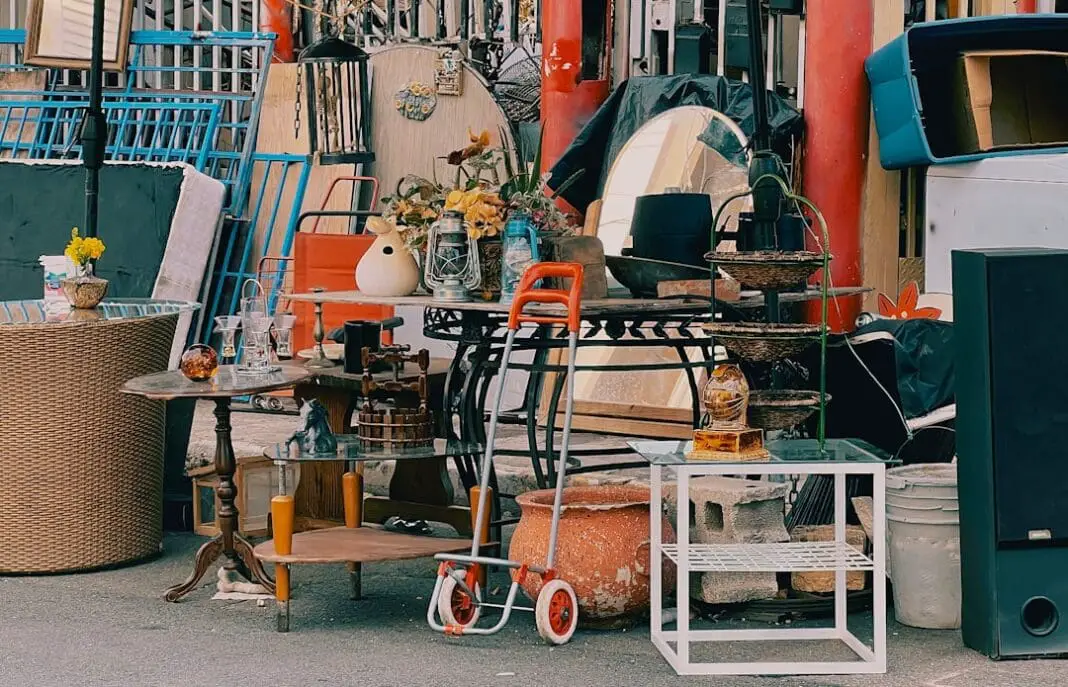
Here’s a scenario that plays out every single weekend across America: somebody’s grandpa retired, or somebody’s dad passed away, and the family drags everything out of the garage and slaps price stickers on it. They price the riding mower carefully. They haggle over the grill. But the tools? The tools get dumped into a cardboard box with a piece of masking tape that says “$5 each” — and that’s where the real money is sitting.
Experienced garage sale hunters know this. They show up at 6:45 AM, fifteen minutes before the sale officially starts, and they walk straight past the furniture, straight past the old vinyl records, and head directly for the tool section. What they’re looking for might shock you, because the most valuable stuff rarely looks impressive. It looks old. It looks dirty. And most people walk right by it.
Snap-On Tools Are Basically Currency Among Mechanics
If you see a red-handled ratchet or wrench stamped with the Snap-On logo sitting in a pile of random tools at a garage sale, pick it up immediately. Brand new Snap-On sets retail for over $200, and you can’t just walk into a store and buy them — you either need to know a local distributor with a tool truck or order directly from their website. Most people who collect these tools buy them used on eBay, where they still command prices way above what normal tool brands cost.
The brand has a cult following among professional mechanics. Snap-On’s quality is genuinely reflected in its pricing, though the lifetime warranty baked into each tool also inflates the cost. Here’s the tricky part: the company has moved toward honoring warranties only for original owners, so buying secondhand technically means you’re not covered. But the thing about Snap-On hand tools is they’re built so well that the warranty barely matters. These things survive being dropped, run over, and abused on job sites for decades. Older Americans everywhere tend to have drawers full of Snap-On gear accumulated over a lifetime of work, and when those tools hit a garage sale, sellers often have no idea what they’re worth. A $3 ratchet on a folding table might be a $60 tool.
Vintage Craftsman From the Sears Era Is a Completely Different Animal
Modern Craftsman tools are fine. They’re decent. But vintage Craftsman hand tools made in the USA — specifically the ones sold under the Sears & Roebuck name from the 1920s through the 1960s — are on another level entirely. The most collectible power tool lineup was produced between 1946 and 1967, during the post-war manufacturing boom when American factories were churning out seriously overbuilt products.
These tools were so well-made that many of them still work today, which is wild when you think about it. We’re talking about 60- to 80-year-old power tools that can still do the job. Working vintage Craftsman models regularly go for $50 or more on eBay despite their age. And Craftsman’s legendary lifetime warranty used to be honored even on vintage pieces — even tools that had outlasted their original owners. That policy has changed in recent years, but it tells you something about how confident the company once was in its products. Hand tools from the 1930s and 1940s, things like wrenches and socket sets, are especially prized among tool enthusiasts for their durability and the quality of the steel used.
A Rusty Old Hand Saw Might Be Worth More Than the Table It’s Lying On
The Disston D8 hand saw is one of those tools that experienced buyers get visibly excited about. Henry Disston & Sons manufactured these starting in the mid-19th century, and at one point, Disston was the largest saw manufacturer in the world. The D8’s blade is taper-ground, meaning it gets thinner from the tooth edge to the back, which reduces friction and makes cutting remarkably smooth. The hardwood handles are ergonomic, and the teeth came in various configurations for different types of work.
Finding an old Disston at a garage sale is something of a rite of passage for tool hunters. They’re not ultra-rare — Disston made a ton of them — but they’re special. The No. 12 is considered the company’s flagship design, and various sub-versions were produced, including shorter variants that fit in a mobile toolbox. A D43 hand saw with a mahogany handle and intricate engravings has been valued at around $195. That’s for a used hand saw. Don’t walk past these just because they look old and grimy.
Some Antique Tools Have Sold for Jaw-Dropping Amounts at Auction
This is where things get really interesting. A single wrench sold for $16,500 at auction in 2017. Not a set. One wrench. It was designed for a John Deere Dain all-wheel-drive tractor — a model so obscure that John Deere only made 100 of them and then tried to buy nearly all of them back. It’s believed that only nine of these wrenches exist anywhere in the world. The buyer, D. Wayne Dill, had originally purchased it in 2009 for $15,000.
But that’s not even close to the record. A drafting set and patent model by Louis C. Rodier sold for $91,000 at auction in 2004. The previous record for any tool was just $30,000. A hand-carved wood bellows, possibly made in the early 19th century, was appraised on Antiques Roadshow for $35,000. A gold-plated, ivory-handled wrench thought to be a gift to Chauncey Depew — an attorney for Cornelius Vanderbilt who later became a U.S. Senator — went for $5,980. And here’s the best detail: the engraver misspelled Depew’s name on it.
The Stanley No. 1 Plane Is the Holy Grail — and It Fits in Your Palm
Stanley’s metal hand planes were mass-produced in the early 1900s, and most of the ones floating around today have been passed down through at least one generation. Here’s the kicker: vintage, well-used Stanley planes are frequently both cheaper than brand-new models and objectively better tools. The steel was better. The manufacturing tolerances were tighter. Modern production has cut costs, and that often comes at the expense of material quality.
But the real prize is the Stanley No. 1 Plane. It’s one of the smallest planes ever made — just 5½ inches long with a blade only 1¼ inches wide. It fits in the palm of your hand. Made from 1869 to 1943, it’s not exactly practical for heavy-duty woodworking, but collectors go absolutely nuts for it. Finding one at a garage sale would be like finding a first-edition book in a free pile at a library sale. Stanley planes in general are a safe entry point for anyone interested in collecting antique tools because they’re easy to identify and fairly consistent in value.
A Former Slave Made Some of the Most Valuable American Tools Ever
Cesar Chelor was enslaved by Francis Nicholson, who is recognized as America’s first documented planemaker — the first to stamp his name on the tools he built. Nicholson lived from 1683 to 1753. After Nicholson’s death, Chelor was freed and became his apprentice’s successor, continuing to create tools throughout his life. He is the earliest documented African American toolmaker in the United States.
A cornice molding plane made by Chelor, dating back to the 1730s or 1740s and found in unused condition, sold at auction for $27,950. That’s nearly $28,000 for a wooden plane. Nicholson’s own tools are also extremely valuable — one of his wooden planes sold for $5,140. These prices aren’t just about rarity. They represent a piece of American craft history that most people have never heard of.
Precision Measuring Tools and Clamps Are the Sleeper Picks
While everyone’s arguing over the power tools, smart buyers quietly scoop up the boring-looking stuff that nobody else wants. Precision measuring tools — calipers, micrometers, dial indicators — from brands like Mitutoyo, Starrett, or Brown & Sharpe are excellent investments that can retain their accuracy for decades. The analog versions are often more durable than digital ones and don’t need batteries. Even if they need recalibration, finding these at garage sale prices is a huge score. A Starrett Combination Square alone is a favorite among professionals and hobbyists for its precision and versatility.
And clamps. Oh, clamps. Anyone who has ever done woodworking knows the golden rule: you can never have enough clamps. Brands like Bessey, Jorgensen, and even Irwin hold their value and last for years. Clamps are almost impossible to break or seriously damage, which means even rusty ones can be restored easily. Check the jaws for excessive wear and make sure the screw mechanisms still turn, but beyond that, you’re probably looking at a tool that’ll outlast you.
The One Rule Every Garage Sale Tool Buyer Should Follow
Here’s what experienced buyers understand that casual shoppers don’t: old tools were often made better than new ones. Before the 20th century, and even through the mid-1900s, tools were made domestically from quality materials like wrought iron and leather. Toolmakers took pride in their craft and taught that standard to the next generation. There wasn’t pressure to mass-produce millions of units at the lowest possible cost. Today, there absolutely is, and material quality suffers as a result.
So the next time you’re at a garage sale and you see a dusty, grimy, beat-up old tool sitting in a bucket — don’t assume it’s junk. Check the brand stamped on the metal. Look at the handle material. Feel the weight. That scratched-up ratchet or rusty hand plane might be worth ten times what the seller is asking, and it might work better than anything you could buy new at a hardware store today. The people who know this are already at the sale before you. Maybe it’s time to start setting your alarm a little earlier on Saturday mornings.

