

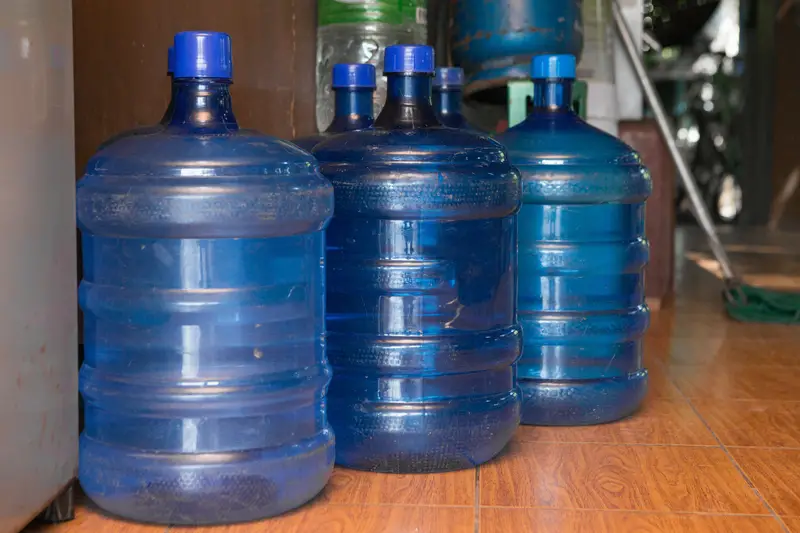
Last summer, a friend of mine grabbed a bottle of water from a case she’d been keeping in her garage for weeks. She cracked it open, took a sip, and immediately made a face. “This tastes like plastic,” she said. She wasn’t wrong — and the reason why should make all of us think twice about where we stash our bottled water.
Your garage is the single worst spot
Most of us have done it. You come home from Costco with a 40-pack of water bottles, and the kitchen pantry is already stuffed. So the flat goes in the garage, tucked against the wall next to the lawn mower. Seems harmless enough. But your garage might actually be the worst room in your house for storing drinking water, for reasons that go beyond just temperature.
Garages tend to house all sorts of chemicals — gasoline cans, paint thinner, pesticides, cleaning solvents. Those substances release vapors that hang in the air, and here’s the thing most people don’t realize about plastic water bottles: they’re slightly permeable. That means those ambient chemical vapors can actually seep through the plastic and contaminate the water inside. It’s not just theoretical. The International Bottled Water Association (IBWA) specifically warns consumers to keep bottled water away from household solvents and chemicals for exactly this reason.
So it’s not only about heat (though that’s a big factor too, which we’ll get to). It’s about what else lives in that space alongside your water supply. If your garage doubles as a storage area for anything with fumes, your water bottles are absorbing traces of it.
Heat turns plastic bottles into a chemistry experiment
The chemical vapor problem is bad. But the heat issue might be worse. Most plastic water bottles are made from polyethylene terephthalate — PET, for short. During manufacturing, a semi-metal called antimony is used in the process. Under normal, cool conditions, those bottles are considered safe. Raise the temperature, though, and the chemical bonds in the plastic start breaking down. Antimony leaches into the water. And antimony, at high enough levels, is toxic.
Arizona State University ran a study back in 2008 that put real numbers to this. After 38 days of heat exposure, the antimony levels in the water exceeded safety recommendations. That might sound like a long time, but consider how long a forgotten case of water can sit in a garage during an Arizona summer. Or a Texas one. Or honestly, even a Virginia one in July. Temperatures inside garages, parked cars, and enclosed storage areas can exceed 140 degrees Fahrenheit. That’s not an outlier number — that’s routine in many parts of the country from June through September.
Sunlight makes everything worse
On the flip side of the heat problem, there’s UV light — which operates through a different mechanism but produces equally concerning results. PET bottles are sensitive to ultraviolet radiation. When sunlight hits them, the plastic degrades and releases not just antimony but endocrine-disrupting chemicals. Those are the ones that can mess with your hormone levels. Some research has linked long-term exposure to increased risks of cancer and diabetes.
This is why leaving a water bottle on your car’s dashboard or the seat of your car during a sunny afternoon is a genuinely bad idea. Even a few hours of direct exposure can start the breakdown process. And yet we’ve all done it — left a half-finished bottle sitting in the cupholder on a 90-degree day and then taken a swig later. That warm, slightly off-tasting water? That taste is the plastic degrading. Which, honestly, is kind of unsettling once you think about it.
The combination of UV light and heat together accelerates the whole process. So a garage with windows? A car parked outside? A patio table? All of these are environments where your bottled water is quietly becoming less safe to drink with every passing hour.
Where you should actually keep it
The CDC recommends storing water between 50 and 70 degrees Fahrenheit. That’s basically room temperature. A kitchen pantry works great. A hallway closet is fine too. Under a bed in an air-conditioned house? Perfectly acceptable. The key criteria are simple: cool, dry, dark, and far away from anything with chemical fumes.
The IBWA recommends room temperature or cooler, out of direct sunlight, and away from solvents and chemicals. A cool basement works well, as long as it’s clean and dry. Your fridge is ideal if you’ve got the space, though most of us can barely fit last night’s leftovers in there, let alone a dozen bottles of water. One tip I’ve seen is mounting a small rack on the inside of a pantry door — keeps the bottles organized and out of the way without taking up shelf space.
Bottled water doesn’t really expire — but the bottle does
Here’s something that confuses a lot of people: why does bottled water even have an expiration date? Water doesn’t spoil. It has no sugars, no proteins, nothing in it that bacteria can feed on in the way they’d feed on, say, milk or juice. And technically, the FDA has determined that there is no limit to the shelf life of bottled water. They don’t require an expiration date on the product at all.
Only one state — New Jersey — ever required expiration dates on bottled water, starting in 1987. They repealed that law in 2006 after concluding there wasn’t scientific evidence to justify it. So those dates you see stamped on bottles? They’re mostly lot codes that retailers use for stock rotation. They’re not federally mandated expiration dates.
That said, the general recommendation is to use your bottled water within two years of purchase. Not because the water goes bad, but because the plastic container slowly degrades over time — even under ideal storage conditions. The longer it sits, the more opportunity there is for trace amounts of plastic to migrate into the water. So while the water itself is fine indefinitely, its packaging has a limited lifespan.
Glass and aluminum solve most of these problems
If all this talk about leaching chemicals and permeable plastic is making you uncomfortable, there are alternatives. Water bottled in glass doesn’t carry the same risks. Glass is inert and non-toxic, meaning it doesn’t react with its contents regardless of temperature or storage duration. You could leave a glass bottle of water in moderately warm conditions and the water inside wouldn’t pick up chemical contaminants from the container. It’s just a more stable material.
Then there’s canned water. Brands like Liquid Death have made aluminum-canned water trendy, but the practical benefit is real: metal containers can last for decades without degrading in the same way plastic does. For anyone building an emergency water supply — and the Department of Homeland Security recommends every household keep at least one gallon per person per day for several days — canned water is a much more shelf-stable option. Yes, it costs more. And you’re not going to find 40-packs of canned water at your average warehouse club for the same price as plastic. But for long-term storage, the tradeoff is probably worth considering.
The emergency supply most people get wrong
Speaking of emergency preparedness, this is where the storage question gets really practical. A lot of people buy a case or two of water, shove it in the garage or a closet, and forget about it for years. They figure if a hurricane or power outage hits, they’re covered. But if that water has been sitting in a hot garage for three years, it might not be safe to drink — which kind of defeats the purpose.
The U.S. Department of Homeland Security suggests maintaining at least one gallon per person per day for several days. For a family of four, that’s a minimum of 12 gallons for a three-day period. That’s a lot of water to store, and it needs to be rotated. If you’re using plastic bottles, swap them out every couple of years. Keep them in a cool, dark spot inside your house — not the garage, not the attic, not a shed. If you want to skip the rotation hassle entirely, invest in glass-bottled or canned options that won’t degrade.
And remember: that water isn’t just for drinking. During an emergency, you’ll use it for brushing your teeth, basic cleaning, maybe even cooking. So the quality of what you’ve stored matters even more than you might think when everything is working normally.
There’s one last thought that stuck with me while researching all of this. We spend so much time worrying about what’s in our water — filtration systems, mineral content, spring versus purified — but almost nobody thinks about what the container is doing to the water after we buy it. Maybe the bottle matters just as much as the source. Something to sit with next time you’re hauling a flat of Poland Spring out of the trunk.

