

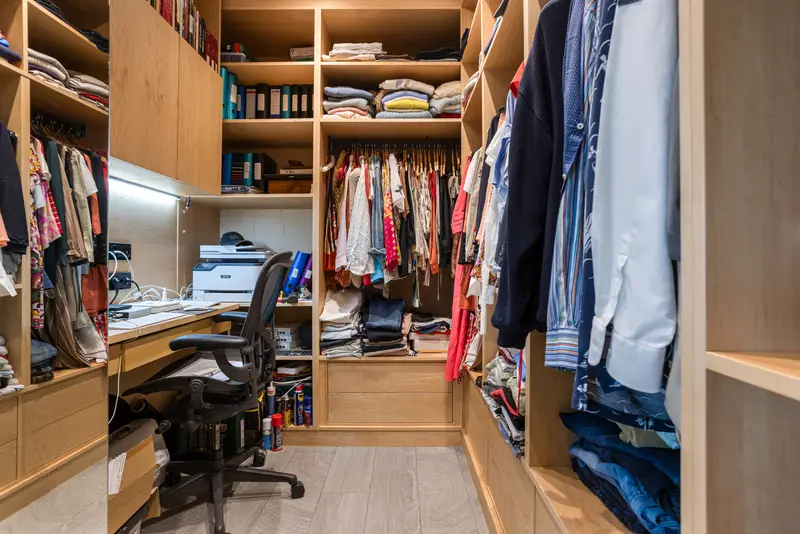
Your bedroom closet started with one job: hold your clothes and shoes. Then it slowly turned into the place where random stuff goes to hide. A shoebox of old cables here, a couple of spare batteries there, maybe a candle you forgot about. It feels harmless. It usually isn’t. Two professional organizers told Yahoo there’s a whole list of things that have no business living in there, and some of the reasons will surprise you. A few are about clutter. A few are about your clothes getting wrecked. And a few are genuinely about your house catching fire while you sleep. Let’s go through the stuff you want out.
Spare lithium-ion batteries
This is the big one, and almost nobody thinks about it. Loose battery packs, spare phone batteries, e-bike batteries, power tool packs. People toss them in a closet bin and forget them. Here’s the problem. The U.S. Fire Administration says to store lithium-ion batteries away from anything that can burn. A closet packed with cotton shirts, wool sweaters, and cardboard is basically a pile of fuel. If a battery gets damaged, overcharged, or just fails, it can go into what’s called thermal runaway. That’s a chain reaction that produces intense heat and flames fast. The federal guidance is also specific about temperature. Don’t keep these batteries anywhere below 32 degrees or above 105 degrees. Closets swing hot and cold depending on the season, which is exactly what you don’t want. If a battery smells weird, changes color, gets puffy, or makes odd noises, stop using it. Those are the warning signs, and a clothes-filled closet is the worst possible spot for one to go bad.
The fire math nobody talks about
Think improper storage is just an organizing nitpick? Here’s a number that changed my mind. According to FEMA, an average of 1,700 home fires a year are caused by spontaneous combustion or a chemical reaction. That’s not a typo. Products react with each other, or slowly heat up on their own, and a fire starts with nobody around. The federal rules are blunt. Never mix household chemicals in storage, because things like chlorine bleach and ammonia can react, ignite, or even explode. Keep products in their original containers. And never store hazardous stuff in food containers, because that’s how accidental poisonings happen. A bedroom closet is a small, closed box with poor airflow, sitting right next to where you sleep six to eight hours a night. It’s about the last place you’d want a slow chemical reaction cooking away.
Mothballs, which are secretly flammable
Here’s a plot twist. The thing people put in closets specifically to protect their clothes is one of the worst things to keep there. Mothballs are flammable. Older ones use naphthalene and newer ones use paradichlorobenzene, and both carry the same flammability rating. They won’t burst into flames on their own, but they add fuel. If a spark from a nearby bulb or an overheated device reaches them, a fire spreads much faster than it normally would. On top of that, insurers point out that mothballs in a small, poorly ventilated space give off fumes you really don’t want lingering in the air you breathe all night. If you’re fighting moths, boxes of pheromone moth traps do the job without turning your closet into a fume box. Just make sure you grab the kind made for clothes moths, since some traps only catch pantry moths.
That little closet light bulb
Okay, you can’t exactly stop storing a light bulb. But you can rethink the one hanging in your closet, because it’s sneakier than it looks. House Digest flags exposed closet bulbs as a real fire risk. In a tight space, a hanging shirt or a stacked cardboard box can drift right up against the bulb. Leave that light on too long and the heat can scorch fabric or set a box smoldering. In a small closet, once one thing lights up, everything else follows in seconds. Old incandescent bulbs are the worst offenders because they run seriously hot. LED bulbs put off almost no heat, so they’re the smart swap. Even better, a motion-sensor closet light that shuts itself off means the bulb is never quietly baking your sweaters while you’re at work. Also good to know: cotton and silk catch fire easily, while wool is stubborn and hard to light. Your fabric choices matter more than you’d guess.
Snacks and food stashes
I get the appeal of a secret snack drawer. A stash of chips or candy in the closet feels genius until you learn what it invites. Professional organizers told Craft Your Happy Place that food in a bedroom closet attracts pests and leaves behind odors that soak into your clothes. Closets also run warm and swing in temperature, so anything perishable spoils faster than it would in a pantry. And once bugs or mice figure out there’s a food source next to your favorite jacket, they don’t just eat the snacks. They chew through fabric and leave a mess that’s a nightmare to clean. If you want a bedside snack, keep it in a sealed container somewhere the whole family can see it, not buried behind your shoes where you’ll forget it exists.
Your birth certificate and other important papers
Loads of people keep birth certificates, Social Security cards, tax returns, and insurance papers in a shoebox on the closet shelf. It feels safe because it’s out of sight. It isn’t safe at all. As organizers explained to It’s My Nest, moisture and temperature swings can warp paper past the point of saving. A closet isn’t fireproof and it isn’t secure, so a small leak, a burst pipe upstairs, or a house fire could wipe out documents you can’t easily replace. There’s also the guest problem. If someone’s rummaging for a coat, they’ve got easy access to your most sensitive paperwork. The better move is a locked, fire-resistant file box or a small safe. It costs a little upfront and saves you a giant headache the day you actually need those papers in a hurry.
Scented candles
Candles show up on the hazard list for a reason. A university extension guide from the University of Georgia lists candles among the items commonly misplaced in bedrooms. Beyond the obvious open-flame worry, storing them in a closet does weird stuff. Strong fragrances seep into your fabrics over time, so your work shirts start smelling faintly like vanilla or pumpkin spice, and it’s tough to wash out. Then there’s the wax itself. Closet heat can soften and warp candles into lumpy shapes, and cold makes them brittle enough to crack. Either way you end up with a ruined candle and a wardrobe that smells like a gift shop. Keep candles in a cool, dry spot with a door between them and your clothes.
Old chargers, cords, and dead electronics
Everybody has the drawer, or in this case the closet corner, full of tangled chargers and a graveyard of old phones and laptops. According to FODMAP Everyday, those forgotten electronics attract dust and become a fire risk over time. The bigger issue is the batteries inside them. Old batteries degrade and can leak, and that happens faster in the fluctuating temperature and humidity of a closet. A leaking battery pressed against fabric is a genuinely bad combo. Sitting electronics near clothes and other things that burn also raises the stakes if anything shorts out. Round up the dead devices and drop them at a battery or electronics recycling spot. Your closet gets its shelf back, and you stop babysitting a pile of aging batteries next to your sweaters.
Bulky luggage
This one is less dramatic but wildly common. Big suitcases eat closet space like nothing else. Organizers over at It’s My Nest call them space hogs that shove your everyday clothes into cramped corners where wrinkles multiply. There’s also a gross factor most people never consider. Luggage picks up dust, odors, and even pests from previous trips, and now that’s parked right next to your clean clothes. Hotel floors, airport carousels, and rental car trunks are not exactly spotless. Suitcases do much better under the bed, up in the attic, or in a dedicated storage room. Bonus: nesting smaller bags inside bigger ones saves even more space.
The quick takeaway
Your closet doesn’t need to be a magazine cover. But a few of these swaps are worth doing this weekend, especially the batteries and the mothballs, because those are the ones that can actually start a fire while you’re asleep a few feet away. Everything else is about protecting your clothes and your sanity. Pull out the stuff that doesn’t belong, give it a real home, and let your closet go back to doing the one job it’s good at.

