

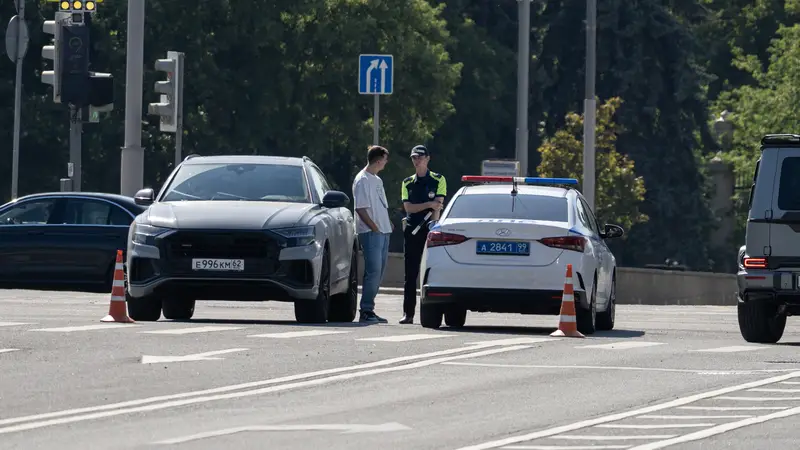
Here is something most people get completely backwards. When those red and blue lights pop up in your mirror, your gut might tell you to hop out, walk back toward the cruiser, and show the officer you are a friendly, reasonable person with nothing to hide. Feels polite, right? It is actually one of the worst moves you can make. That one friendly gesture can flip a routine stop into a tense, dangerous mess in about two seconds flat.
The Polite Move That Backfires
Cops are trained to treat every single stop like it could go sideways. From where they are standing, the person in that car is a total stranger, and the walk up to your window is considered the most nerve-racking part of the whole thing. So when a driver suddenly swings the door open and steps out, an officer does not read that as friendly. They read it as unpredictable, maybe even threatening. Lawyers who deal with this stuff say voluntarily getting out on your own can look like you are trying to hide something in the car, or like you are getting ready to run. Even if you are just trying to be nice, the officer does not know that. The rule is dead simple. Stay put unless you are told otherwise, and keep both hands where they can be seen. The best spot is right on top of the steering wheel where there is zero mystery about what you are doing.
A 1977 Case Decides This For You
Here is the part that surprises people. While you should never climb out on your own, the officer absolutely can order you out. That comes from a Supreme Court case called Pennsylvania v. Mimms, decided all the way back in 1977. The Court ruled that during a lawful stop, an officer can tell you to exit your vehicle without needing any extra reason or suspicion of a crime. They called it a “minimal further intrusion” and said officer safety wins out. Twenty years later, a case called Maryland v. Wilson stretched that same power to cover passengers too. So the setup is a little lopsided. You cannot choose to get out, but the cop can make you. The smart play, according to legal experts, is to start with the assumption that you stay in the car, then only step out if you are clearly directed to.
There Is a Word Trick You Should Know
This one is sneaky and almost nobody notices it in the moment. There is a legal difference between an officer asking you to get out and ordering you to. If a cop says “Would you mind stepping out of the vehicle?” that is technically a request, and you can politely say “No, thank you.” But if they say “Step out of the vehicle,” that is a direct command, and refusing it can land you in real trouble fast. The wording matters more than you would ever guess. Attorneys point out that the gap between asking and ordering is the whole ballgame. That said, I would not bet my afternoon on splitting hairs over grammar with a stressed-out officer on the side of the highway. Knowing the difference is useful. Actually gambling on it usually is not.
The Guy Who Refused and Walked Away With $20,000
Every rule has that one story that makes you go “wait, really?” Back in 2019, a Virginia driver got pulled over for something as small as an expired inspection sticker. When the trooper ordered him out, he refused. Not once, but multiple times. The trooper ended up forcibly pulling him from the car, and the driver got hit with obstruction charges. Sounds like a total loss, right? Except the story flips. He later won a $20,000 civil rights settlement, and the trooper was fired for unprofessional conduct. So technically, the guy came out ahead. But do not let that fool you into thinking refusal is a smart bet. For every headline like that, there are countless stops where digging in your heels just gets you arrested, hurt, or slapped with charges that stick. He rolled the dice and got lucky. Most people do not.
Why Refusing Can Follow You Into Court
Here is a wrinkle that catches folks off guard. Saying no to a lawful order does not just risk trouble on the roadside. It can actually be used against you later. If a stop ends in an arrest, prosecutors can point to your refusal and argue it shows a “consciousness of guilt.” In plain English, that means they will claim you were fighting the officer because you had something to hide. Your “no” becomes a piece of their case. And even if the stop was shaky to begin with, challenging it later is a long, expensive slog, and your refusal weakens your footing. The advice that basically every attorney gives is the same four words. Comply first, fight later. You lose almost nothing by cooperating in the moment and sorting out the legality in a courtroom, where you are not standing next to a nervous cop and a loaded weapon.
You Can Lock Your Car and Nobody Can Say a Thing
If you do get ordered out, here is a detail worth tucking away. You are allowed to roll up your window and lock your car before you step away. That is not treated as suspicious, and it does not magically give the officer permission to search your ride. Locking up is just protecting your stuff, plain and simple. While you are at it, a few small moves keep things calm. Turn off the engine, and if it is dark out, flip on your interior light so the officer can see inside. Kill any music. And do not go rummaging through your glove box or back pocket for your license until you are asked, because from the outside that reaching motion looks like you might be grabbing something dangerous. One more thing worth doing. You can politely ask why you are being told to get out. It puts the officer on notice that you know your rights, and it does it without picking a fight.
Passengers Are Not Off the Hook
A lot of people assume the passenger seat is a safe zone where the rules do not apply. Nope. Police can order passengers out of the car too, and they can require everyone to stick around for the whole stop. They do not need any special reason to do it. The logic is the same as with the driver. Getting everyone out means nobody can quietly reach for a hidden weapon, and it gives the officer a clean look into the vehicle. But being ordered around physically does not erase your other rights. A passenger can still refuse a search of their body, their bag, or their pockets without a warrant. And just like the driver, a passenger should never voluntarily wander off or pop out of the car on their own. Same instinct, same mistake, same advice. Stay seated until you are clearly told to move.
The Camera in Your Pocket Is a Real Tool
You have the right to record a traffic stop, and honestly, it is one of the most useful things you can do. The officer is almost certainly recording too, so it evens the playing field. If anything goes wrong, that footage can become the most important piece of evidence in your favor. A dashcam works great for this because it just runs on its own. Beyond filming, remember a couple of protections that are stronger than most people realize. You do not have to answer the classic opener, “Do you know why I pulled you over?” The smartest response is simply that you do not know, because admitting you were speeding is basically confessing. You can also refuse consent to a search, and the stop itself cannot drag on longer than it takes to check your license and write a ticket unless the officer develops a fresh reason. If they do get you out and pat you down, that search is limited to weapons over your clothing. They cannot go digging through your pockets on a hunch.
So the big takeaway ties back to that first instinct. The move that feels polite, hopping out to greet the officer, is exactly the one that can spook them and turn a two-minute ticket into something far worse. Keep your seatbelt on, your hands on the wheel, and your mouth mostly shut. Let the officer run the show at the roadside, and save any real fight for a courtroom where the odds actually favor a calm, prepared person. Boring? A little. But boring is exactly what you want a traffic stop to be.

