

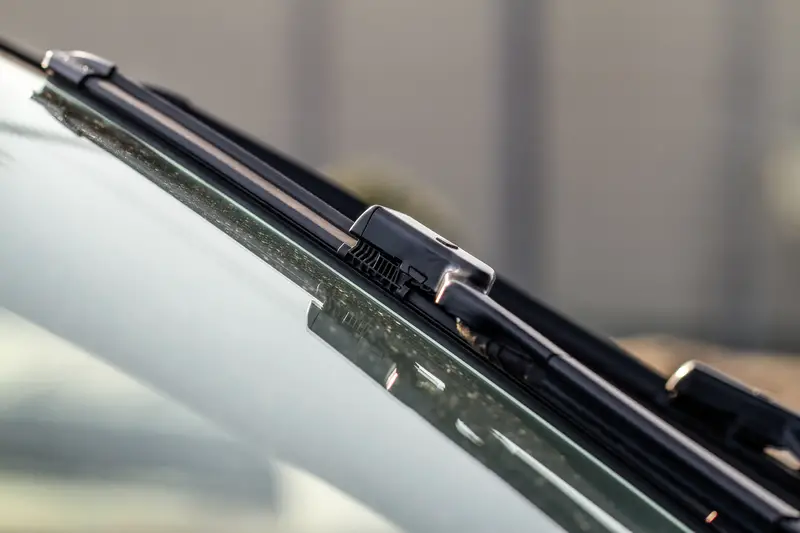
You walk out of Target with a cart full of stuff you didn’t plan on buying, you throw the bags in the trunk, and then you spot it. A little plastic zip tie looped around your windshield wiper. Your stomach drops, because you’ve seen the Facebook posts. Someone marked your car. A trafficker is watching. Get in and drive.
That warning has been passed around for years and screenshotted into oblivion. Here’s the part nobody wants to hear, though. It is almost certainly nonsense. Fact-checkers have been picking this story apart for a long time, and the claim that a zip tie means you’re a trafficking target has been rated flatly false. But the real story behind the panic is honestly way more interesting than the scary version, and there are a few surprising details even the people sharing it have never heard.
The whole thing started in one Texas town
Everyone talks about this like it’s some nationwide crime wave, but the trail leads back to a single spot. The earliest documented version came from San Angelo, Texas, back in October 2018. On October 15 of that year, the San Angelo Police Department put out an actual statement saying they had not received a single report of black zip ties being used to mark anyone for any type of crime.
Then in November 2019 the same story popped up an hour and a half away in College Station, Texas. That police department also weighed in, calling the trafficking angle extremely unlikely. What actually happened in College Station is wild. A shopper found zip ties on their car at Post Oak Mall and posted a warning online, mostly because rumors about a kidnapping at that same mall were already flying around. Two separate scares crashed into each other and created one giant panic. That’s how these things snowball.
The plan makes no sense if you think about it for ten seconds
This is my favorite part. The founder of a big fact-checking site actually broke down why the story falls apart the moment you apply basic logic to it. The supposed plan goes like this: a bad guy ties something to your wiper, waits in the parking lot, and grabs you when you get out to remove it.
His response was blunt. If someone wants to steal a car or grab a person, that’s a crime of opportunity. Nobody is going to plant an object on your car and then just sit there for an hour, or three hours, with no idea when you’re coming back. And this is the line that really nails it: why would a criminal need you to get in your car and then get back out again? If they wanted to get you, they’d just do it when you were walking up to the car in the first place. The extra step exists for no reason. It only makes sense as a story, not as an actual scheme.
News teams called a dozen police departments and got nothing
People love to say “well, the police probably just aren’t reporting it.” Reporters actually tested that. One TV station’s verification team called law enforcement across a huge chunk of the D.C. area, including Arlington, Alexandria, Fairfax, Prince William County, Prince George’s County, and Montgomery County. The result across every single jurisdiction? Zero documented cases.
A Montgomery County police spokesperson put it perfectly. She said the agency had never received any reports like this, and that some version of the claim has floated around social media for years, gaining traction every so often before dying down again. Think about that. This is one of the most geographically wide checks anyone has done on the rumor, covering an entire metro area, and it came up completely empty. When a story is real, at least one police report usually exists somewhere. This one has none.
It’s part of a whole family of “marked car” myths
The zip tie is just the newest costume for a very old scare. Before zip ties, the viral version was a piece of clothing tied to your wiper. In 2017, a woman in Flint, Michigan found a blue flannel shirt on her windshield and, instead of stopping to yank it off, drove somewhere safe first. Police looked into it and confirmed no other incidents like it had been reported.
Then there’s the “white dot” story, where a mark on your car supposedly signals a trafficker, plus versions involving zip ties on side mirrors and door handles. A Michigan anti-trafficking nonprofit addressed all of it head on and confirmed these markings have not been tied to a single real trafficking case. Same hoax, new props. Every couple of years it gets a fresh coat of paint and starts circulating again like it’s brand new information, when it’s really just the same recycled fear.
Real trafficking looks almost nothing like the movies
Here’s the fact that should actually make you stop and think. The group that runs the U.S. National Human Trafficking Hotline says the single most common myth about trafficking is the idea that it usually involves kidnapping or physically dragging someone off. That dramatic parking-lot grab is the exception, not the rule.
What actually happens is uglier and quieter. Traffickers use manipulation, lies, isolation, and money to control people. They often use love as the weapon, romantic love, friendship, even family love, to trap someone slowly. In 2021 alone, the hotline logged 10,359 trafficking situations involving 16,554 victims, and not one of them involved a zip tie on a car. A Memphis anti-trafficking director described the most common pattern she sees as a “boyfriend pimp,” where the victim genuinely believes she’s in a relationship she can’t leave. People can even be recruited in their own hometown, or their own home, with no car and no travel involved at all. The parking-lot version we all fear is basically the least accurate picture of the real crime.
So if it’s fake, why does the advice still hold up?
Now for the twist that makes the original headline weirdly correct anyway. Even though the trafficking story is a hoax, cutting a zip tie off your car in a dark, empty lot is still a dumb move, and “just drive” is still solid advice. Not because a shadowy kidnapper is timing you, but because a distracted person fumbling with something on their car is an easy mark for a plain old opportunistic thief. Police who debunked the rumor still said the same thing every time: awareness in a parking lot is never a bad idea.
The realistic explanations for a random zip tie are boring, by the way. It’s usually a prank, some kid messing around, or a piece of junk that got stuck there. At absolute worst, it’s a distraction trick by a small-time thief, and even that is rare.
If you do find one and it rattles you, the smart play is simple. Don’t crouch down and struggle with it alone in a poorly lit lot. Get in, lock the doors, and drive to a busy, well-lit spot before you deal with it. A few seconds of fumbling in the wrong place is the only real risk here, and driving 30 seconds down the road erases it. If something genuinely feels off, call the police. You can never be too careful, even about a hoax.
The takeaway
The zip tie warning is scarelore, plain and simple. It preys on a real, legitimate fear, wraps it in a story that feels detailed and specific, and then spreads because sharing it feels like protecting the people you love. That’s exactly why it refuses to die. Every debunk gets fewer shares than the scary version did.
So the next time this pops up in your feed with a friend tagging fifteen people and a row of shocked emojis, you’ll know the real backstory. It traces to two Texas towns, it collapses under ten seconds of logic, a dozen police departments found nothing, and the actual crime it claims to warn about works in a completely different way. And yet, the plain “just drive somewhere safe” instinct is still good sense. Trust that part. Ignore the rest.

