

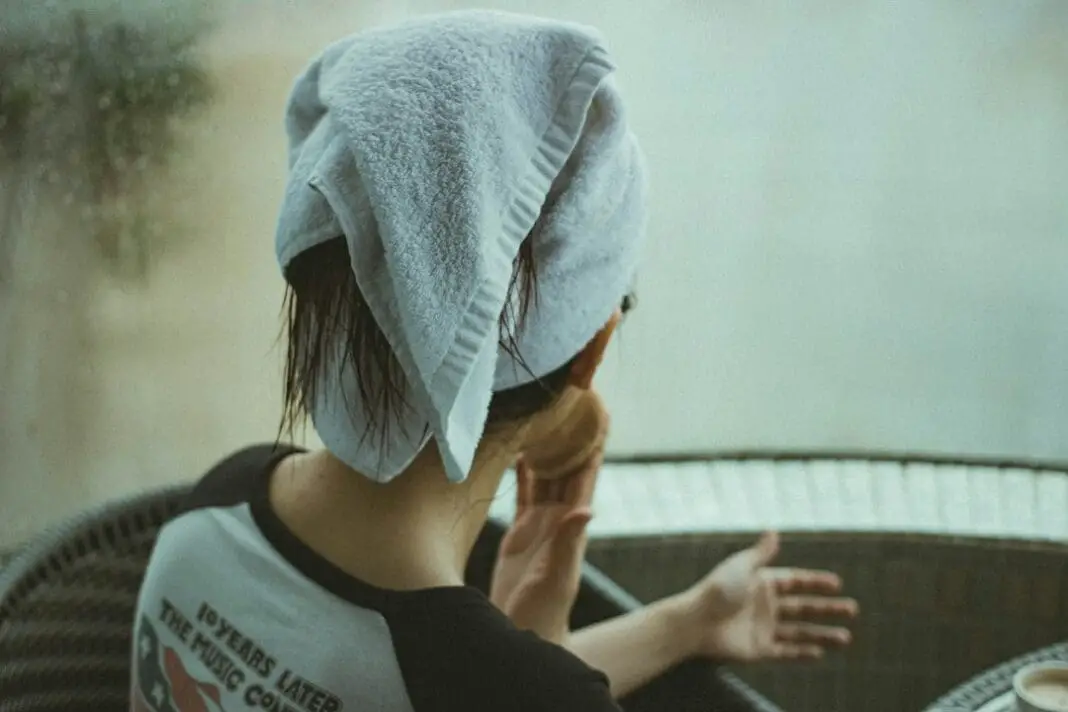
It is 11:40 at night. You just got out of the shower, your hair is soaked, and the blow dryer is buried in a drawer behind the spare towels. So you do what most people do and get in bed anyway. The warning you grew up with, the one about catching a cold, is the part dermatologists throw out completely. What they actually care about is the eight hours your wet head spends grinding against a cotton pillowcase, and the warm damp patch you leave behind in it.
Noah Gratch, M.D., a board-certified dermatologist in New York, put the stakes plainly when he was asked about the habit. “While it’s not dangerous, there are dermatologic and hair health concerns associated with the habit,” he said. That is the honest version. Nobody is going to the emergency room over a damp pillow. But the people who look at scalps and hair shafts for a living can tell when somebody has been doing this every single night for years.
Your Grandmother Was Wrong About The Cold
Colds come from viruses, not from being damp. You have to be exposed to an infected person or a contaminated surface. A wet head cannot manufacture a rhinovirus out of thin air. As Cleveland Clinic family physician Matthew Goldman, MD, puts it, “a microorganism, such as a virus, has to be involved.”
The myth hangs on for a boring reason. Cold and flu season peaks in the cold months, which is exactly when people are stuck indoors breathing each other’s air and are more likely to shower right before bed. Two things happening at the same time is not one thing causing the other. The Sleep Foundation lands in the same place: wet hair is not known to cause respiratory illness.
Wet Hair Is Basically A Different Material
Soak a strand of hair and the hydrogen bonds inside it break temporarily. Briana Delvecchio, a hairstylist at Ashley Lauren Beauty Lounge in New York, describes the result as more elastic, more fragile and far easier to snap. “Combine that with friction from your pillowcase, and it’s a recipe for split ends, tangles and long-term damage,” she said.
Cleveland Clinic dermatologist Shilpi Khetarpal, MD, says the same thing in fewer words. “Hair can be more fragile when it’s wet, meaning it’s more prone to snapping, stretching or breaking,” she explained. When hair is wet, water makes the inner core of the strand swell, which is why it gives way under friction that dry hair would shrug off.
Here is the number that gets people’s attention. Wet hair can safely stretch by up to about 30 percent of its original length, according to Cleveland Clinic. Push it further than that and the damage does not come back. Now think about how much you roll around in eight hours. You are not styling your hair while you sleep, you are stress-testing it.
There is also a slower version of the damage with a name attached. Dermatologist Alexis Stephens, DO, calls it hygral fatigue: the strand swells with water, shrinks as it dries, and repeats that cycle night after night until the internal bonds give up. The end result is hair that looks dull, limp and breakage-prone, which most people blame on their colorist.
The Pillowcase Is Doing Most Of The Damage
Standard cotton is a rougher surface than silk or satin. In plain English, cotton grabs. Every time you turn over, it catches wet strands instead of letting them slide.
Cotton also soaks up everything you give it. Cotton fiber can hold many times its own weight in water, which means the spot under your head stays humid long after you have fallen asleep. You are not sleeping on a damp pillow for ten minutes. You are sleeping on one most of the night.
Joshua Zeichner, MD, a board-certified dermatologist, points to the same mechanical problem: wet hair is at higher risk of breakage, and that includes the simple friction of your head rubbing against the pillow while you sleep. Khetarpal says swapping cotton for satin or silk helps, but she is clear that it is a consolation prize. Letting hair air dry before you get in bed is still the better move.
Your Scalp Turns Into A Greenhouse
A damp scalp pressed into a pillow for hours is warm, wet and low on oxygen. That is a great set of conditions if you happen to be a yeast. “A constantly damp scalp creates a warm, moist environment that can promote the overgrowth of Malassezia, a yeast that naturally lives on the scalp but can proliferate under these conditions,” Gratch said. “This may contribute to scalp conditions, such as seborrheic dermatitis (a chronic inflammatory skin condition) or dandruff.”
Malassezia is already living on your head right now. It is a normal resident. The problem is handing it a nightly incubator.
Bacteria get in on it too. Staphylococcus can invade hair follicles and cause folliculitis, which shows up as red inflamed bumps and pus pimples around the follicles, according to Zeichner. Khetarpal sees the same complaint. Moisture on the scalp, she said, promotes an environment for bacteria and yeast to grow, which can lead to folliculitis and dandruff, and those are reasons enough to cut back on the habit.
Certified trichologist Celestine Gitau adds a less pleasant guest to the list. Aspergillus, a mold found indoors and out, can treat a chronically damp pillow as a welcoming environment. Scalp ringworm, or tinea capitis, is a contagious fungal infection you have to catch from someone or something, and a damp scalp only gives it an easier time once you have it. Gratch also notes the obvious thing nobody thinks about, which is that moisture trapped in a pillowcase supports bacteria, fungi and dust mites. Pillows that stay damp night after night can pick up a musty smell or visible mildew.
Your Conditioner Becomes A Face Product
This is the part people never see coming. Mona Gohara, MD, an associate clinical professor of dermatology at Yale School of Medicine, lays out the chain: “Wet hair means a wet pillow, which means your face will be wet and the product in your hair will leach onto your skin, possibly causing irritation and acne.”
Conditioner is built to pull in moisture, which is great on a hair shaft and not what you want sitting on your cheek for eight hours. Gohara points out that the same humectants can clog pores. Lauren Penzi, MD, a dermatologist at MDCS Dermatology in New York City, says the damp environment can feed fungus and bacteria that cause trouble beyond the scalp, including fungal acne on the face, chest and back, and pityriasis versicolor, a yeast overgrowth that shows up as discoloration, flaking and sometimes itching.
Gohara raises one more drawback that has nothing to do with skin. A cold wet pillow is annoying, and annoyed people wake up more. You are trading three minutes of blow-drying for a choppier night of sleep.
The Morning Headache Nobody Connects To The Shower
Plenty of people swear they wake up with a stiff neck or a headache after sleeping on a wet head, and the evidence here is thin and anecdotal rather than proven. The proposed explanation is simple physics. As hair dries overnight, evaporation pulls heat out of the skin around the scalp and neck, and in people who already get tension headaches, that temperature drop may be enough to set one off. Lying on one damp side for hours can also leave the neck and upper shoulders stiff.
Sensitivity varies wildly, and many people sleep with wet hair for decades and wake up perfectly fine. If you are the type who keeps blaming your pillow for morning headaches, it is worth noticing whether they track with hair-washing nights.
Some Heads Should Care A Lot More Than Others
If your hair is bleached, relaxed or permanently colored, the cuticle is already stripped and compromised, and wet strands break even more easily under friction. Adding eight hours of swelling and rubbing on top of that is where the damage speeds up.
Dandruff-prone scalps are the other obvious group. A damp night is exactly the warm, wet setup Malassezia likes. Alexis Stephens, DO, a dermatologist and the founder of Parkland Dermatology & Cosmetic Surgery in Coral Springs, Florida, draws the line the same way: people with sturdy hair and a healthy scalp can get away with the occasional damp night, while sensitive scalps and brittle hair cannot.
People with weakened immune systems, including anyone on immunosuppressive medication or going through chemotherapy, have less margin for fungal or bacterial overgrowth. Young children and older adults regulate body temperature less efficiently, so overnight evaporation cools them more. And if you live somewhere genuinely humid, Houston in August rather than Denver in January, the pillow has no chance to dry out between nights.
What To Do If You Shower At Night Anyway
Start with the towel. A microfiber towel soaks up water fast and does not grab the strands, so blot rather than scrub. Delvecchio recommends towel-drying, then a leave-in conditioner to protect the strands, then either blow-drying on low heat or loosely braiding once the hair is mostly dry.
If you reach for the dryer, keep it on low or cool. Khetarpal warns that extreme heat just trades one kind of damage for another. A few minutes of cool air is enough to get hair from soaked to damp, and that difference matters. “Damp is better than soaked,” as Gohara puts it.
Buy yourself time instead of heat when you can. Wash first, then do your skincare, clean up the kitchen, read a chapter. Loose is the rule for anything you tie: Gitau suggests a loose twist or braid, and Gohara says that if you use a cap or bonnet, do not twist the hair into a tight bun underneath it first.
Change the pillowcase more often than you think you need to. Weekly is the floor, and more often helps if you wash at night. Silk or satin cuts the friction, and bamboo is the budget-friendly cousin. Hair oils help too, with coconut oil studied for reducing protein loss and argan oil for keeping hair moisturized. One more free trick: sleeping on your back cuts down how much your hair rubs the pillow at all.
The Verdict
One wet-haired night is not going to wreck anything. Every expert who gets asked about this says some version of the same thing, and Penzi says it most usefully: if you are not getting breakage or frizz and it does not bother you, it is probably fine for you. The habit is what does the work. Nightly dampness, a cotton pillowcase that holds water like a sponge, and hair that swells and shrinks on repeat add up over months, and by the time you notice, you are blaming your shampoo.
The fix costs about four minutes and a better pillowcase. That is a cheap trade for the one beauty habit almost nobody realizes they have.

