

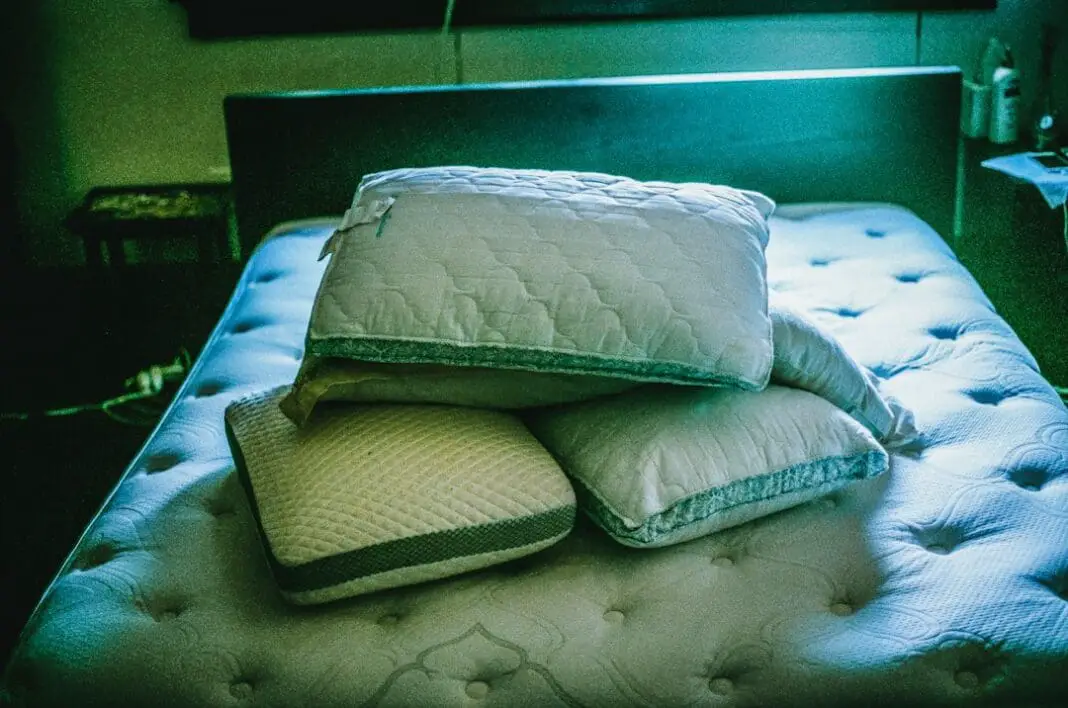
There comes a moment every couple of years when you strip the pillowcase off and really look at the thing underneath. Flat on one side. Yellowed through the middle. Lumpy in a way that no amount of punching will fix. The reflex is to carry it straight out to the curb in a kitchen bag, and that reflex is how a pillow ends up buried in a landfill where polyester fill can sit for decades. The better move is not the trash can. It is also not the donation bin outside the strip mall, because most Goodwill stores will not take a bed pillow at all, no matter how clean it looks. What you actually want is an animal shelter, a textile recycling bin, or a pair of scissors and twenty minutes.
Goodwill Will Turn You Down Flat
Local Goodwill organizations list bed pillows among the things they cannot accept, right alongside mattresses and box springs, and the rule covers the whole category rather than the condition of your specific pillow. Washed, barely used, still in the plastic from a guest room nobody sleeps in? Does not matter. The Salvation Army lists bedding as welcome, but its stores set their own limits, so call before you load the car.
What confuses people is that the same stores happily take blankets, comforters and decorative throw pillows. Planet Aid’s bedding program draws the same line: throw pillows are welcome, bed pillows are not. The difference is sanitation policy, plus the plain fact that a used bed pillow has almost no resale market. Nobody browses the housewares aisle hoping to buy a stranger’s pillow.
Smaller independent thrift shops and local charities sometimes make exceptions for pillows in like-new shape. Call and ask about pillows specifically, because the answer changes store to store and the person on the phone will know in about four seconds.
The Animal Shelter Is The One Place That Says Yes
Shelters take clean pillows and put them to work immediately as kennel padding, as bedding, and as comfort for animals recovering from surgery or illness. Older dogs with sore joints get the soft stuff. The standards are far less strict than they are at a thrift store that has to resell the item to a human being.
Prep it properly and you are much more likely to get a yes: wash in hot water with unscented detergent, dry it all the way through, and carry it over in a plastic bag so it stays clean in your trunk. Call first about hours and quantity limits. Some shelters will not take down or feather pillows at all, so ask before you drive across town with six of them.
Other numbers worth dialing: wildlife rehabilitation centers, veterinary clinics, daycare centers and community centers. Homeless shelters are a mixed bag. Some genuinely need pillows for emergency housing and temporary stays, while others will only accept bedding that is new with the tags still on. Creative reuse centers and art organizations are the dark horse, since they want raw material and do not care what it used to be.
Never Put One In Your Blue Bin
Tossing a pillow in with the cardboard and soda bottles feels like the responsible choice and is actually the worst version of it. Local facilities cannot process textiles, and a pillow in the stream can contaminate the rest of the load. People in the recycling business call this wishcycling, and it costs centers time and money to sort back out.
Pillows can get recycled, just through a separate door. Some textile recyclers take bed pillows, worn ones included, but plenty of donation-bin operators do not: Planet Aid’s bins turn away bed pillows and heavily stained items alike. Read the operator’s list on the bin or its website before you drop one in.
To find a drop-off near you, Earth911 lets you search by material and zip code. TerraCycle’s prepaid mail-in fabrics box is no help here, since it excludes anything with fill. Some schools and community centers run textile collection bins as fundraisers and get paid by the pound, and a few apparel retailers run in-store take-back programs, though you should call before loading up the car. For context on the scale of the problem, the Environmental Protection Agency estimated that Americans generated 17 million tons of textiles in 2018, its most recent year of data, or 5.8% of all municipal waste.
Take It Apart First
A pillow is not one material, which is the whole reason it jams up normal recycling. Pull the cover off if it is a different fabric than the fill. Then separate synthetic fill, usually polyester fiberfill, from natural fill like down and feathers, because those go to completely different streams. Bag them apart and label the bags. It takes five minutes and it is the difference between a donation and a nuisance.
If you would rather hand it to a neighbor than a facility, Buy Nothing groups, Freecycle, Facebook Marketplace and Craigslist all move this stuff. Somebody doing a craft project or padding a dog crate will come get it from your porch.
Stop A Draft With One
One popular tip says to stuff old pillows up a drafty chimney. Skip it. A pillow in a flue has no way to fail safely if somebody lights a fire under it, and a blocked flue can push fumes back into the house. Close the damper, or buy a chimney balloon made for the job.
Drafty doors are easier. Lay the whole pillow along the bottom of the worst one, or stuff a long tube sock with the loose filling and sew the end shut for a draft stopper that looks halfway intentional. Loose filling tacked up in a home office or studio can also soften echo a little.
The Stuffing Is Worth More Than The Pillow
Once you stop thinking of it as a pillow and start thinking of it as a bag of free fiberfill, the math changes. Craft store fiberfill is not cheap, and you are holding a pound of it.
Cut the seam, pull the fill, and feed it into whatever has gone saggy: a flat throw pillow, a deflated bean bag, a kid’s stuffed animal that has lost its shape. For the stuffed animal, pick out a few stitches, pack it, and sew it shut. That move has saved more bedtime meltdowns than any toy store ever has.
Two flat pillows stacked inside a single sham make one firm cushion. Five pillowcases sewn together along the long sides, with a pillow slid into each, make a long floor cushion for movie nights. Crafters shape loose fill into hanging clouds for a kid’s room, stuff it into pumpkin-shaped fabric in the fall with twine wrapped around for grooves, and spread it around the base of a Christmas tree as fake snow in December.
Jobs Around The House That Beat The Curb
Keep one in the garage with the garden tools as a knee pad. Slide it into a moisture-resistant protector and then a washable pillowcase and it will last for years of weeding, which is more than you can say for the foam kneeler at the hardware store.
Moving is where old pillows earn their keep. Wedge them between bikes so the frames do not scratch, lean them against furniture in the truck to stop scuffing on the highway, and use loose filling as packing material around fragile things in boxes. Anyone who has ever paid for bubble wrap should be annoyed about this.
Smaller jobs: lumbar support behind your lower back at a desk or on a long drive, a stash in the trunk for warmth or a makeshift cushion, filling for a U-shaped travel pillow if you can sew, cage liner for a hamster that you swap when it gets dirty. The casing fabric cuts into cleaning rags that are softer than anything you would buy, and a pillowcase sewn across the bottom becomes a tote for the farmers market.
Feathers Can Go In The Compost, Foam Never Can
Down and feather filling is biodegradable and breaks down well in a compost pile, where it feeds the soil. Cut the pillow open, scatter the feathers in thin layers mixed with dried leaves or wood chips rather than dumping them in one clump, and turn the pile as usual. Wool and 100% organic cotton can go in too.
Synthetics cannot, full stop. Polyester, memory foam, nylon and spandex will not break down. If the outer casing is natural fabric you can compost that as well, but strip off the zipper, the tags and any synthetic thread first.
How To Tell It Is Actually Finished
Fold the pillow in half and let go. If it springs back open, it still has structure. If it just lies there folded like a taco, the inside has collapsed and no amount of fluffing is bringing it back. Flat spots, permanent lumps, yellowing and a smell that survives a wash are the other tells.
The general guidance is to replace a pillow every one to two years, though it depends heavily on fill type and how you treat it. A pillow protector under the pillowcase, plus washing the case and sheets weekly, buys you real extra time.
Here is the order I would work through. Clean and intact goes to the animal shelter after a phone call. Torn, stained or genuinely disgusting goes to a textile recycler that lists pillows, if one near you does. If you have a sewing machine or a drafty door, keep it and use it. The trash bag is the last option, not the first one, and it is the one most of us reach for by habit.

