

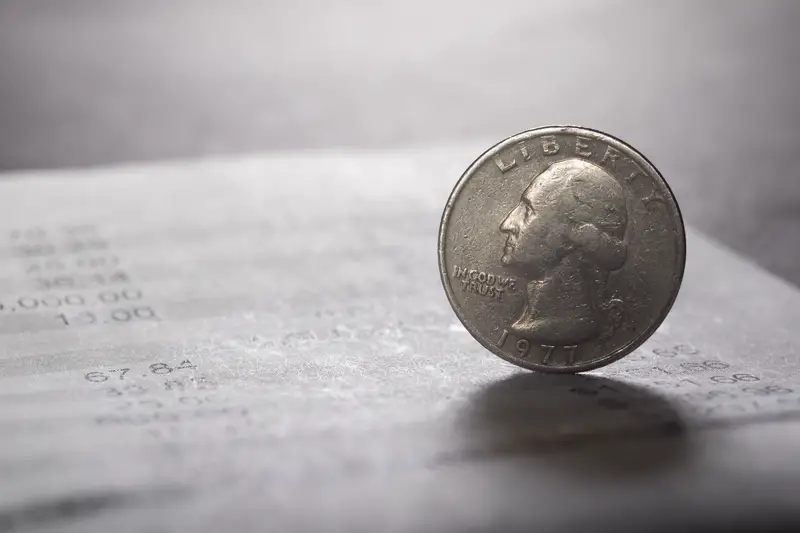
Turn over a 2004 Wisconsin quarter and you get a dairy cow, a wheel of cheese and an ear of corn. It is about as plain as American coinage gets. Now look at the corn. On a small number of the Wisconsin quarters struck at the Denver Mint, there is a leaf on that cornstalk that has no business being there, and that one stray bump of metal is the difference between 25 cents and four figures.
A 2004 Wisconsin quarter with the extra “low leaf” sold for a record $6,000 in January 2020, according to sale records published by Professional Coin Grading Services. A “high leaf” example set its own record of $2,530 back in July 2006. Both coins came out of Denver.
These are not museum pieces. The extra leaf quarters were never recalled, and an unknown number reached general circulation, where they scattered into coin jars, laundry machines and cash drawers across the country.
The Leaf Only Shows Up On Denver Coins
Start with the mint mark. Only quarters carrying the “D” on the front, next to Washington’s portrait, have this variety. Philadelphia Wisconsin quarters do not, so if yours says P, you can stop there.
Flip to the back and find the cornstalk on the right, past the cow and the cheese wheel. The extra leaf sits at the bottom left of the plant. On the Extra Leaf High, it juts upward at a sharp angle. On the Extra Leaf Low, it lies closer to flat and points down toward the cheese wheel. A normal Wisconsin quarter has a clean husk with nothing sticking out of it, which is why holding a regular one next to your suspect coin is the fastest check there is.
Use a 10x loupe or magnifier. The leaf is small, and plenty of what people mail off for grading turns out to be a scratch or post-mint damage rather than a raised design feature. Under good light, a real one is raised and rounded, not scraped in.
Someone At The Denver Mint May Have Done It On Purpose
The boring explanation is that metal shavings got stuck in the die and gouged the coin as it was struck. That happens. What bothers collectors is that it apparently happened twice, in nearly the same spot, on two different dies. Littleton Coin Company, a New Hampshire coin seller, laid out the problem in its writeup on statehood quarter errors: because roughly equal quantities of both varieties exist, some experts think the leaves were added deliberately by someone at the Denver Mint, “as the odds of such a similar event occurring on the same location on two different dies are astronomical.”
The other theory is simpler and stranger. An employee hand-tooled the die, cutting a leaf into the design before the coins were struck, either as a private joke or as a favor to whoever knew to look for them later.
Blake Alma of Lebanon, Ohio, a collector and founder of the coin blog CoinHub, has explained the appeal of error coins to FOX Business in blunt terms: coins with detectable errors “are supposed to be inspected, seen and then destroyed by the mint.” These ones got out instead.
High Leaf And Low Leaf Are Not Worth The Same
Jaime Hernandez, whose CoinFacts writeup PCGS publishes, calls the 2004-D extra leaf quarters “the only major varieties in the entire Statehood Quarters Program.” Ten years of designs, 50 states, billions of coins, and this is the one that produced a variety worth chasing. He notes the Low Leaf is the more common of the two, with the High Leaf being scarcer.
That scarcity shows up in the price guides, though the guides do not agree with each other. NGC’s guide starts a worn High Leaf at $50 and a worn Low Leaf at $45, with either running to $1,200 at MS67. Other guides put circulated examples in the $100 to $300 range. Uncirculated coins graded MS-65 or better are the ones that pull real money at auction.
The spread between guides is the honest answer here. Nobody knows exactly how many exist, and a worn quarter with a genuine leaf is still a coin somebody will pay for.
A Wisconsin Quarter With No Error Sold For $1,495
The record for a plain Philadelphia-minted 2004 Wisconsin quarter, no extra leaf, no gouge, nothing unusual at all, is $1,495. The Denver equivalent has hit $699. Those are ordinary coins from a run of more than 450 million struck for circulation, with Denver alone accounting for 226,600,000 of them.
Condition is the whole story. Almost every Wisconsin quarter that went into a register got nicked, rubbed and pocket-worn within weeks. The handful that somehow survived flawless are genuinely scarce, and registry set collectors fight over them. A normal circulated one is worth exactly 25 cents, an uncirculated one runs 50 cents to a couple of dollars, and the San Francisco proofs from collector sets run a few dollars, more for the silver ones.
For the record, the coin itself is nothing special: 5.67 grams, 24.26 millimeters across, a copper core clad in cupronickel, with a reeded edge. The reverse was designed by mint sculptor Alfred Maletsky, and the coin debuted on Oct. 25, 2004 as the 30th release in a program that ran from 1999 to 2008.
The Mint Started A Nationwide Treasure Hunt On Purpose
On April 1, 2019, the U.S. Mint slipped West Point-struck quarters into the normal shipments of coins heading from Philadelphia and Denver to Federal Reserve vaults. Two million per design, five designs, announced the next day. It was the first time in the Mint’s 227-year history that a circulating coin carried a “W” mint mark.
Collectors started tearing open bank boxes within days, alongside a separate dealer-run promotion called the Great American Coin Hunt. The odds were roughly one in 170 quarters dated 2019, and a coin worth 25 cents at the register was suddenly worth $25 or more to a collector. The five designs honored Lowell National Historical Park in Massachusetts, American Memorial Park in the Northern Mariana Islands, War in the Pacific National Historical Park in Guam, San Antonio Missions National Historical Park in Texas, and the Frank Church River of No Return Wilderness in Idaho.
Two million sounds like a lot until you know a typical America the Beautiful quarter ran a few hundred million. The 2019-W release was about a single day’s production at Philadelphia, which made it the lowest-mintage circulating quarter since the 1937-S, breaking an 82-year record. A 2019-W graded MS68 sold for $9,900 in March 2023.
The Top End Of That Hunt Is Absurd
A 2019-W San Antonio Missions quarter in top condition has sold for as much as $75,000. A 2020-W Marsh-Billings-Rockefeller has reached $40,000. These are coins that were handed out as change at gas stations.
Most of the 2019-W and 2020-W quarters went straight into circulation and picked up wear, which is precisely why an untouched one is worth so much more than the two-million mintage alone would suggest. The W sits on the front, just to the right of Washington’s ponytail ribbon, and it is easy to miss without a loupe. Only quarters dated 2019 and 2020 carry it; the Mint never struck a 2021 run.
Added W mint marks are the most common fake on modern quarters, so a raw coin someone is trying to sell you as a W deserves a hard look and a grading service.
A 1965 Quarter Once Sold For $12,650
Nineteen sixty-five is about as common as a date gets. It is the first year the Mint dropped silver from quarters, and they were made by the hundreds of millions. But an ungraded gem 1965 Washington quarter sold for $12,650 at Stack’s in 2005, purely because almost nobody bothered to save a perfect one.
Same pattern with the 1999-P Delaware “Spitting Horse,” where a die gouge makes the horse look like it is spitting. Circulated ones bring roughly $20 to $50, uncirculated examples can clear $300. Even a plain 1999-P Delaware with no error at all has cleared $1,000 in MS68.
Then there is the 1970-S proof quarter that was struck on top of a 1941 Canadian quarter, after a foreign coin somehow wandered into the presses at the San Francisco Mint. Proofs get struck multiple times, so the mistake is unusually crisp.
The 1932 Quarters Are The Ones Dealers Actually Want
The Washington quarter’s first year produced its two hardest coins. San Francisco struck just 408,000, the smallest mintage in the series. Denver struck 436,800. A worn 1932-D or 1932-S can still bring around $100, and a near-perfect 1932-D in MS 66 sold for $143,750 in 2008.
You are not finding one of those in a bank roll. What you might find is silver. Every U.S. quarter struck between 1838 and 1964 was 90% silver, and the 1964-D was the last regular-strike quarter made that way.
Look At The Edge, Not Just The Date
Stack your quarters and glance at the edges. A silver quarter is solid silver-gray all the way through. A modern clad quarter shows a copper-colored stripe sandwiched in the middle. It takes about one second per coin and it is the single easiest way to spot money in a jar of change.
A common-date silver quarter is worth roughly $12 to $15 depending on where silver is trading, regardless of how beat up it is. For scale on the other end of the hobby, the lowest-mintage U.S. quarter is the 1796 Draped Bust, with just 6,146 struck. Survivors bring tens of thousands of dollars in any condition.
If You Find One, Do Not Clean It
This is the mistake that costs people the most money. Cleaning strips the original luster and leaves fine scratches that graders spot instantly. A polished coin can lose most of its premium even when the date, mint mark and variety are all correct. Hold it by the edges and leave it exactly as you found it.
Grading through PCGS or NGC typically runs $20 to $50 and is worth it on anything you believe is worth more than about $150. Certification confirms the coin is real, rules out cleaning, and is what serious buyers require before they pay full price. For coins in the low hundreds, eBay or a local dealer is fine. For anything in the four- or five-figure range, established auction houses like Heritage Auctions, GreatCollections or Stack’s Bowers put it in front of bidders who compete.
My honest read: the odds of pulling a $6,000 quarter out of your couch are slim. But the Wisconsin extra leaf is the one modern variety that genuinely still turns up in change, it costs nothing to check, and bank rolls of quarters are the cheapest hobby in America. Ask for $10 rolls, check the coin returns on laundry machines, and look at the corn.

