

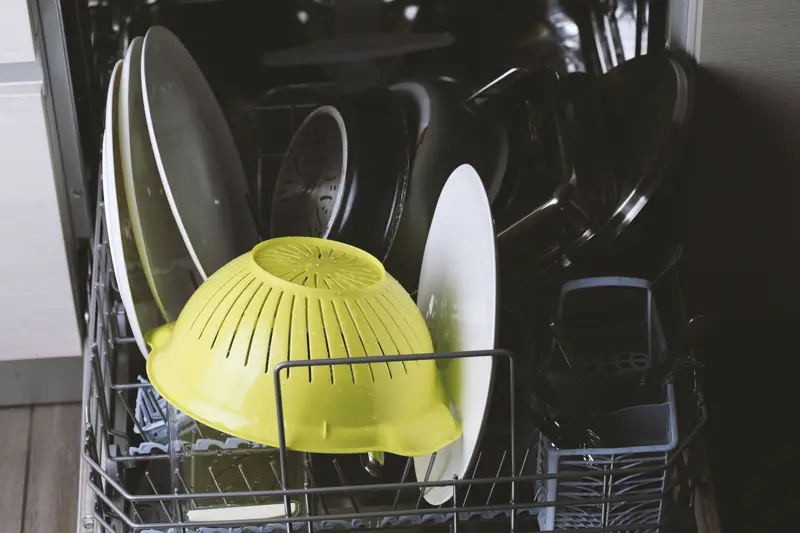
You buy a set of drinking glasses. Six months later they look like someone breathed on them and the fog never went away. So you run them again. Still hazy. You soak one in vinegar, scrub it with a sponge, hold it up to the kitchen window, and it looks exactly the same as it did before. That glass is not dirty. It is damaged, and the most likely cause is the polite little chore you do at the sink every night: rinsing every plate and cup until it is spotless before it goes in the rack. Appliance makers have a blunt word for what happens next. Etching. Maytag’s own guidance tells owners to stop prewashing dishes, and it is not because they want your machine to work harder.
Your Detergent Is Hunting For Food, And You Took It Away
Dishwasher detergent is not soap in the way hand soap is soap. It is built around enzymes that latch onto food and chelating agents that grab minerals. A senior scientist at Procter & Gamble, speaking to home-improvement columnist Tim Carter in 2020, described chelants as “a major part of auto-dishwashing formulations because they form soluble complexes with calcium and other metal ions.” That is great chemistry when there is chili crusted on a bowl. When the load is already clean, the chemistry has nothing to do, so it goes to work on the surface of the glass instead.
The same scientist laid out four ingredients that together make a perfect glass-etching storm: soft water, low soil load, high temperatures, and chelating agents. Three of those are decisions you make. The low soil load is the one you control completely, and most American kitchens get it wrong out of politeness.
Sean Busch, CEO and co-founder of the cleaner company Puracy, put the case for leaving the mess on plainly when he told HuffPost, “When the enzymes are working hard, the rest of the detergent works better.” Scrape off chunks. Knock the rice into the trash. Then stop. No faucet, no sponge, no “quick rinse so it doesn’t get stuck.”
One Drop Of Vinegar Tells You If The Glass Is Already Gone
Cloudy glassware comes from one of two things, and only one of them can be undone. Hard water leaves a chalky mineral film that sits on top of the glass. Etching is erosion, tiny pits and scratches in the surface itself, and no cleaner on earth patches it because there is physically less glass there than there used to be.
The test takes about five seconds. Put a single drop of white vinegar on a cloudy spot and rub it with your finger. If the haze clears, it is mineral buildup and you can fix it. If the spot looks exactly the same, that glass is etched and it is never coming back. A slower version of the same test uses lemon juice on the cloudy area, left to soak five to ten minutes before you rinse and dry it.
Early etching does not always look like fog, either. In its first stages it can show up as a faint iridescence, that oil-slick shimmer you might mistake for a cool light effect. Miele says mineral film shows the same shimmer, which is one more reason to run the vinegar drop before you write a glass off. It can also be splotchy rather than even, which is why people assume the dishwasher just missed a spot.
If It Is Mineral Film, One Empty Cycle Clears The Whole Cabinet
Hand-scrubbing cloudy glasses one at a time defeats the entire point of owning a dishwasher. The faster route is to load every hazy glass onto the top rack of an empty machine, skip the detergent completely, and set a dishwasher-safe bowl or measuring cup filled with 2 cups of plain white vinegar on the bottom rack. Whirlpool, Maytag and KitchenAid all specify the bottom rack and an air-dry or energy-saving dry setting. Vinegar is an acid, so run this when the machine needs a deep clean rather than every week.
The spray knocks the vinegar out of the bowl slowly, so mild acid keeps circulating for the whole cycle instead of dumping all at once. It dissolves the film off the glasses and flushes scale out of the machine at the same time. Citric acid powder does the same job if you keep it around.
Then fill the rinse aid compartment, which a startling number of people have never opened. Rinse aid is not a fragrance or a gimmick. It contains surfactants that break the surface tension of water so it sheets off the glass instead of beading up, and beads are what leave minerals behind when they evaporate during the dry cycle.
Soft Water Is The Part Nobody Warns You About
Here is the backwards bit. Hard water gets blamed for everything, but soft water is the one that etches. A softener strips calcium out of the water, which means the detergent’s mineral-grabbing agents arrive with nothing to grab. Use a standard dose in soft water and the excess goes looking for a target. The glass is the target.
Whirlpool’s guidance is to switch to a detergent with a glass-protecting formula if your water is softened, and the same goes for machines with a built-in softener. HuffPost adds two more levers: cut the amount of soap in half, and choose mild, clear products without dyes or perfumes.
Busch still recommends a softener for homes fighting hard water. “The true way to fix it is to invest in a whole-home water softener, which will extend the life of all of your water appliances and pipes,” he said. Just understand that the day the softener goes in, your detergent habits have to change with it, or you trade spots for permanent haze.
Hotter Water Is Not Cleaner Water
Water that is too cold leaves detergent sitting on your dishes. Water that is too hot speeds up the reaction between detergent and glass, and anything above 140°F accelerates it noticeably. The target range is 120°F to 140°F, and the Energy Department says most households only need a water heater set at 120°F.
You can check it with a kitchen thermometer in about a minute. Run the kitchen faucet hot for 45 seconds first so you are measuring the water that actually reaches the machine, then hold the thermometer under the stream.
Plenty of advice tells you to use the sanitize or high-temp setting for stubborn hard water, and for glassware that is pointed in exactly the wrong direction. The P&G scientist’s advice was the opposite: skip the pots-and-pans and sanitizing cycles, run shorter washes, and use a product containing zinc. Save the heavy settings for the casserole dish.
Half A Tab And The Quick Cycle
Dishwashers run longer than they used to, which Whirlpool puts down to tighter water and energy use: a normal cycle now runs an hour and a half to two hours, heavier settings run past three, and the quick cycle finishes in an hour or less. Detergent cleans the glasses early in that run. The remaining time is just more contact with the surface.
One household with a softener, a habit of aggressive rinsing and years of slowly fogging glasses tried the obvious experiment: cut the detergent tabs in half and switch to the one-hour cycle. The dishes came out just as clean. After about nine months, the blogger reported that the etching seemed to have stopped.
That same household had already ruled out the usual suspects. Buying nicer glasses did not help, and some cheap glasses survived while pricier ones fogged in the same machine. Price is not the variable. What the glass is made of is: lead and barium crystal give up their metal ions to an alkaline wash faster than ordinary soda-lime glass does. Phosphates get blamed constantly in online threads, but American dishwasher detergents went phosphate free in July 2010, so that theory is out of date.
Some Glasses Simply Do Not Belong In There
Katie Sadler, brand manager and kitchen expert for Whirlpool, drew the line clearly when she told HuffPost: “Everyday wine glasses and sturdy drinking glasses can be put in the dishwasher, but delicate glassware, handblown/painted glass, milk glass and crystal should be washed by hand to avoid breakage, yellowing or etching.”
Strongly alkaline detergents add another risk, because the high pH that makes them clean is what hydrolyzes the silica in glass, and high temperatures push that reaction along. Bleach gels get the blame, but it is their alkalinity doing the damage, and most pods and powders now use oxygen bleach rather than chlorine anyway. Letting acidic drinks sit in a glass for days before washing does not help either.
Not every cloudy glass is a chemistry problem, either. Filming can come down to simply using the wrong amount or the wrong type of detergent for your water, and certain glassware just reacts badly with certain water.
Running It Again Is The Worst Thing You Can Do
Etched glass looks dirty, so the instinct is to send it through another wash. That is another full dose of detergent, another hour or two of contact, and more erosion on a surface that is already pitted. The cloudier it gets, the more people wash it, and the cycle feeds itself.
How you load matters too. Glasses packed tight against each other or bulky items blocking the spray arms create dead zones where nothing gets properly rinsed. Your owner’s manual has a loading diagram for the top rack, and it exists for a reason.
Busch also suggests cleaning the filter roughly every dozen loads, which takes under a minute and keeps old particles from being sprayed back onto everything. Maytag suggests running a cleaner tablet monthly to pull mineral buildup off the interior. And check your detergent’s age. Sarah Bowen, an interior designer and co-founder of the U.K. home site Spruce Up, told HuffPost, “Old, powdered detergent can leave hazy marks on your glassware,” and suggested storing fresh powder in a tightly rolled Ziploc bag. Pods cost more per load but remove the temptation to eyeball a scoop.
What I Would Change Tonight
Quit rinsing. Scrape the plate, load it messy, and let the detergent eat what it was designed to eat. Then do the vinegar drop test on your foggiest glass. If the haze wipes away, you have a mineral problem and one vinegar cycle plus a full rinse aid reservoir will handle it.
If the spot stays, that glass is finished, and no vinegar soak, no fancy detergent and no second wash will bring it back. Treat it as tuition. Cut your detergent, shorten the cycle, keep the water inside the 120°F to 140°F band, and the glasses still sitting in the cabinet stand a real chance.

