

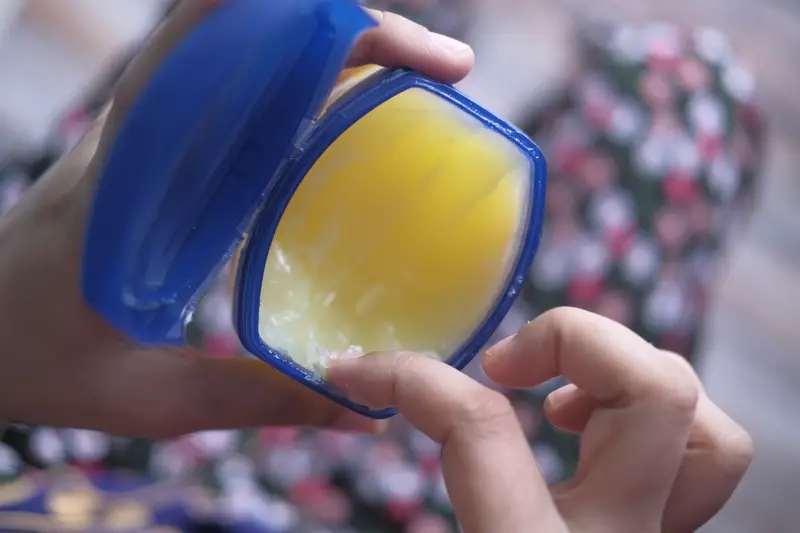
There’s a decent chance you have a tub of Vaseline sitting in a medicine cabinet or junk drawer right now. Maybe you bought it for dry lips five winters ago, used it twice, and forgot about it. That little blue-capped jar has been collecting dust in American homes since the 1870s, and most of us barely scratch the surface of what it can actually do.
Here’s the thing about petroleum jelly — it’s weirdly, almost absurdly versatile. We’re talking about a product that a chemist named Robert Chesebrough literally marketed by burning himself and then slathering it on to prove it worked. That’s the kind of confidence you only get when your product actually does what you say it does. Nearly 150 years later, dermatologists still reach for it before expensive creams. And people who know its full range of tricks use it for stuff that would never occur to most of us.
It Can Keep Your Locks From Freezing Shut
If you live anywhere north of Tennessee, you’ve probably experienced the special frustration of standing outside in January trying to jam your key into a frozen lock. Your fingers are numb, you’re running late, and nothing is working. Here’s a trick that costs about four cents: smear some Vaseline on the lock and the key, insert the key, and work it back and forth a few times. The petroleum jelly coats the internal mechanism and keeps excess moisture from getting in and freezing the tumbler.
Do this before the cold snap hits and you won’t have to stand there with a lighter trying to thaw your front door like some kind of desperate survivalist. It’s one of those solutions that feels too simple to actually work, but it does. The jelly acts as a moisture barrier inside the lock itself. People in Minnesota and Wisconsin have been doing this for ages.
It Makes Your Perfume or Cologne Last Way Longer
This one is for anyone who sprays on their favorite fragrance in the morning and can’t smell it by lunchtime. Perfume evaporates faster on dry skin. That’s just chemistry. If you spread a thin layer of Vaseline on your pulse points — wrists, neck, behind the ears — before you spray, the petroleum jelly gives the fragrance something to cling to. It slows evaporation. Your scent sticks around significantly longer.
Think about that the next time you’re debating whether to buy a $120 bottle of cologne at Macy’s or settle for a $40 one. If the cheaper one lasts all day because of a dab of Vaseline, who cares? You’re getting more mileage out of every spray. This is one of those beauty secrets that makeup artists and fragrance people have known forever, and the rest of us are just catching up.
It’s Better Than Painter’s Tape (Seriously)
Raise your hand if you’ve ever taped off baseboards and window trim before painting a room, only to peel the tape off and find the paint bled underneath anyway. It’s infuriating. Next time, skip the tape entirely. Apply a thin coat of Vaseline to any surface where you don’t want paint to land — window glass, door hinges, doorknobs, floor edges. Paint literally will not stick to petroleum jelly. When you’re done, wipe it off with a wet rag. No scraping, no cursing, no picking dried paint off your hardware with a razor blade.
But here’s where it gets even better: if you’re into that distressed, shabby-chic furniture look (and based on the number of Chalk Paint tutorials on YouTube, a lot of you are), Vaseline can give you that effect on purpose. Brush Vaseline onto a piece of furniture in the pattern you want, paint over the whole thing, and then wipe the jelly areas. The paint won’t adhere there, leaving you with a two-tone, worn-in finish that looks like you found the piece in a French farmhouse instead of at HomeGoods.
It Fixes Scratches on Wood Furniture
Got a coffee table with a scratch from when your kid dragged a toy across it? Or a dining table with that one gouge you’ve been covering with a placemat for two years? Before you buy some $25 wood repair pen from Home Depot, try this: apply a thick coating of petroleum jelly directly onto the scratch. Leave it there for a full 24 hours. Then wipe off the excess with a cloth and buff the area.
The jelly soaks into the scratch and helps the wood fibers swell slightly, which minimizes the appearance of the damage. It also restores some of the sheen that gets lost when wood gets scraped. This won’t fix a deep gouge down to bare wood, but for surface scratches and watermark rings from glasses? It works shockingly well. And it costs you basically nothing if you already have a jar in the house.
It Stops Light Bulbs From Getting Stuck
This is one of those problems you don’t think about until you’re standing on a ladder trying to twist a dead bulb out of a porch light fixture and it won’t budge. The metal threads on the bulb basically fuse to the socket over time through corrosion and heat. The fix is so simple it’s almost annoying: next time you put in a new bulb, apply a thin layer of Vaseline to the threads before screwing it in.
That’s it. The petroleum jelly acts as a barrier between the two metal surfaces, preventing corrosion from bonding them together. When it’s time to swap the bulb out months or years later, it’ll twist right out like it was installed yesterday. This is especially useful for outdoor fixtures, garage lights, and bathroom fixtures where humidity speeds up corrosion. It’s the kind of two-second step that saves you a ten-minute battle later.
It Keeps Your Dog’s Paws From Cracking
If you have a dog, you know what winter sidewalks do to their paw pads. Salt, ice, and cold pavement dry them out and cause painful cracking. There are expensive pet paw balms at PetSmart — some running $15 or more for a tiny tin — but petroleum jelly does the same job. Clean your dog’s paws with a cloth after a walk, dry them off, and rub on some Vaseline. It forms a protective barrier that locks moisture in and keeps irritants out.
The best time to apply it is right after a walk or when your dog is lying down and relaxed, so they’re less likely to immediately lick it all off. It’s not toxic if they do lick some, but you want it on there long enough to actually do its job. A lot of dog owners swear by this, and once you see cracked paw pads heal up, you’ll wonder why you ever paid premium prices for something marketed with a cute paw print on the label.
It Keeps Ants Out of Your Dog’s Food Bowl
Speaking of dogs — if you’ve ever left a bowl of kibble out and come back to find a highway of ants marching to and from it, this one’s for you. Spread a ring of Vaseline around the outside bottom edge of the bowl, or around the area where the bowl sits on the floor. Ants are land-based crawlers, and they physically cannot cross a barrier of petroleum jelly. Their legs get stuck. They turn around. Problem solved without poison, sprays, or those weird ant motels.
This works on windowsills too, or anywhere ants are marching into your house in a single-file invasion. You can also coat the base of a hummingbird feeder pole if ants keep climbing up to steal the sugar water. It’s pest control for about three cents’ worth of product, and it doesn’t involve anything you’d worry about your pets or kids touching.
The funny thing about Vaseline is that it’s been around since before the light bulb was a common household object, and it’s still solving problems nobody expected it to solve. Robert Chesebrough was so convinced of his product that he reportedly ate a spoonful of it every day — which, to be clear, doctors do not recommend. But his faith wasn’t misplaced. That same jar that heals your dry lips in February can protect your furniture, save your frozen lock, stretch your cologne, and keep ants away from your dog’s dinner. For a product that costs about $4 at Walmart, that’s a pretty impressive résumé.

