

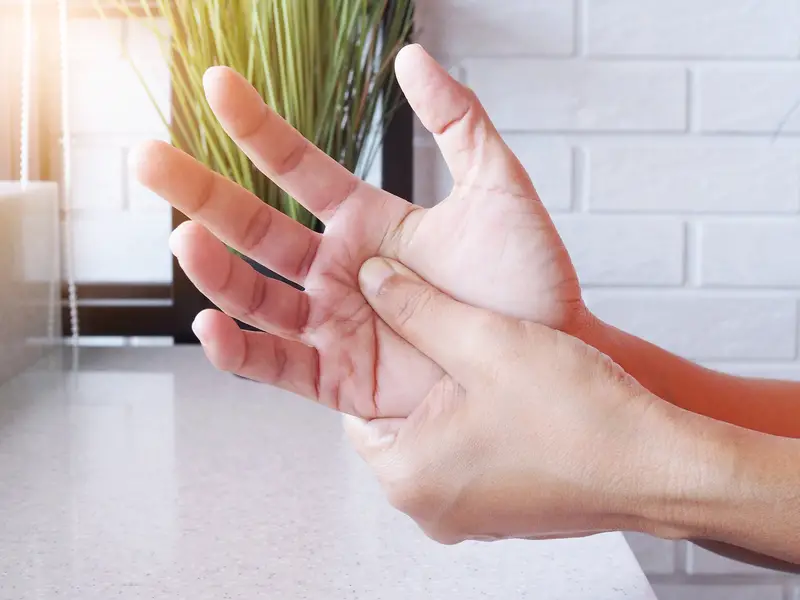
About one in three adults wakes up at least once a week with numb, tingling hands. One in three. That means if you, your partner, and your best friend all sleep in beds tonight, statistically one of you is going to get jolted awake by that weird pins-and-needles sensation. Most people shake it off—literally—and go back to sleep. But that little wake-up call from your nervous system might be saying something you really don’t want to ignore.
It’s not just because you slept on your arm weird
Okay, sometimes it is because you slept on your arm weird. That’s fair. When you compress a nerve or cut off blood flow by lying on your hand for too long, the nerve temporarily stops sending signals. You wake up, your hand feels like a dead fish, you flap it around for thirty seconds, and everything’s fine. This is the scenario most of us have experienced and the one we use to dismiss the whole thing.
But here’s the thing: if it’s happening regularly—like multiple times a week—the cause probably isn’t just a bad sleeping position. Repeated numbness in your hands while sleeping is called nocturnal paresthesias, and it can point to a range of conditions from carpal tunnel syndrome to nerve damage to vitamin deficiencies. Your body doesn’t usually repeat warning signals for no reason. So when it does, the smart move is to start paying attention rather than just rolling over.
Your sleeping position matters more than you’d think
We all have our preferred sleep positions, and most of us never think twice about them. But certain positions are practically designed to compress nerves. Sleeping with your wrists curled inward, your hands tucked under your face, or your head resting on your forearm—all of these can pinch nerves or reduce blood flow enough to cause numbness. Stomach sleeping is especially associated with nerve compression, which makes sense when you think about how much weight your torso puts on your arms in that position.
Side sleeping gets mixed reviews from experts, but some say it’s the least likely to cause hand numbness—as long as you keep your wrists straight. The fetal position, though? That’s a different story. Dr. Joseph Schreiber, a fellowship-trained hand and wrist specialist, points out that we tend to sleep with both our wrists and elbows bent in that curled-up position. Flexing those joints for hours narrows the tunnels that nerves pass through. It’s basically giving your nerves a long, slow squeeze all night. Not great.
Carpal tunnel isn’t just a desk job thing
Most people hear “carpal tunnel syndrome” and immediately picture someone hunched over a keyboard. And sure, repetitive wrist motions from typing can contribute. But carpal tunnel can also develop from assembly line work, knitting, playing golf, or really any activity that involves the same hand and wrist movements over and over. What happens is the tendons in your wrist become inflamed and squeeze the median nerve as it passes through the carpal tunnel—a narrow passageway in your wrist. The result? Numbness, tingling, and pain in your thumb, index finger, and middle finger.
And here’s what a lot of people don’t realize: carpal tunnel symptoms are often worse at night. During the day, you’re moving your hands around, keeping blood flowing, adjusting your wrist position constantly. At night, you curl up, your wrist bends, and the nerve gets compressed for hours without relief. People with carpal tunnel frequently report that shaking their hands provides temporary relief—which, honestly, is kind of a grim nightly ritual. If you’re doing the shake-and-go-back-to-sleep routine multiple nights a week, that’s a pretty strong signal something is going on beyond just sleeping funny.
There’s another nerve problem and it’s in your elbow
Carpal tunnel gets all the attention, but there’s a lesser-known cousin called cubital tunnel syndrome. This one involves the ulnar nerve—the same nerve responsible for that electric jolt you feel when you hit your funny bone. When you sleep with your elbows bent (which, again, most of us do), the ulnar nerve gets pinched along the inside of the elbow. The telltale sign is numbness or tingling in your ring and pinky fingers specifically, rather than the thumb side of your hand.
Dr. Schreiber offers a surprisingly low-tech fix: wrap a towel around your elbow before bed and hold it in place with tape or an Ace bandage. It sounds almost too simple, but it keeps the elbow from bending too far during sleep, which gives the nerve room to breathe. His reasoning is practical—if you can stop irritating the nerve for the six to eight hours you’re asleep, it tends to bother you a lot less during the day. A wrist splint worn at night does the same thing for carpal tunnel by keeping the wrist in a neutral position.
Sometimes the problem starts in your neck
This one throws people off. You’d think hand numbness would always originate in the hand or wrist, right? Not necessarily. A pinched nerve in your cervical spine—the neck region—can send pain, tingling, or numbness radiating all the way down your arm and into your fingers. This is called cervical radiculopathy, and it can be caused by a herniated disc, arthritis, or something called cervical spondylosis, which is basically age-related wear and tear on the spinal discs in your neck.
Thoracic outlet syndrome is another one that sneaks up on people. It happens when nerves or blood vessels get compressed in the narrow space between your collarbone and first rib. The symptoms can mimic carpal tunnel or cubital tunnel, which makes it tricky to diagnose without a proper exam. If you’ve been treating what you thought was a wrist problem and nothing’s improving, it might be time to look higher up the chain.
Your vitamin levels might be part of the equation
Vitamin B12 is essential for healthy nerve function. When your levels drop too low, the nerves themselves can become damaged, leading to numbness or tingling in your hands and feet. The tricky part is that B12 deficiency tends to develop gradually—so gradually you might not notice the symptoms creeping in until they’re disrupting your sleep. During the night, when you’re not moving around and circulation slows, those sensory disturbances become a lot more obvious.
Certain groups are more at risk. Older adults, people with gastrointestinal conditions that affect nutrient absorption, and anyone on a strict vegan diet (since B12 comes primarily from animal products) should be particularly aware. The good news is that a simple blood test can check your levels, and supplementation can help restore them over time. It won’t fix things overnight, but if B12 is the culprit, it’s one of the more straightforward problems to address. Other conditions like diabetes, thyroid disorders, and autoimmune diseases can also damage peripheral nerves and cause similar symptoms, which is why seeing a doctor matters when numbness becomes a pattern.
Alcohol does more nerve damage than most people realize
This doesn’t come up in casual conversation much, but alcohol use disorder is a recognized cause of peripheral neuropathy—the broad term for nerve damage in the hands and extremities. Chronic heavy drinking can directly damage peripheral nerves and also contribute to nutritional deficiencies (including B12 and other B vitamins) that compound the problem. So if you’re waking up with numb hands and you also drink regularly, the two might be connected in ways that go beyond just passing out in an awkward position.
Exposure to certain toxins and medications can also cause peripheral neuropathy, as can infections. The nervous system is surprisingly fragile in some ways. It doesn’t take a catastrophic event to cause damage—sometimes it’s a slow accumulation of small insults over months or years. The numbness that wakes you at 3 AM could be the first noticeable symptom of something that’s been building for a while.
Surgery actually works really well for this
Nobody wants to hear the word “surgery,” but when conservative treatments fail, carpal tunnel release surgery has an impressive track record. A study published in the Journal of Hand Surgery looked at 398 people with carpal tunnel syndrome and measured their sleep quality before and after surgery. The results were kind of remarkable. Patients reported less difficulty falling asleep, fewer problems waking up early, better daily functioning, improved concentration and memory, and—this is the part that gets me—significant improvements in all seven sleep quality measures as soon as two weeks after surgery. Two weeks.
Non-surgical options should obviously come first. Wrist splints, anti-inflammatory medications, postural changes, and nerve gliding exercises can all make a real difference for many people. But if you’ve tried those things and you’re still getting woken up by burning, tingling hands, surgical release of the compressed nerve is a well-established procedure with strong outcomes. As Dr. Schreiber puts it, the surgery can quickly decrease symptoms and might make you feel much more rested overall. The sleep improvement alone can be life-changing for people who’ve been dealing with this for months or years.
When should you actually worry about it
Waking up with a numb hand once in a while after sleeping in a pretzel shape? Probably nothing to lose sleep over. Irony intended. But there are clear signals that it’s time to see a doctor. If the numbness happens frequently, if it persists even after you’re up and moving, if it wakes you from sleep regularly, or if you’re dropping things more than usual—those are all red flags. Numbness or tingling that spreads, gets progressively worse, or affects only one side of the body deserves prompt medical attention, since in rare cases it can indicate something more serious like stroke, multiple sclerosis, or Raynaud’s disease.
A hand specialist or neurologist can run tests to figure out exactly which nerve is involved and what’s causing the compression or damage. Early treatment almost always leads to better outcomes. The longer a nerve stays compressed, the harder it can be to fully recover function. So while the occasional dead-hand wake-up is just an annoying quirk of being human, a pattern of nighttime numbness is your body asking for help—and the sooner you listen, the easier the fix tends to be.
Tonight, before bed, take thirty seconds to check your sleeping setup: keep your wrists straight, don’t tuck your hands under your head, and consider a cheap wrist splint from the pharmacy if this has been an ongoing thing—it’s one of the simplest changes that can make the biggest difference.

