

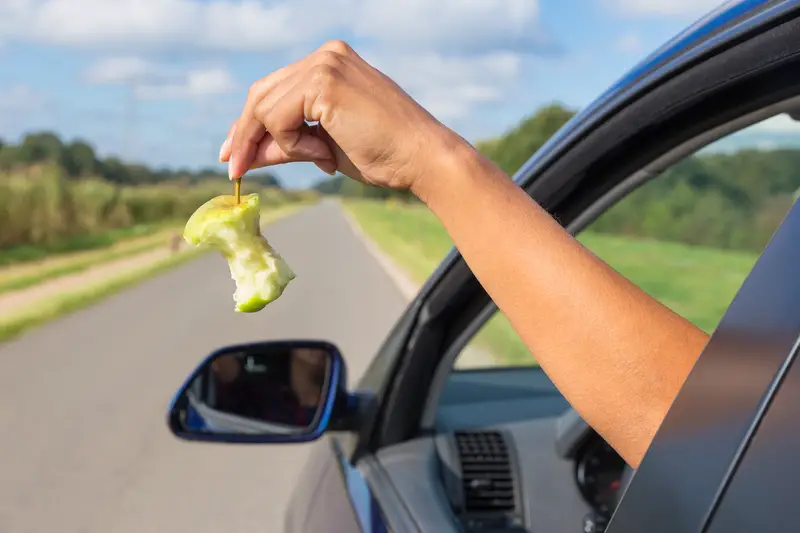
You finish an apple while driving down a scenic road, and without thinking twice, you toss the core out the window. It’s natural and biodegradable, right? What harm could it possibly do? Turns out, that innocent apple core creates more problems than you’d ever imagine. From attracting animals to dangerous areas to disrupting entire ecosystems, that seemingly harmless toss has consequences that last far longer than the few seconds it takes to do it. Most people have no idea that something as simple as fruit waste can cause such serious issues for wildlife and the environment around us.
Your apple core won’t break down anytime soon
When you toss that apple core onto the roadside or hiking trail, you probably assume it’ll disappear within a few days. After all, it’s just fruit, and fruit rots quickly in your kitchen trash, right? The reality is completely different. An apple core can sit on the ground for one to two months or even longer before fully breaking down. That’s because proper decomposition needs specific conditions that roadsides and trails simply don’t provide. Your core needs moisture, warmth, oxygen, and beneficial bacteria to decompose efficiently.
The side of the road doesn’t offer any of these things consistently. Instead, your apple core sits there getting dried out by the sun, covered in dust from passing cars, and exposed to pollutants from traffic. The soil along highways is often too dry or has the wrong pH balance for the natural breakdown process to work properly. What you thought would vanish in a few days becomes an eyesore that sticks around for weeks or months. During all that time, it’s creating problems you never intended when you casually flicked it out your car window.
Animals get hit by cars while eating your trash
That apple core you tossed becomes a meal ticket for wild animals, but not in a good way. When animals find food along roadsides, they start associating these dangerous areas with easy meals. A squirrel discovers your apple core and returns to that spot day after day, hoping to find more free food. An opossum wanders out at night to nibble on fruit scraps left by drivers. These animals have no understanding that they’re putting themselves directly in harm’s way by lingering near busy roads where cars whiz past at high speeds.
The Wildlife Center of Virginia admits hundreds of patients every year that were struck by vehicles while searching for food along roadsides. Picture a hawk perched in a tree, watching a squirrel munching on an apple core in the left lane. The hawk swoops down to grab the squirrel and gets hit by an oncoming car. The driver never even sees it coming. Small rodents attracted to roadside food also draw owls and other birds of prey to these areas, and vehicle collisions are among the top five causes of bird deaths in the United States.
Wild animals can’t digest your snacks properly
Just because something is edible for humans doesn’t mean it works for wild animals. Apples aren’t part of most wild animals’ natural diets, which means their digestive systems aren’t built to handle them. When a wild animal eats an apple core, it’s consuming tough fibers and seeds that can be difficult or impossible for them to digest properly. This can lead to stomach problems, intestinal blockages, or other health issues that leave the animal weakened and vulnerable.
The seeds inside apple cores pose additional risks. Some animals might struggle to break down these seeds, leading to choking hazards or digestive complications. Even if an animal manages to eat the core without immediate problems, the food isn’t providing the nutrition their bodies actually need. They’re filling up on food that doesn’t support their health, which can leave them malnourished over time. Wild animals evolved to eat specific foods found in their natural habitat, and your grocery store apple isn’t part of that equation.
Fed animals become aggressive and dangerous
There’s a saying among wildlife experts: “A fed bear is a dead bear.” When wild animals start thinking of humans as a food source, their behavior changes in dangerous ways. Animals that find food scraps near people lose their natural wariness and begin approaching humans more boldly. They might wander into campgrounds, parking lots, or picnic areas expecting to find easy meals. This isn’t cute or helpful—it’s actually a death sentence for many of these animals.
Once animals become habituated to human food, they often turn aggressive when searching for their next meal. A bear that’s learned to associate people with food might approach campers or break into cars looking for snacks. When this happens, park rangers have no choice but to put the animal down for public safety. What started as someone tossing an innocent apple core ends with a wild animal being killed because it learned the wrong lesson. Small actions really do have big consequences when it comes to wildlife behavior and safety.
Apple seeds sprout where they don’t belong
Your apple probably came from a grocery store, which means it’s almost certainly not native to wherever you’re tossing the core. When those apple seeds end up on the ground, there’s a real chance they’ll sprout and start growing. This might not sound like a problem until you consider what happens when non-native plants take root in delicate ecosystems. These foreign plants can crowd out native species that local wildlife depends on for food and shelter.
Native plants evolved alongside the animals and insects in their environment, creating a balanced ecosystem where everything works together. When non-native species move in, they disrupt this balance. An apple tree growing in the wrong place might use up water and nutrients that native plants need. It might not provide the right kind of food for local insects and birds. Over time, these invasive plants can completely change the landscape, pushing out the native species that belonged there first and creating problems that last for generations.
Nobody wants to see rotting fruit on trails
You head out for a peaceful hike in nature, hoping to enjoy beautiful scenery and fresh air. Instead, you find browning banana peels scattered along the trail, moldy orange rinds piled by the trailhead, and apple cores decomposing in the bushes. Even though these items are technically biodegradable, they’re still litter while they’re sitting there for weeks or months. They create an eyesore that ruins the outdoor experience for everyone who comes after you.
Seeing rotting fruit litter sends the wrong message to other visitors too. When people see trash on the ground, even if it’s “natural” trash, they’re more likely to litter themselves. It creates a broken windows effect where one person’s apple core leads to another person’s candy wrapper, which leads to someone else’s plastic bottle. Before long, that pristine trail or scenic overlook becomes a dumping ground. Everyone loses the chance to enjoy nature the way it’s supposed to be experienced.
Roads become more dangerous for everyone
When animals congregate along roadsides looking for food scraps, they don’t just put themselves at risk—they endanger human drivers too. Imagine you’re driving down a winding mountain road at dusk when a deer suddenly jumps out in front of your car, drawn to the roadside by food waste someone tossed earlier. You slam on your brakes and swerve to avoid hitting it, but now you’re headed toward oncoming traffic or off the side of the road.
These split-second situations happen all the time on roads where animals have learned to search for food waste tossed by drivers. Collisions with wildlife cause thousands of accidents every year, resulting in injuries, deaths, and millions of dollars in vehicle damage. Some of these accidents could be prevented if animals weren’t drawn to roadsides in the first place. When you keep your food waste in your car until you reach a proper trash can, you’re protecting both the animals and your fellow drivers from potentially deadly encounters.
Trails and parks aren’t compost bins
Many people assume that tossing organic waste into nature is basically the same as composting, but that couldn’t be further from the truth. Real composting happens in controlled conditions where the right mix of materials, moisture, temperature, and microorganisms work together to break down waste efficiently. Your backyard compost bin or a municipal composting facility creates the perfect environment for decomposition. A hiking trail or roadside doesn’t come anywhere close to providing these conditions.
The microbes needed for proper decomposition might not even be present in the soil where you toss your apple core. The moisture levels are probably wrong. The temperature fluctuates too much. Without these controlled conditions, your food waste just sits there, slowly rotting in a way that creates all the problems we’ve discussed. If you want to compost your apple cores, take them home and put them in an actual compost bin where they can break down properly without harming wildlife or ecosystems.
The simple solution costs you nothing
Preventing all these problems is incredibly easy and requires zero effort beyond what you’re already doing. Instead of tossing that apple core out the window, just keep it in your car until you get home or reach a trash can. Bring a small bag or container specifically for food waste when you go hiking or on road trips. Toss your cores, peels, and other scraps in there, then dispose of them properly when you’re done with your outdoor activities.
This simple habit protects wildlife, keeps trails and roadsides clean, prevents accidents, and maintains the natural balance of ecosystems. You don’t need special equipment or training—just the willingness to hold onto your trash for a little while longer. The next time you finish an apple while enjoying the outdoors, remember that keeping that core with you is the right choice. It might seem like a small thing, but when everyone makes this choice, it adds up to a huge difference for the animals and wild places we all want to protect and enjoy.
That apple core might be biodegradable, but it’s definitely not harmless when you toss it out your car window or leave it on a hiking trail. From attracting animals to dangerous roadsides to disrupting local ecosystems with invasive seeds, the problems it creates last far longer than you’d expect. The good news is that solving this problem requires almost no effort on your part—just pack out what you pack in, and dispose of your food waste properly when you get home. Wildlife, fellow outdoor enthusiasts, and future generations will all benefit from this one simple change to your habits.

