

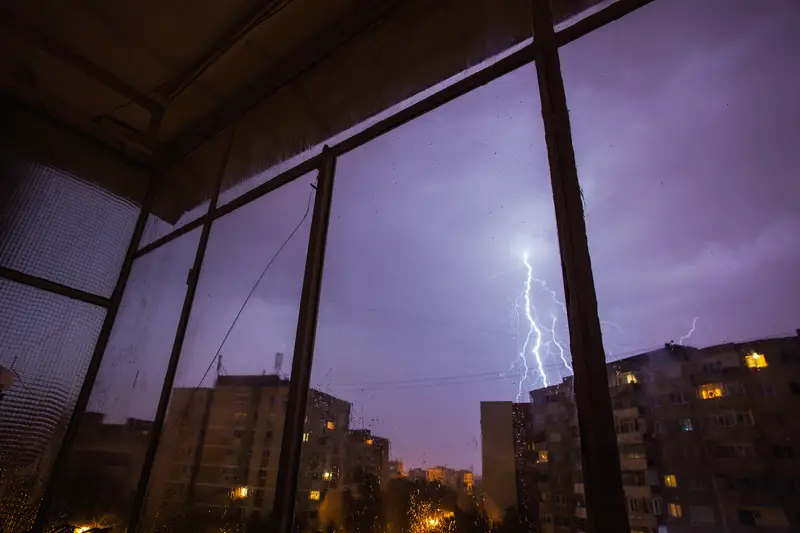
About 40 million lightning strikes hit the ground across America every year. While your odds of getting struck are less than one in a million, here’s something that might shock you: one-third of all lightning injuries happen indoors. That’s right, being inside your house doesn’t make you completely safe from a storm raging outside. And one of the riskiest things you can do during a thunderstorm? Hopping in the shower. Your bathroom might seem like a safe place, but when lightning strikes, water and pipes can turn it into a danger zone.
Lightning can travel through your plumbing system
When lightning strikes your house, it doesn’t just disappear. It follows the path of least resistance, which often means traveling through your home’s plumbing and electrical systems. This happens because lightning is searching for a way to reach the ground. Your pipes, whether they’re metal or even plastic, can become a highway for electrical current because water conducts electricity extremely well. The lightning doesn’t need a direct path through metal pipes alone to reach you.
Once that electrical current is coursing through your pipes, it’s looking for an exit point. If you’re standing in the shower, you become that exit point. The current can jump from the showerhead or faucet directly to your body. Even if your home has modern plastic PVC pipes, you’re still at risk because the water flowing through them is a good conductor of electricity. The combination of water and your wet body creates an ideal pathway for lightning to strike you indoors.
The electrical current spreads throughout your entire house
Your house has an interconnected network of pipes and wires running through walls, floors, and ceilings. When lightning hits, it doesn’t just stay in one spot. The electrical charge spreads out through all these systems simultaneously. This means that touching any faucet, using any sink, or standing in any shower puts you at risk during a storm. Your dishwasher, washing machine, and even your toilet can become conducting points for lightning.
The good news is that lightning strikes inside a home are typically less severe than getting struck outdoors. This happens because the electricity has to travel farther inside your house and has more opportunities to divide and spread out in different directions. However, less severe doesn’t mean safe. Conduction strikes in homes still cause serious injuries every year. Any contact with water or plumbing during a storm creates an unnecessary risk that’s easily avoided by just waiting it out.
Washing dishes or your hands is just as dangerous
It’s not just showers and baths that put you at risk. Any activity that involves running water can be dangerous during a thunderstorm. Washing dishes at the kitchen sink, rinsing vegetables, or even washing your hands connects you to the plumbing system. The moment you turn on a faucet and put your hands under the water, you’re creating a potential pathway for electrical current to reach your body if lightning strikes.
Many people don’t realize that even brief contact with water can be hazardous. You might think that quickly washing your hands is no big deal, but lightning strikes in milliseconds. If a strike happens while your hands are under running water or touching a wet faucet, the timing won’t matter. The current can easily travel through the water and into your body before you even have time to react. Those dirty dishes can absolutely wait until the storm passes.
The danger window extends beyond the visible storm
Just because the rain has slowed down or you don’t see lightning doesn’t mean the danger has passed. The most dangerous times for lightning strikes are actually immediately before and immediately after the main part of the storm. Lightning can strike from a thundercloud that’s up to 10 miles away. If you can hear thunder, even if it sounds distant, you’re still within striking distance of lightning.
The safe rule is to wait at least 30 minutes after hearing the last rumble of thunder before you shower. This gives the storm enough time to move completely out of range. Many people make the mistake of jumping in the shower as soon as the heavy rain stops, not realizing that lightning strikes can extend far beyond where the rain is falling. That half-hour waiting period might seem excessive, but it’s based on how far lightning can reach from a storm system.
Lightning heats air to temperatures hotter than the sun
Lightning isn’t just an electrical shock. It heats the air around it to more than 50,000 degrees Fahrenheit, which is five times hotter than the surface of the sun. When this superheated bolt of energy strikes, it can cause different types of injuries beyond just electrical burns. If you’re wet when lightning strikes, the moisture on your skin can actually vaporize into steam instantly, causing severe steam burns on top of electrical injuries.
The extreme heat happens so fast that it can blow off clothes and shoes from people who get struck. In a shower, where you’re surrounded by water and enclosed in a small space, the effects could be even worse. The water droplets in the air and on your body provide multiple points of contact for the electrical current. The combination of extreme heat and electrical current makes a lightning strike while showering particularly dangerous compared to other indoor activities.
Apartment buildings don’t guarantee safety from lightning
Living in an apartment complex or high-rise building might make you feel safer, but you’re not immune to lightning danger. While commercial buildings often have lightning rods and other protective systems, lightning that strikes these buildings still needs to find its way to the ground. That electrical current travels through the building’s plumbing and electrical systems just like it would in a house.
The main difference in larger buildings is that there are more pathways for the electricity to spread out through, which reduces the risk to any individual person. However, reduced risk doesn’t mean no risk. If you’re showering when lightning strikes your building, and the current happens to travel through the pipes connected to your shower, you’re still in danger. The same rules apply whether you live in a single-family home or on the 20th floor of an apartment tower. There’s less risk in a big building, but that doesn’t mean there’s zero risk.
The injuries from lightning strikes can change your life
Getting struck by lightning can cause immediate life-threatening problems. The electrical current can stop your heart or make you unable to breathe. But even if you survive the initial strike, the long-term effects can be devastating. Lightning strike survivors often deal with nerve damage that leads to seizures, memory problems, sleep issues, and personality changes. Some people develop chronic pain from nerve damage that feels like constant pins and needles in their hands and feet.
Lightning particularly damages your eyes and ears because the electrical current takes the path of least resistance through your body. It’s easier for electricity to travel through the openings in your face than through thick bone like your skull. This means lightning strike victims commonly suffer vision loss, cataracts, retinal detachments, and internal eye bleeding. Hearing loss and ruptured eardrums are also common. About 90 percent of lightning strike victims survive, but many face lifelong debilitation from their injuries. Is a shower really worth that risk?
Other electrical devices pose similar indoor risks
While we’re talking about shower safety, it’s worth knowing that other activities are also dangerous during thunderstorms. Using a landline phone that’s plugged into the wall can conduct electricity if lightning strikes your phone line. Working on a desktop computer that’s plugged in, using wired headphones, or touching anything connected directly to an electrical outlet creates a potential path for lightning to reach you.
The safest approach during a thunderstorm is to stay away from both plumbing and electrical systems. Use your phone only if it’s a cordless or cell phone. Avoid doing laundry, since washing machines connect to both water and electricity. Don’t lie down on the floor or lean against walls where pipes and wires might be running. Standing in the middle of a room away from windows and electrical systems is your best bet. Read a book, watch battery-powered entertainment, or just wait it out.
What to do if someone gets struck by lightning
If someone near you gets struck by lightning, the first priority is getting to safety yourself. Lightning can definitely strike the same place twice, despite what the old saying claims. Once you’re safe, call 911 immediately. The victim is safe to touch because they don’t carry an electrical charge. Many lightning strike victims stop breathing or their heart stops beating because the electrical current disrupts the body’s natural electrical signals.
If you know CPR, start chest compressions and rescue breathing right away while waiting for emergency services. Using an AED or defibrillator can also save lives if one is available. The sooner you can get their heart beating and lungs working again, the better their chances of survival and recovery. Most fatalities from lightning happen because the strike knocks out the body’s ability to breathe or maintain a heartbeat. Quick action with CPR can save someone’s life while those critical systems restart. Every second counts when someone has been struck.
The bottom line is simple: your shower can wait. With 40 million lightning strikes happening across the country every year, thunderstorms are common enough that most of us will face this situation regularly. Waiting 30 minutes after the last thunder might be inconvenient, but it’s a small price to pay for safety. Remember that indoor lightning injuries are real and can cause permanent damage. Next time you hear thunder rumbling and think about jumping in the shower, give it some time. Those extra minutes of patience could literally save your life.

