

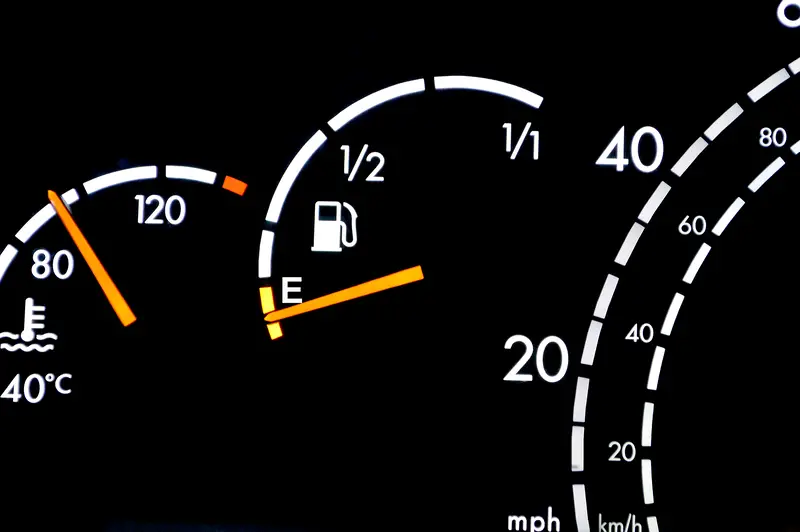
That little orange light on your dashboard isn’t just a gentle reminder to fuel up soon. When it flickers on, your car is basically screaming that something bad might happen if you keep pushing your luck. Most people think running low on gas just means you might get stuck somewhere awkward, but the real damage happens under the hood where you can’t see it. Your fuel system wasn’t designed to operate on fumes, and every time you ignore that warning light, you’re setting yourself up for repairs that cost way more than a tank of gas ever would.
Your fuel pump needs gas to stay cool
Your fuel pump sits inside your gas tank, completely submerged in gasoline when everything’s working right. This isn’t just about having enough fuel to reach the engine. The gasoline actually cools down the pump while it’s working, kind of like how a computer needs a cooling fan to prevent overheating. When you drive around with barely any gas in the tank, the pump starts drawing air instead of liquid fuel, and that’s when things go wrong. Without enough gasoline flowing through it, the pump can’t regulate its temperature properly and starts getting hotter than it should.
The problem gets worse when you’re actually driving rather than sitting still. When your car is parked and idling, the fuel sits level in the tank, so the pump only draws air briefly before the engine shuts off from lack of fuel. But when you’re moving, the gas sloshes around like water in a bucket, which means the pump keeps grabbing air pockets repeatedly. This constant cycle of insufficient fuel flow leads to overheating, and an overheated fuel pump wears out much faster than it should. According to experts, keeping at least a quarter tank prevents this issue entirely, since the pump stays submerged no matter how much the fuel moves around.
Sediment gets stirred up from the tank bottom
Every gas tank accumulates junk over time, even if you only fill up at the cleanest stations. Rust flakes from metal tank walls, tiny dirt particles that sneak in during refueling, and separated fuel additives all sink to the bottom and pile up there. When your tank has plenty of gas, the fuel pump draws from the middle section, leaving all that settled gunk undisturbed at the bottom where it belongs. Your fuel filter handles the normal amount of clean gasoline without any problems, catching the occasional stray particle that floats through.
Running your tank nearly empty forces the pump to suck fuel from the very bottom where all those sediments have been collecting for months or years. This contaminated mixture gets pulled directly into your fuel filter, overwhelming its ability to screen out debris. The filter becomes clogged much faster than normal, restricting gasoline flow to your engine. A blocked filter causes rough idling, weak acceleration, and sometimes complete stalling. In really bad cases, the dirty fuel bypasses the compromised filter entirely and heads straight for your engine, where it can damage fuel injectors and other expensive components that weren’t meant to handle contaminated gasoline.
Engine misfires happen when fuel runs too low
Your engine needs a steady, reliable stream of gasoline mixed with air to run smoothly. When the fuel supply becomes inconsistent because your tank is nearly empty, the cylinders don’t get the right amount of fuel at the right time. This causes misfires, which you might notice as sputtering, hesitation, or a rough feeling when you press the gas pedal. The engine basically stumbles instead of running smoothly, and this puts unnecessary stress on multiple components that have to work harder to compensate for the uneven fuel delivery.
The real danger comes when you’re driving fast or pushing the engine hard. Your car’s computer tries to protect the engine by requesting a richer fuel mixture when you’re accelerating or maintaining high speeds. If the fuel pump can’t deliver enough gasoline to meet this demand, you get something called engine knock. That’s the same problem you’d hear if you put regular gas in a car designed for premium fuel. Engine knock sounds like a rattling or pinging noise, and it indicates that fuel is igniting at the wrong time in the combustion cycle. Over time, this irregular combustion damages pistons, cylinder walls, and valves, leading to repairs that cost thousands of dollars.
Your catalytic converter faces potential damage
The catalytic converter sits in your exhaust system and breaks down harmful chemicals before they leave your tailpipe. It uses precious metals like platinum, rhodium, and palladium to trigger chemical reactions that convert nasty exhaust gases into less harmful emissions like carbon dioxide and water vapor. These reactive materials work great with exhaust gases, but they weren’t designed to come into direct contact with pure, unburned gasoline. Under normal circumstances, fuel burns completely in the engine before the exhaust reaches the catalytic converter.
When your engine misfires because of low fuel, unburned gasoline can slip past the cylinders and make its way into the exhaust system. This raw fuel then reaches the catalytic converter where it ignites, causing the converter to overheat significantly. The good news is that if you’re running on empty, you don’t have much fuel to send through in the first place, so the risk stays somewhat minimal. Still, repeated exposure to this kind of stress shortens the life of your catalytic converter, and replacing one costs anywhere from a thousand to three thousand dollars depending on your vehicle. That’s a steep price for the convenience of squeezing out every last mile from your tank.
Replacement costs add up faster than gas
A fuel pump replacement typically runs between four hundred and eight hundred dollars for the part alone, and that doesn’t include labor costs. Mechanics charge another two hundred to four hundred dollars to actually install the new pump, since they usually have to drop the entire fuel tank to access it. That’s a lot of money to spend on something that might have lasted another hundred thousand miles if you’d just kept your tank reasonably full. The fuel filter costs less to replace, but it’s still an unnecessary expense when you could avoid the problem entirely by fueling up before the warning light appears.
Other repairs pile on when contaminated fuel reaches your engine. Damaged fuel injectors cost three hundred to eight hundred dollars each to replace, and most cars have four to eight of them. If your catalytic converter fails from overheating, you’re looking at that thousand to three thousand dollar replacement bill. Add in potential damage to oxygen sensors, spark plugs, and other engine components, and the total repair costs can easily exceed five thousand dollars. Compare that to spending forty or fifty bucks to fill up when your tank hits the quarter mark, and the math becomes pretty obvious.
Getting stranded creates safety risks and expenses
Running out of gas on the highway during rush hour puts you in immediate danger from other vehicles that might not see you in time. Breaking down on a dark country road at night leaves you vulnerable, especially if your phone has no signal to call for help. Even getting stuck in what seems like a safe area during the daytime still means you’re sitting there waiting for assistance while your schedule falls apart. Weather makes everything worse too, whether you’re dealing with summer heat that turns your car into an oven or winter cold that could lead to hypothermia if you’re stuck for hours.
The financial hit starts with towing charges. Standard towing companies charge seventy five to one hundred fifty dollars for basic service, plus extra fees for mileage, nighttime calls, or difficult locations like busy highways. Many roadside assistance plans don’t cover fuel delivery, which means you pay for both the tow and a separate service to bring you gas. Some areas charge even more if you need a tow from a restricted zone like a bridge or tunnel. All of this hassle and expense comes from pushing your fuel gauge into the red zone when you could have stopped at any gas station along the way.
The fuel light means you’re at reserve levels
When that warning light comes on, your fuel tank has dropped to somewhere between ten and fifteen percent of its total capacity. This reserve fuel exists to give you enough warning to reach a gas station, not as extra driving range for you to use up whenever convenient. Some people treat it like a challenge, trying to calculate exactly how many miles they can squeeze out before they absolutely must refuel. They do the math based on their average fuel economy and remaining gallons, figuring they’ve got another fifty or sixty miles to play with.
This kind of calculation ignores all the mechanical problems that start happening once you hit reserve levels. Your fuel economy estimate assumes normal driving conditions, but it doesn’t account for unexpected detours, traffic jams, or that gas station that’s supposedly two miles ahead but turns out to be closed for renovation. The reserve fuel exists as a safety buffer, not as regular usable range. Once the light appears, you should be actively looking for the nearest station instead of convincing yourself you can make it to a cheaper one ten miles down the road. The few dollars you might save on gas prices don’t justify the risk of mechanical damage or getting stranded.
Consistent low fuel creates long term problems
Running your tank low once because you miscalculated probably won’t destroy your car. The real damage accumulates when you make it a habit, constantly waiting until the warning light appears before you bother to refuel. Each time you drive around on fumes, you’re exposing your fuel pump to inadequate cooling, stirring up more sediment, and risking engine misfires. These effects compound over months and years, slowly wearing down components that should last the lifetime of your vehicle under normal conditions.
Your fuel pump might be rated for a hundred thousand miles or more, but operating in low fuel conditions can cut that lifespan in half. The fuel filter clogs faster and needs replacement more often. Your engine experiences more wear from inconsistent fuel delivery and occasional knocking. All of these small problems add up to decreased reliability and higher maintenance costs over the years you own the car. Breaking the habit of running on empty protects your investment and keeps your car running smoothly for much longer than it would otherwise.
Quarter tank should be your minimum threshold
Experts recommend refueling once your gauge reaches the quarter tank mark rather than waiting for the warning light. This practice ensures your fuel pump stays completely submerged in gasoline at all times, providing proper cooling and lubrication regardless of how the fuel sloshes around during driving. It keeps the pump drawing from cleaner fuel in the middle of the tank instead of sucking up sediment from the bottom. Your engine gets consistent fuel pressure and delivery, preventing misfires and the resulting stress on various components.
Making this a regular habit costs you nothing extra since you’re buying the same amount of gas either way. You’re just spreading out your gas station visits differently instead of waiting until you’re nearly empty each time. The quarter tank rule also gives you a comfortable buffer for unexpected situations like construction detours, closed gas stations, or sudden errands that take you farther than planned. You’ll never have to experience that sinking feeling of watching your fuel gauge drop while you’re stuck in traffic, wondering if you’ll make it to the next exit. This simple change in behavior protects your car and eliminates the stress of cutting things too close.
Your car’s fuel system works as a connected network where each component depends on the others functioning properly. Maintaining adequate fuel levels represents basic care that prevents a cascade of expensive problems down the road. The warning light exists for a reason, and treating it as an actual warning rather than a suggestion keeps your vehicle running reliably for years while saving you from repair bills that dwarf the cost of regular fillups.

