

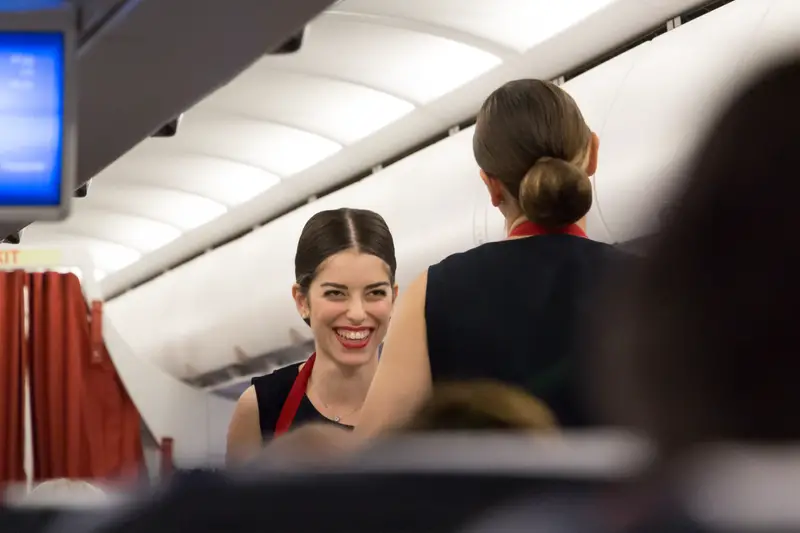
Next time you’re on a plane, look around. Almost every passenger has earbuds or headphones on, blocking out crying babies, chatty neighbors, or just the general hum of the aircraft. It’s basically standard operating procedure for air travel at this point. But here’s something you probably never noticed: flight attendants never do this. Not once during your entire flight will you see a crew member with headphones on. This isn’t just a preference or a suggestion in their employee handbook. It’s actually a strict rule that could get them in serious trouble if they break it. While passengers tune out and zone into their favorite music or podcasts, flight attendants must stay completely alert and available throughout the entire flight, no matter how long or boring it gets.
Flight attendants must hear every sound in the cabin
When you’re 35,000 feet in the air, sounds matter more than you might think. Flight attendants are trained to recognize specific noises that indicate problems or emergencies. There’s a particular ding for crew calls, another sound for lavatory smoke detectors, and different tones for various passenger requests. Missing even one of these alerts could mean the difference between catching a problem early and dealing with a full-blown emergency. These crew members also need to hear announcements from the cockpit that might come at any moment without warning.
Beyond mechanical sounds, flight attendants must listen for human cues too. A passenger in distress might call out for help, or there could be subtle sounds indicating someone is getting sick or having a medical emergency. Even arguments between passengers or signs of someone violating safety rules need to be caught early. While you’re enjoying your noise-canceling headphones and blocking out everything around you, the cabin crew is doing the exact opposite. They’re actively monitoring every sound, conversation, and movement happening throughout the plane. It’s exhausting work that requires constant vigilance, but it’s absolutely necessary for keeping everyone safe.
Passengers need immediate access to crew members
Think about the last time you needed something on a flight. Maybe your seatbelt was stuck, you needed an extra blanket, or you had a question about your connecting flight. You probably just looked around for a flight attendant and flagged them down. Now imagine trying to get their attention if they had earbuds in and were bobbing their head to music. That would be incredibly frustrating and completely unprofessional. Flight attendants are there primarily for your safety, but customer service is also a huge part of their job. They need to be approachable and ready to help at a moment’s notice, which is impossible if they’re tuned out to their own entertainment.
One passenger actually shared a concerning story about seeing a flight attendant wearing AirPods during a flight and wondered whether to report it. This person wasn’t being petty or looking to get someone in trouble. They genuinely felt less safe knowing the crew member might not hear important announcements or calls for help. That’s exactly why this rule exists. When crew members wear headphones, it doesn’t just affect their ability to do their job. It also impacts how secure and cared for passengers feel during their flight. Nobody wants to worry about whether the people responsible for their safety are actually paying attention.
Sleeping on the job is also prohibited for most flights
If wearing headphones seems like a harsh restriction, consider this: flight attendants also can’t sleep during most flights, even when passengers are snoozing away around them. Working odd hours and jumping between time zones makes this job incredibly tiring. Crew members often work red-eye flights or have irregular schedules that mess with their natural sleep patterns. Despite all this exhaustion, they must remain awake and alert throughout every flight. This means no quick naps in the galley, no dozing off in a jump seat, and definitely no closing their eyes for a few minutes during quiet periods.
There is one major exception to this rule, though. On very long international flights, like those crossing oceans or continents, airlines are actually required to give flight attendants designated rest periods. These longer flights have special crew rest compartments where attendants can take mandatory breaks and sleep in shifts. This ensures that fresh, alert crew members are always available in the cabin. For shorter domestic flights or medium-length routes, though, attendants just have to power through their entire shift without any real rest. They might sit down briefly during calm periods, but they’re still expected to remain fully aware of everything happening around them.
Even eating and drinking must happen out of sight
Here’s another surprising restriction: flight attendants aren’t supposed to eat or drink anything in front of passengers. Yes, they’re human and need food and water to function properly, especially on long shifts. But they’re expected to take care of these basic needs away from passenger view, usually behind the curtain in the galley. If you’ve ever walked back to use the bathroom and noticed the galley curtain pulled shut, there’s a good chance the crew was having their meal break. They’re not hiding back there to avoid passengers or slack off. They’re simply following company policy about maintaining a professional appearance.
This rule exists because airlines want their crew members to appear constantly available and ready to serve. Seeing a flight attendant munching on a sandwich or sipping coffee might make passengers feel like they’re bothering them if they need assistance. It’s similar to how waiters at fancy restaurants don’t eat in the dining room during their shifts. The cabin crew represents the airline brand and must maintain a certain image throughout the flight. They squeeze in quick meals between service rounds, often eating while standing or in cramped galley spaces. It’s just another way their experience on the plane differs drastically from what passengers go through.
Running down the aisle is strictly forbidden
Short flights can be especially challenging for flight attendants. They have the same safety checks, announcements, and service requirements as longer flights, but compressed into a much tighter timeframe. You might think this would give them permission to hurry through the cabin or jog between the front and back galleys when they’re running behind schedule. Nope. Flight attendants are explicitly prohibited from running down the aisle, no matter how rushed they are. This rule exists for two important reasons: safety and professionalism. Running on a moving aircraft increases the risk of stumbling or falling, which could injure the crew member or passengers.
Additionally, seeing flight attendants rushing around frantically would make passengers nervous. If the crew looks panicked or hurried, people might worry that something is wrong with the flight. Airlines want their staff to project an image of calm control at all times, even when they’re scrambling behind the scenes to get everything done on time. This means walking at a brisk but controlled pace, maintaining composure, and never letting passengers see them sweat. It’s another example of how flight attendants must prioritize appearance and safety over their own convenience or comfort during every single flight.
Accepting tips from passengers is not allowed
After receiving exceptional service from a flight attendant, you might feel tempted to slip them some cash as a tip. Maybe they went out of their way to help with your bags, brought you extra snacks, or were just genuinely kind and helpful throughout a long flight. In restaurants or hotels, tipping is expected and appreciated. On airplanes, however, flight attendants are not allowed to accept tips from passengers. This might seem odd or even unfair, but there’s a specific reason for this policy. Flight attendants are primarily there for safety purposes, not service. Food and beverage service is secondary to their main job of keeping everyone safe.
Airlines worry that allowing tips might create a situation where crew members focus more on pleasing passengers who tip well rather than maintaining equal safety standards for everyone. If you want to show appreciation for excellent service, the best approach is simply being a polite, friendly passenger. You can also fill out a customer service form praising specific crew members by name. These compliments go into their employee records and can help with promotions or recognition programs. Some airlines even have formal programs where passengers can nominate flight attendants for awards. A sincere thank you and a smile go much further than cash in the aviation industry.
Visible tattoos are still banned by most airlines
Tattoos have become increasingly mainstream and accepted in most workplaces over the past decade. Many industries that once required covering all ink have relaxed their policies. The airline industry, however, remains pretty strict about visible tattoos. Most major carriers still prohibit flight attendants from having any tattoos visible while in uniform. This typically means no ink on arms, legs, hands, neck, or face. Some airlines have started allowing small, discreet tattoos in certain locations, but the general rule remains conservative. Flight attendants with tattoos must either have them in areas completely covered by their uniform or use special makeup to conceal them during flights.
The reasoning behind this policy relates to maintaining a uniform, professional appearance that appeals to diverse passenger populations from various cultures and backgrounds. Airlines operate globally and want their crew members to present an image that won’t offend or concern passengers from more conservative regions. This requirement definitely limits who can work as a flight attendant and has sparked ongoing debates about outdated appearance standards. Some newer or more progressive airlines have begun loosening these restrictions, but change is happening slowly. Anyone considering a career as a flight attendant should research specific airline policies before getting visible tattoos that might disqualify them from their dream job.
Makeup requirements are mandatory for female crew members
Here’s a requirement that might shock people: female flight attendants are required to wear makeup while working. They cannot show up to a flight with a completely bare face. This doesn’t mean they need to look like they’re headed to a nightclub or wearing dramatic, intense makeup. The requirement is for natural-looking makeup that enhances their features without being obvious or distracting. No black lipstick, heavy smoky eyes, or bold experimental looks are permitted. Airlines provide specific guidelines about acceptable makeup styles, often including which lipstick shades are appropriate and how much eye makeup is too much.
This policy has faced criticism for being outdated and sexist, especially since male flight attendants face no similar requirement. Airlines defend the rule by saying it’s part of maintaining a polished, professional appearance that passengers expect from crew members. Female attendants must also maintain neat, well-groomed nails with conservative polish colors. Black nail polish is typically forbidden, and nails must be kept short enough to perform all job duties safely. These appearance standards extend to hair as well, with strict requirements about length, color, and styling. Hair longer than shoulder length must be pulled back into a bun or ponytail, and only natural hair colors are acceptable.
Professional behavior extends beyond the aircraft
Flight attendants represent their airline even when they’re not actively working on a plane. Once they put on that uniform, they’re expected to maintain professional behavior anywhere they might be seen by the public. This includes in airports, on shuttles, in hotel lobbies, or anywhere else they’re wearing their airline uniform or identification. They cannot smoke, use inappropriate language, chew gum, or behave in any way that might reflect poorly on their employer. Getting caught acting unprofessionally while in uniform can result in serious disciplinary action, including termination.
This means flight attendants need to be constantly aware of how they’re presenting themselves from the moment they leave home until they return after their shift. They’re not permitted to slouch, put their hands in their pockets, or cross their arms in ways that might appear unprofessional or unwelcoming. Even their posture is regulated. These restrictions might seem excessive, but airlines invest heavily in their brand image and expect employees to uphold certain standards. The uniform itself is considered company property and must be worn exactly as specified, with no personal modifications or accessories beyond what’s explicitly allowed in the dress code manual.
The next time you’re settling into your airplane seat with your headphones on, take a moment to appreciate what flight attendants sacrifice for your safety and comfort. While you zone out and relax, they remain constantly alert and available throughout your entire flight. These restrictions might seem harsh or unnecessary at first glance, but they exist to ensure someone is always paying attention and ready to respond if anything goes wrong. Being polite, patient, and appreciative costs you nothing but means everything to crew members who work under these demanding conditions every single day.

