

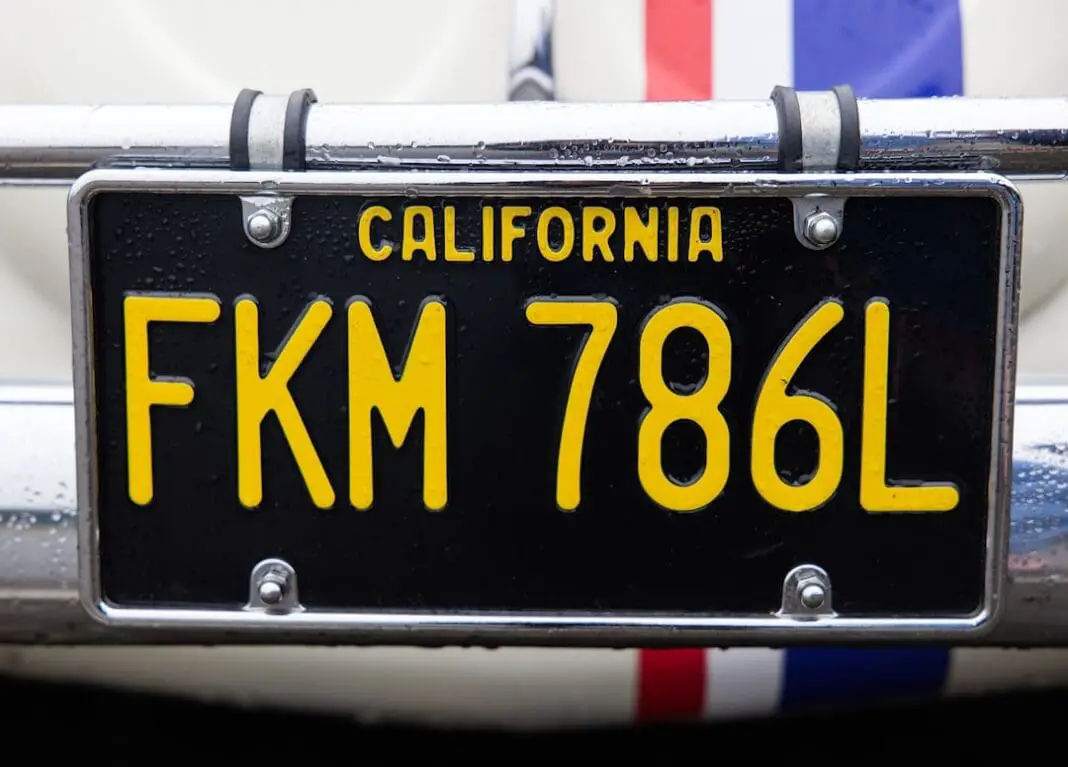
If you’ve driven anywhere lately, you’ve probably spotted them. Cars rolling by with a solid black plate and crisp white letters, looking like something off a movie car instead of the minivan in the school pickup line. They’re not fake. They’re not some sticker somebody slapped on in their garage. They’re real, state-issued plates, and in a bunch of states people cannot order them fast enough. So what’s actually going on here? Why did a boring rectangle of metal suddenly become the thing everyone wants? Turns out the answer is way more interesting than “they look cool.”
Minnesota Bought Nearly Half a Million in a Single Year
Let me throw a number at you that made me do a double take. In 2025, Minnesota drivers bought more than 470,000 blackout plates. That’s not the grand total since they launched. That’s just one year. The state only started selling them in 2024, and in that first year they moved 256,387 of them. So in twelve months, sales nearly doubled.
To put that in perspective, Minnesota also sells a Vikings plate, and this is football-crazy Minnesota. Those went from 5,700 to 9,000. Solid growth. But the blackout plate blew right past it and kept going. This is a state whose classic plate has that pretty blue background with a lake and a canoe, a design that first hit cars back in 1978. Swapping that for stark black was the biggest look change in decades, and people jumped on it. When something doubles in a year, that’s not a fad fizzling out. That’s a genuine trend.
This “New” Look Is Actually Over a Century Old
Here’s the part that surprised me most. The blackout plate isn’t some fresh, modern design. It’s basically a throwback to the very first license plates this country ever made. Delaware was the first state to issue plates, and back in 1909 its plates were white lettering on a black porcelain background. Black and white. Sound familiar?
Plates only started getting colorful and busy about 50 years ago. Around the country’s bicentennial in 1976, states rolled out red, white, and blue specialty plates for the celebration. Then California put out a special plate for the 1984 Los Angeles Olympics, and that popularized the idea of a plate tied to an event or a group instead of just veterans and disabled drivers. So all the graphics and slogans and cartoon lakes we think of as “normal” plates? Those are the newcomers. The plain black plate everyone thinks looks so edgy and modern is actually the oldest style in the book. We circled all the way back around.
States Realized These Things Print Money
Let’s be honest about why so many states suddenly want in. It’s not because lawmakers love the aesthetic. It’s the cash. Iowa started selling blackout plates back in 2019, and since then the state has pulled in over $30 million from them. That’s real money for a plate that costs the state almost nothing extra to produce.
Indiana saw those Iowa numbers and clearly wanted a piece. The state figured it might sell around 100,000 plates in the first year for roughly $3 million. When they actually launched in August 2025, they sold over 40,000 in just the first few months, bringing in about $1.3 million. The BMV commissioner put it plainly, saying “Hoosiers have spoken, and we have listened.” What he meant is people were basically handing the state money for a design tweak. In Minnesota, part of that $30 fee funds the Driver and Vehicle Services department. In other states the money goes to transportation or highway safety funds. Either way, a plate that raises millions with almost zero effort is a dream for any budget-strapped agency.
The War on “Ghost Plates” Made the Legal Ones Look Better
Here’s a connection most people miss. At the same time official blackout plates took off, states started cracking down hard on illegal plate covers and “ghost plates,” which are altered or fake plates people use to dodge tolls and cameras. New York went all in on this. A multi-agency task force in 2025 towed more than 5,300 vehicles, made 1,300 arrests, and handed out 16,000 summonses.
And the reason they care so much is eye-opening. Investigators in New York City looked at 768 out-of-state plates and found nearly 20% of them were ghost plates. Those cars racked up almost 50% more camera violations, including speeding in school zones, than cars with legit plates. Between 2022 and 2024, the state Thruway Authority alone lost more than $1 million to toll evasion tied to these fake plates. So drones and mobile plate readers went out hunting. The result? If you want the dark, stealthy look but don’t want a cop tearing your plate off, the state-issued blackout plate is the clean, legal way to get it.
California Just Declared War on Plate Flippers
California took the crackdown a step further. Starting January 1, 2026, a new law makes it an infraction to even manufacture any device that hides a plate from being read, whether by a human eye or by a toll reader, a bridge scanner, or a police camera. We’re talking about tints, shades, covers, and those wild “flipper” gadgets that literally flip your plate out of view at the push of a button.
The new rules draw a hard line. On one side you’ve got the shady stuff getting banned. On the other side you’ve got the official blackout plate, which is fully readable because it’s just a black background with white letters. And California isn’t alone. Florida bans flippers with fines and even possible jail time. Illinois, Wisconsin, and Pennsylvania have passed or proposed similar bans with fines that can climb into the thousands. New York, Virginia, and Pennsylvania already outlawed tinted plate covers. So as the sketchy options disappear, the legal stealthy-looking plate becomes the obvious pick for anyone chasing that murdered-out look.
They Cost More Than You Might Guess
Now for the sticker shock. These plates are not a one-time cheap add-on. Most states hit you with an upfront fee plus a yearly renewal fee that stacks right on top of your normal registration. Wisconsin, opening orders in 2026, charges $15 upfront and then $25 every single year after that. Indiana charges $45 a year, and another $45 on top if you want personalized letters. North Dakota runs $25 a year.
That recurring cost is why the blackout renewal fees tend to run higher than other specialty plates. You’re paying every year just to keep looking cool. That said, when you compare it to what people spend on a custom paint job or a full vinyl wrap, a plate that changes your car’s whole vibe for a few bucks a year starts to feel like a bargain. It’s the cheapest way to make your ride look different without touching the actual car. One catch worth knowing: in most states the blackout design can’t be combined with other graphic specialty plates. You pick one or the other.
The Knockoff Versions Will Get You Fined
This is important, because it trips people up. You cannot just buy a black plate off the internet and bolt it on. Blackout plates have to come from the state. Aftermarket versions that don’t meet state standards are flat-out illegal, and slapping one on can earn you fines, points on your license, or your plate getting confiscated on the spot.
The whole appeal of the official plate is that it looks stealthy while staying completely legit. Some drivers even use the personalized lettering to sneak clever little messages onto that black background, which is part of the fun. The real ones use solid black with white lettering specifically for high contrast, so cameras and officers can read them just fine. They’re offered for passenger cars, light trucks, motorcycles, and RVs. So if you want one, go through your state’s DMV or BMV. Skip the random online seller promising a “blackout kit,” because that’s how you turn a $30 upgrade into a several hundred dollar headache.
More States Are Getting in Line
The spread has been fast. It started in Iowa in 2019, then Colorado in 2021. But things really took off in 2024, when Minnesota, Mississippi, Utah, Indiana, North Dakota, and Kansas piled in. Wisconsin and Kansas opened orders in January 2026. That’s the kind of rapid rollout you don’t usually see with something as sleepy as license plate design.
Ohio is next in line. Its bill, SB 358, cleared the Senate in May 2026 and moved to the House. If it passes, Ohio joins the growing club. A key sponsor summed up the whole thing perfectly, saying it’s “giving people what they want” while raising “good money for the Highway Safety Fund.” And that right there is the entire story in one sentence. People love the look, states love the revenue, and the timing lined up perfectly with a nationwide crackdown on the illegal alternatives. Put all that together and you get a black-and-white plate showing up on driveways everywhere, a design that’s brand new and more than a hundred years old at the same time.

