

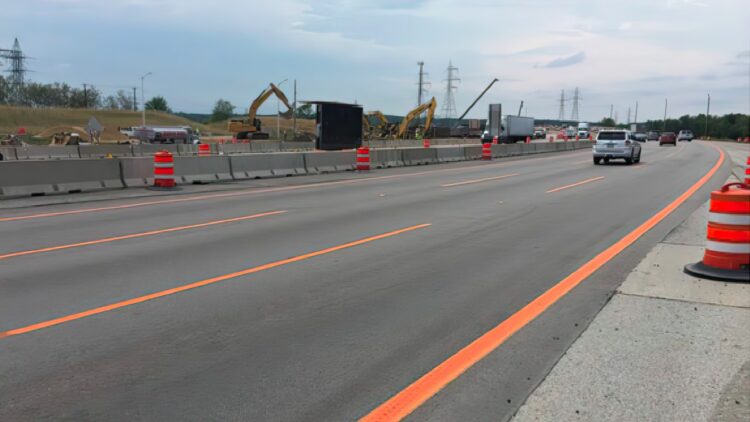
You’re cruising down the highway on your way to work when something catches your eye. The road lines ahead aren’t the usual white or yellow you’ve seen for years—they’re bright orange. At first, you might think your eyes are playing tricks on you, or maybe someone made a mistake with the paint. But those orange lines are completely intentional, and they’re showing up on highways across the country for a very specific reason. If you’ve spotted them recently, here’s everything you need to know about what they mean and why they matter to every driver on the road.
Orange lines signal construction zones and work areas
When you see orange lines painted on the highway, you’re looking at temporary markers that tell you to slow down immediately. These lines replace the standard white and yellow markings you’re used to seeing, but only in areas where road crews are actively working. Construction zones are among the most dangerous places on any highway, with nearly 900 people killed and more than 40,000 injured in work-zone crashes back in 2023. That’s why transportation departments needed a better way to grab drivers’ attention before they reach these high-risk areas. The orange color stands out much more than traditional markings, especially when roads are covered in dirt, salt, or grime from bad weather.
The idea behind orange striping is simple: make it impossible for drivers to miss the warning. Unlike signs posted along the roadside, these bright orange lines are painted directly on the pavement where your eyes naturally focus while driving. You don’t have to look away from the road or spend time reading text on a sign—the color itself tells you everything you need to know instantly. This means faster reaction times and better awareness of what’s ahead. When construction crews are working just feet away from speeding traffic, every second of warning time can make the difference between a safe commute and a serious accident.
Multiple states are testing orange highway markings now
Wisconsin became the first state to experiment with orange highway lines about 10 years ago during a massive rebuild of the Zoo Interchange in Milwaukee. The results were impressive: 80% of drivers said the markings increased their awareness of work zones. Since then, several other states have jumped on board to test the concept. Kentucky started using orange markings on Interstate 75 in 2019, while Texas tested them on the Sam Rayburn Tollway in 2020. Michigan launched a pilot project on Interstate 96 in 2022, and Washington tried orange striping on I-5 near Tacoma in 2023. Each state is learning what works best for their specific conditions and traffic patterns.
California has generated considerable attention with its orange striping project on Interstate 5 just north of San Diego. The state is actually testing two different patterns in a carpool-lane expansion zone. On one side of the highway, orange lines frame white dashes like an Oreo cookie, while on the other side, the dashes are split lengthwise with one half white and the other orange. Indiana has also joined the testing phase with projects on the Indiana Toll Road and Interstate 65. These pilot programs will determine whether orange striping becomes standard practice nationwide or remains a regional solution for specific problem areas.
You need to slow down when orange lines appear
The moment you spot orange lines on the road, your first action should be checking your speedometer and easing off the gas pedal. These markings override all other pavement markings, including regular white or yellow lines. Think of them as the highway equivalent of a flashing red light—they demand your immediate attention and a change in behavior. Most work zones with orange striping have reduced speed limits, often dropping to 55 mph or lower. Following these limits isn’t just about avoiding a ticket, though penalties in construction zones are typically much higher than normal. It’s about protecting the workers who are doing their jobs just a few feet from your vehicle.
If traffic allows and it’s safe to do so, consider moving to a lane farther away from construction personnel. This gives everyone more breathing room and reduces the risk of an accident affecting workers on the roadside. However, never make sudden lane changes or erratic movements that could surprise other drivers. Check your mirrors, use your turn signal, and only move over when you have a clear path. The orange lines often indicate temporary traffic patterns and lane shifts, so the road layout might be different from what you’re used to. Stay alert for barriers, cones, and other equipment that might narrow your lane or change its direction.
Orange beats white and yellow for visibility reasons
Transportation engineers didn’t pick orange at random. The color offers significant visibility advantages over traditional white and yellow markings, particularly in challenging conditions. During winter months, roads get covered with a film of salt, dirt, and grime that can make standard white lines nearly invisible. Orange cuts through this mess much more effectively, maintaining its visibility even when the road surface is less than pristine. The brightness of orange also helps during dawn and dusk hours when lighting conditions make it harder to see subtle differences in pavement markings. Your brain processes the unexpected color quickly, triggering an automatic response that something different is happening ahead.
Another advantage of orange is its instant recognition factor. Drivers already associate orange with caution and construction thanks to orange cones, barrels, and signs used in work zones for decades. When that familiar warning color appears directly in your driving lane, it creates an immediate mental connection without requiring any reading or interpretation. Transportation departments have found that signals painted on the roadway itself get more attention from drivers than signs posted alongside the road. People naturally focus on the pavement ahead while driving, making it the prime location for critical safety information.
Different states are trying different orange stripe patterns
Not every state uses orange striping the same way. Wisconsin replaced white paint entirely with orange paint during their initial experiments, creating solid orange lane markers throughout construction zones. Kentucky took a similar approach, swapping out traditional colors for pure orange in work areas. Texas tested orange markings on toll roads, while Michigan focused on high-traffic interstate sections. Each state is gathering data on what patterns work best for their specific road conditions, weather patterns, and traffic volumes. The variety of approaches helps researchers understand which methods deliver the best safety improvements.
California’s approach stands out because engineers are testing two different pattern styles simultaneously in the same construction zone. The Oreo-style pattern with orange framing white dashes maintains some visual connection to normal road markings while adding the orange warning. The split-dash design creates a unique look that’s impossible to confuse with regular highway markings. Engineers are tracking both designs using video monitors and devices that measure paint brightness and reflectivity over time. These experiments will help determine whether orange should be used as a complete replacement for traditional colors or as a contrast element that enhances existing white and yellow lines.
The orange markings are temporary during construction
Don’t worry about highways staying orange forever. These bright markings are only meant to last while construction or maintenance work is actively happening in that area. Once the project wraps up and workers pack up their equipment, road crews return to paint over the orange with traditional white and yellow stripes. The temporary nature of orange striping is actually one of its key features. It creates a clear visual signal that conditions are different from normal, which helps drivers stay alert and cautious. When the orange disappears, drivers know the work zone has ended and regular traffic patterns have resumed.
The temporary status also means states can experiment without making permanent changes to their highway systems. If orange striping proves less effective than hoped, transportation departments can simply stop using it without having to overhaul their entire approach to road markings. On California’s Interstate 5 project, orange stripes will be replaced with permanent white striping once the carpool lane construction finishes in late 2022. The installation process itself takes time—rainy weather and moist conditions can delay painting work, as California discovered when wet conditions pushed their striping work from November into late January.
Speed surveys show mixed results from orange lines
While drivers generally approve of orange striping and say it increases their awareness of work zones, actual speed reduction has been harder to measure. Kentucky’s evaluation of their Interstate 75 project found that vehicle speeds remained roughly the same in sections with orange striping compared to sections with white striping. This doesn’t necessarily mean the orange lines failed—driver awareness and crash rates matter more than speed alone. Someone driving at the same speed but paying closer attention to the road and surrounding hazards is still safer than a distracted driver. The awareness factor could lead to fewer crashes even without major speed reductions.
Texas saw more encouraging results in driver perception surveys. About 61% of motorists said orange raised their awareness of being in a work zone, while an impressive 88% said they wanted to see the color used in other construction zones throughout the state. Wisconsin’s survey responses were even more positive, with 80% of drivers reporting increased work-zone awareness. These perception numbers suggest that even if speeds don’t drop dramatically, drivers are more conscious of their surroundings and potentially making better decisions. The ultimate test will be whether crash rates and injury numbers decline in zones using orange striping compared to traditional marking methods.
Weather and road conditions affect orange paint performance
Installing orange striping isn’t as simple as grabbing a can of paint and heading to the highway. Road conditions need to be dry for paint to adhere properly and last through heavy traffic. California’s experience shows how weather can throw a wrench into even well-planned projects. When crews planned to start painting in November, rainy conditions and moisture on the road surface forced delays until late January. Once conditions improved, it still took two to three weeks to complete the striping on all northbound and southbound lanes. The type of paint matters too—some formulas work better on concrete while others perform best on asphalt.
Different states have tested various materials to find what works best. Wisconsin started with yellow tape in northbound lanes and yellow paint in southbound lanes before switching to orange. California experimented with both tape and paint versions of their designs. Engineers have to consider how well the orange color holds up under constant tire traffic, harsh weather, and road salt. If the orange fades too quickly, it loses its visibility advantage and defeats the purpose of using a special color. That’s why California’s pilot project includes monitoring equipment to track brightness and reflectivity over the entire construction period.
Federal approval may expand orange striping nationwide
Right now, orange highway striping exists in a testing phase, operating under special permissions from federal transportation authorities. The Manual on Uniform Traffic Control Devices sets the standards for all road markings, signs, and traffic signals across the United States. This manual currently doesn’t include orange as a standard color for lane markings, which means states need interim approval and exceptions to use it. California engineers are hoping their pilot project produces convincing data that will lead to official approval for orange as a contrast color in future construction zones. They’ve successfully gained similar approvals before, like when California added red-colored bus lanes on freeway entrances.
If federal authorities decide orange striping delivers meaningful safety improvements, it could become a standard tool available to all state transportation departments. This would allow engineers across the country to deploy orange markings whenever they face challenging work-zone situations. However, the approval process requires solid evidence that the new approach works better than existing methods. That’s why states are carefully tracking crash rates, driver behavior, and visibility measurements during their pilot programs. The data collected over the next few years will determine whether orange lines become a common sight on American highways or remain a regional experiment.
Orange highway lines represent the latest effort to make construction zones safer for both drivers and workers. While these bright markings might look unusual at first, they serve a critical purpose in alerting you to hazards ahead. The next time you spot orange stripes on your route, remember to slow down, stay alert, and give road crews the space they need to do their jobs safely.

