

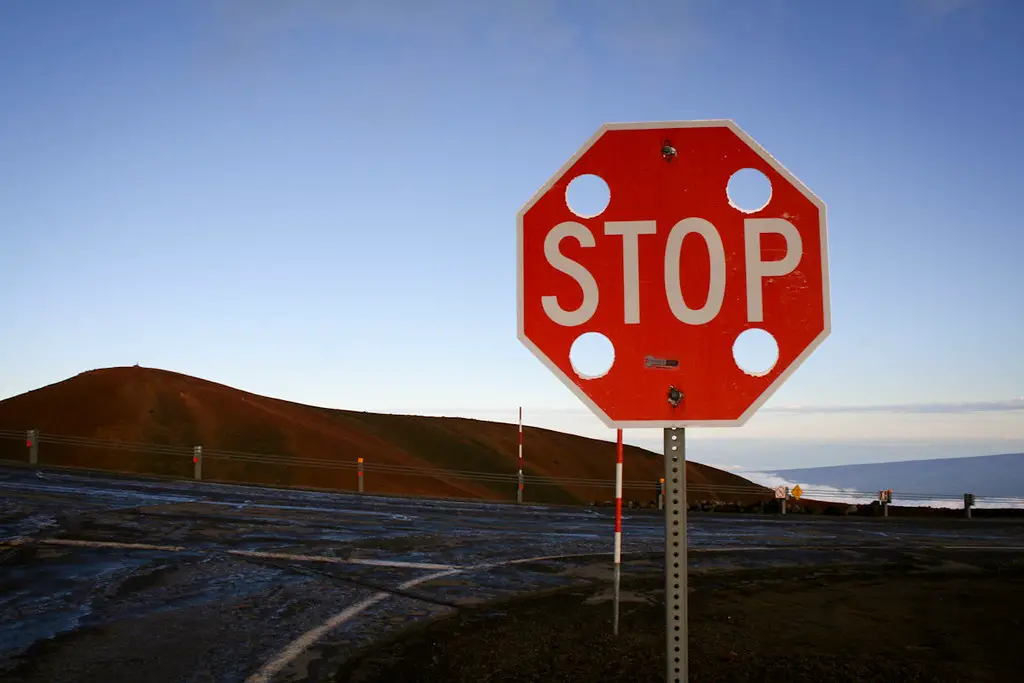
Have you ever noticed perfectly round holes punched into a stop sign and wondered what they were for? Most people assume they’re bullet holes from target practice, especially in rural areas. Turns out, many of those holes are actually put there on purpose by the people who make the signs. These aren’t random punctures at all—they’re carefully designed features that serve a specific function. Once you know what to look for, you’ll start noticing them everywhere, and you’ll be able to tell the difference between intentional design and actual vandalism. The real reason might surprise you!
Those neat circles help signs survive wind storms
The main reason some stop signs have holes is for wind resistance. When strong gusts blow through an area, a solid metal sign acts like a sail, catching all that air pressure. This creates enormous force on the pole holding it up, which can cause the sign to bend, twist in the wrong direction, or even snap off completely. By cutting strategic holes into the metal, engineers allow wind to pass through instead of pushing against the entire surface.
This design choice is especially common in coastal states where hurricanes and tropical storms are regular occurrences. You’ll also find them in mountain passes where wind whips through canyons, on open plains where nothing blocks the gusts, and in cities where tall buildings create what engineers call wind tunnel effects. The holes reduce the stress on the sign’s foundation and keep it standing upright where it belongs, facing the right direction so drivers can actually see it when they need to stop.
Scientists figured out the perfect hole pattern
Engineers didn’t just randomly decide where to punch holes. A scientific study published in 2020 used computer simulations to test different hole patterns and sizes. Researchers blasted virtual signs with winds ranging from 49 miles per hour all the way up to 101 miles per hour—that’s tropical storm to hurricane strength. They tested various hole sizes, spacing arrangements, and placement patterns to see which ones worked best at reducing wind pressure without making the sign too weak or hard to read.
The winning design? Holes about the size of a quarter to a half-dollar, spaced far enough apart that they don’t compromise the sign’s strength. Most perforated signs have four to eight small holes, usually 3/8 to 1/2 inches across, placed in symmetrical patterns around the center. Some have three larger holes arranged vertically near the middle. The key is finding the sweet spot between letting enough wind through and keeping the sign structurally sound. You’ll never see holes cutting through the actual word STOP because that would defeat the whole purpose.
These signs aren’t actually required anywhere
Here’s something interesting: perforated stop signs are completely optional. The Manual on Uniform Traffic Control Devices, which is basically the rulebook for all road signs in America, doesn’t require them. That means counties and cities can choose whether or not to use them based on local conditions. Most permanent signs mounted on sturdy posts don’t need the holes at all. The practice remains pretty uncommon across the country, even though guidelines for wind-load standards have existed since 1994.
You’re most likely to spot these hole-filled signs in construction zones and temporary work areas. Portable signs mounted on lighter stands with weighted bases are much more vulnerable to tipping over in wind, so the perforations help keep them upright. Some states like Wyoming reportedly had road crews drilling their own holes to combat relentless winds, but these homemade solutions were never officially adopted as standard practice. Each community makes its own call based on local weather patterns and past experience with damaged signs.
How to tell intentional holes from bullet damage
Let’s be honest—some of those holes absolutely are from people using signs for target practice. So how can you tell the difference? It’s all about pattern and quality. Intentional wind holes are perfectly symmetrical, placed in neat arrangements, and never interrupt the lettering. They’re clean punctures with smooth edges, uniform in size, and typically round. The holes look professionally made because they are—they’re punched out during manufacturing with precision equipment.
Bullet holes, on the other hand, look messy and random. They’re scattered across the sign with no rhyme or reason, sometimes clustered around the letters or center. The metal around them often looks ragged, cracked, or discolored. You might see visible deformation where the bullet entered and exited, creating different-sized holes on front and back. Even large-caliber bullets don’t create the neat, circular cutouts you see in properly manufactured signs. If the holes look like Swiss cheese with no discernible pattern, you’re probably looking at vandalism damage.
Stop signs didn’t always look like they do now
The first stop sign appeared in Detroit back in 1915, but it looked nothing like what we see today. That original sign was just a simple black-and-white square, only 2 feet by 2 feet. The iconic eight-sided shape didn’t become standard until 1935, and the bright red background we all recognize didn’t become official regulation until 1954. So for nearly 40 years, stop signs came in different shapes and colors depending on where you lived!
As for the intentional wind holes, engineers experimented with perforated panels for years through basic trial and error. It wasn’t until computer technology advanced enough to run sophisticated simulations that anyone could precisely calculate the best hole placement. The American Association of State Highway and Transportation Officials issued guidelines for federal wind-load standards in 1994, but the practice never really caught on nationwide. Only areas with serious wind problems bothered to adopt perforated designs.
Shooting signs causes serious problems for everyone
When people use traffic signs for target practice, it creates real headaches beyond just looking ugly. In West Fargo, North Dakota, vandals caused over $15,000 in damage to signs in just one year. That money comes from taxpayers who have to foot the bill for replacements. In North Dakota alone, counties reportedly need to replace 50 percent of their signs every year because of illegal shooting. That’s an enormous waste of public money that could go toward fixing roads or other community needs.
The safety risks are even more serious than the cost. The more holes in a sign, the harder it becomes to read, especially at night when headlights need to reflect off the surface. Bullet holes reduce that reflectivity and can obscure the message, which puts drivers at risk. Some auto accidents have been blamed in part on vandalized signs that drivers couldn’t see properly. There’s also the danger of stray bullets hitting homes or people. Shiny new signs make tempting targets, but what goes up must come down somewhere.
The holes in sign posts serve a completely different purpose
You might notice that the metal posts holding up traffic signs also have holes drilled in them, but these aren’t for wind resistance at all. They’re part of something called breakaway engineering, designed to literally save your life if you crash into one. According to the National Highway Traffic Safety Administration, 7 out of 10 deadly single-car crashes happen when vehicles run off the road and hit something solid. A rigid post can act like a spear, causing catastrophic damage and injuries.
Breakaway posts were created to solve this problem. Instead of standing firm like a tree, they’re designed to snap off or bend when a car hits them. The federal government made these mandatory on major highways starting in 1998. The holes drilled at regular intervals up and down the post create weak points that allow it to crumple on impact. Some larger posts use a slip base system where the post sits in a concrete-filled cup and tips forward when struck, letting the car pass underneath. States like Minnesota and Texas reported significantly fewer serious crashes after switching to breakaway posts.
Traffic lights sometimes have holes too
Stop signs aren’t the only traffic control devices that might sport perforations. In areas with extreme wind conditions, you might notice holes in the traffic lights themselves. The same principle applies—reducing wind resistance to keep the lights functioning properly and pointing in the right direction. A traffic signal that gets twisted around by wind stops doing its job, creating dangerous intersections where drivers don’t know when to stop or go.
These perforations are more common on signals attached to overhead poles that span across roadways, since these catch more wind than signals mounted on corner posts. The holes are typically placed in the metal housing around the lights, not in the light covers themselves where they might interfere with visibility. Just like with stop signs, the goal is finding the right balance between structural integrity and wind reduction. Engineers have to consider not just keeping the signal upright, but also making sure it stays visible and functional during severe weather when drivers need it most.
Next time you’re stopped at an intersection, take a closer look at that stop sign. Those neat little holes might seem like a small detail, but they represent smart engineering that keeps our roads safer. Whether they’re helping signs withstand hurricane-force winds or allowing posts to break away in crashes, these features work quietly in the background to protect drivers every single day. And now when you spot a sign with random, messy holes, you’ll know that’s a completely different story!

