

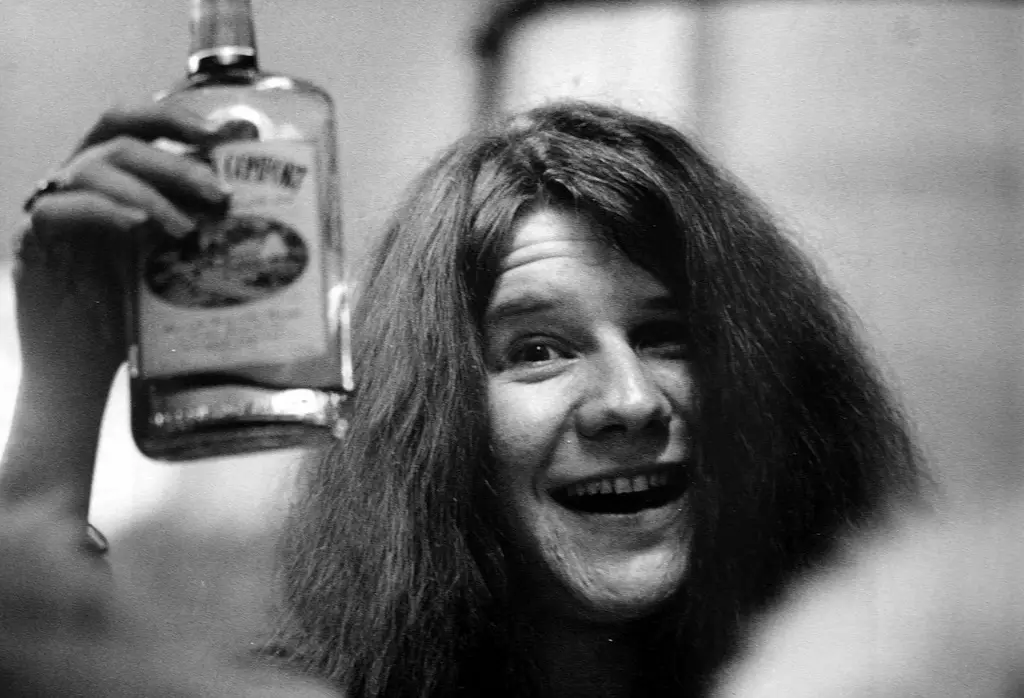
Most people think Janis Joplin’s final days were a blur of chaos and substance abuse — a rock star spiraling with no self-awareness. That’s the version that gets repeated, anyway. But the truth is more complicated and, honestly, more heartbreaking. Four days before her death on October 4, 1970, Joplin sat down for a long, remarkably lucid interview. What she said in that conversation wasn’t the rambling of someone who’d given up. It was the opposite. She was reflective, sharp, funny, and painfully honest about things most famous people never admit out loud.
The interview almost didn’t happen
Howard Smith, a journalist with the Village Voice, had originally scheduled his sit-down with Joplin for mid-August 1970. She canceled. The reason? Rolling Stone magazine had published a piece about her that included the assessment that her signature abundance of jewelry made her look like a “Babylonian whore.” That phrase landed hard. Joplin was too distraught to do press afterward.
When she and Smith finally connected on September 30, the conversation became something nobody expected — a profound exchange about creativity, rejection, and the cost of caring what people think. Smith’s recordings were later included in The Smith Tapes Box Set, an archive of his restored interviews with figures like John Lennon, Jim Morrison, Jane Fonda, and Jerry Garcia. But Joplin’s tape stands apart. It aired four days after she died.
That timing turned a casual interview into something closer to a eulogy she accidentally wrote for herself.
She couldn’t stop caring about critics
One of the most striking parts of the interview is Joplin’s admission that criticism destroyed her — even though she knew, intellectually, that it shouldn’t. She understood she was supposed to be above it. She was a rock star. She’d performed at Woodstock. And yet a nasty review could knock her sideways for days. She told Smith she should be able to get over the press but simply couldn’t, because she had this deep yearning for validation that never quite got satisfied.
This wasn’t a performance of vulnerability, either. PBS’s Blank on Blank later animated this final interview into a short film, and watching it, you can hear the tension in her voice — the way she laughs after saying something honest, trying to take the weight off it. The clip runs about five minutes, and in that short span you get the full contradiction: a woman who was fierce and opinionated on stage, but tenderhearted and insecure when the lights went down.
“You are what you settle for,” she said during the interview. “You are only as much as you settle for.” It’s the kind of line that sounds empowering until you consider the context. She was 27. She had four days left.
Her TV appearance told a different story
A couple months before the Smith interview, on August 3, 1970, Joplin appeared on The Dick Cavett Show. This was her last television appearance. She showed up in her usual eclectic fashion — rings, bracelets, flowing fabrics — and seemed at ease. Smith, who was also on the show, opened with, “Very nice to see you my little songbird.” The conversation was light. They talked about song titles, about a fan who’d been clubbed by a police officer for trying to kiss her. The audience laughed.
But then Smith asked how her relations were with the press, whether she had problems with interviews. Her answer slipped out fast: “Well, other than having to do them when you don’t feel like it and other than having to talk to someone who doesn’t seem to understand what you’re saying, consequently, the words coming out a little strange than you meant them. No.” The audience laughed again. Joplin’s face, though, told a different story. It was one of those moments where someone says something real and everyone treats it like a joke.
Nobody around her saw what was coming
Here’s the part that gets under your skin. The people who worked with Joplin daily — her band, her crew — described her as positive, energetic, completely committed to the music. John Till, the guitarist in her Full Tilt Boogie Band, remembered her as “this very up, very happy, very ready to rock, ready to play, ready to do the job… make the music. That was the side of her we saw. We really didn’t see the other side.”
That other side was significant. According to the documentary Janis Joplin: Final 24 Hours, she was deeply insecure about her looks, her talent, and her popularity. Drinks and drugs helped fill what she experienced as emptiness. Her road manager, John Cooke, later said the only thing you can really do with someone who has an addictive personality is “tell them how you feel” and hope they choose to change. Which is a helpless thing to say, and he knew it.
Joplin had actually gotten clean for about six months after her first overdose. Her team said it was a real effort. But it didn’t hold.
Drugs entered her life for a surprisingly practical reason
The common assumption is that Joplin got into drugs because she was a wild child, or because it was the ’60s and everyone was doing it. The reality is more specific — and kind of darkly logical. According to Holly George-Warren’s biography The Secret Side of Janis Joplin, she initially drank alcohol to “take the edge off” before performances. Stage fright. That was the starting point.
But alcohol was rough on her voice, and her voice was everything. So heavier substances entered the picture partly because they were considered less destructive to her vocal cords than liquor. A singer protecting her instrument by switching to harder drugs. That’s the kind of logic addiction produces — each step makes a weird kind of sense in isolation, and then one day you look up and you’re somewhere you never intended to be.
Joplin also reportedly suffered from manic depression, attention deficit disorder, and body dysmorphia. None of which were treated with anything close to what we’d consider adequate today. Mental health support for rock musicians in 1970 basically didn’t exist.
She described fame’s loneliest contradiction
One quote from Joplin gets repeated more than almost anything else she ever said: “I make love to 25,000 different people, then I go home alone.” She said it during a live show, not in some private confession. Right there on stage. And people cheered, because what else do you do when a performer says something devastating while smiling?
Holly George-Warren compared this feeling to something like postpartum depression, happening nightly. “When you do a concert, and you connect with all these people… it just takes you to another plane. Your adrenaline is pumping, your heart is beating. And then the concert’s over. So then what? It’s almost like postpartum depression, night after night.” That cycle — the massive high of performing followed by the crash of silence — is something a lot of musicians have talked about since. But Joplin was articulating it in real time, without a framework for what she was experiencing.
On the flip side, her final interview with Smith showed someone who was still thinking clearly about her art, still invested in what she was creating. She wasn’t done. That’s what makes it so hard to listen to now.
Pearl came out without her
When Joplin died on October 4, 1970, she was in Los Angeles finishing her album Pearl. She’d been in the studio putting on final touches. After she failed to show up for a recording session, her road manager John Cooke found her dead in her hotel room. An overdose. She was 27 — the same age as Brian Jones, Jimi Hendrix (who had died just 16 days earlier), and later Jim Morrison and Kurt Cobain. That grim pattern would eventually get its own name.
Pearl was released three months after her death and became a massive commercial success. It landed in the top 10 best-selling albums of 1971, alongside records from Led Zeppelin, Carole King, The Rolling Stones, and The Doors. Her single “Me and Bobby McGee” stayed on the Billboard Hot 100 for 15 weeks and hit number one — making it her biggest chart success ever, one she never got to witness. The song has been covered by everyone from Pink to countless bar bands across America, and it still streams heavily on Spotify and Apple Music decades later.
Other tracks from the album charted too: “Cry Baby” spent six weeks on the Hot 100, “Kozmic Blues” managed nine weeks, and “Get It While You Can” had a brief two-week appearance. For an artist whose career spanned roughly four years, the output was remarkable.
What sticks with me about Joplin’s final interview isn’t any single quote. It’s the contradiction it captured — someone who was simultaneously at the top of her creative powers and quietly falling apart. We tend to flatten famous people who died young into simple narratives: the tortured genius, the reckless rock star. But that September 30 conversation, just four days before the end, suggests something messier and more human. She knew exactly what was wrong. She just couldn’t fix it. And if her story has a lingering question, it might be this: how many people around her heard what she was really saying and thought she was just being entertaining?

