

You pull a perfectly golden chicken breast out of the oven, ready to serve dinner, and there it is: a puddle of weird white goo pooling around your meat. It looks strange, maybe even a little gross, and you’re left wondering if something went wrong. Should you eat it? Toss the whole thing? This mysterious white substance shows up more often than most people realize, and while it might not win any beauty contests, there’s actually a simple explanation for what’s happening. Once you understand where it comes from and why it appears, you can decide whether to work around it or just ignore it completely.
The white stuff is just protein doing its thing
That white goo seeping out of your chicken isn’t anything mysterious or dangerous. It’s actually a protein called albumin, which is naturally present in chicken meat. The same protein shows up in other animal products too, including eggs, milk, and various types of meat. When you cook chicken, the heat causes the muscle fibers to contract and tighten up. As they squeeze together, they push out liquid that was sitting between the cells. That liquid contains water and dissolved proteins, and when it hits the hot surface of your pan or baking sheet, it changes form completely.
Think about what happens when you crack an egg into a hot pan. The clear, runny egg white transforms into something solid and white as soon as the heat hits it. The exact same process happens with the liquid coming out of your chicken. The protein starts out invisible and dissolved in water, but when exposed to heat, it coagulates and turns into that white, slightly rubbery substance you see. It’s basically the same stuff you’re eating when you bite into the chicken itself, just in a different form. Nothing has been added to your meat, and nothing weird is leaking out that shouldn’t be there.
Freezing and thawing makes it way worse
You might notice that some chicken produces tons of white goo while other pieces barely show any at all. The biggest factor isn’t how you cook it, but how many times that chicken has been frozen and thawed before it made it to your kitchen. When chicken freezes, the water inside turns into ice crystals. Those crystals are sharp and jagged, and they actually puncture the cell walls as they form. When the chicken thaws, all that liquid from the broken cells drains out into the spaces between muscle fibers. Then when you cook it, there’s way more liquid to push out than there would be in fresh chicken.
This happens a lot more than you might think. Maybe you bought frozen chicken at the grocery store, and it started to thaw a bit on the drive home. You get home and stick it back in the freezer because your dinner plans changed. That’s one freeze-thaw cycle right there. The chicken might have gone through similar cycles at the store or during shipping too. Each time the temperature goes up and down, more cells get damaged. Fresh chicken that’s never been frozen will produce much less of that white stuff because the cells are still intact. If you’re tired of dealing with puddles of goo, buying fresh chicken and cooking it within a day or two makes a huge difference.
Yes, you can eat it without any problems
The white stuff might look unappetizing, but it’s completely safe to eat. It’s the same protein you’re already eating when you bite into the chicken breast itself. The only difference is the texture and appearance. Some people don’t mind it at all and just mix it into their sauce or side dishes. Others find the slightly rubbery, jiggly texture off-putting and prefer to scrape it off before serving. Either way, you’re not putting yourself at any risk by leaving it on your plate. The white stuff doesn’t have much taste on its own, so in small amounts you probably wouldn’t even notice it.
There is one important exception to keep in mind. If the goo coming out of your chicken is any color other than white or off-white, something’s wrong. If it’s yellow, green, gray, or has a strong unpleasant smell, that’s a sign the chicken has gone bad. The same goes if the chicken itself smells weird or looks discolored. Fresh chicken should smell fairly neutral and look pink or pale. When protein coagulates during normal cooking, it should always be white or maybe slightly cream-colored. Any other color means bacteria have been growing in the meat, and you should throw it out rather than take a chance.
It shows up when you boil chicken too
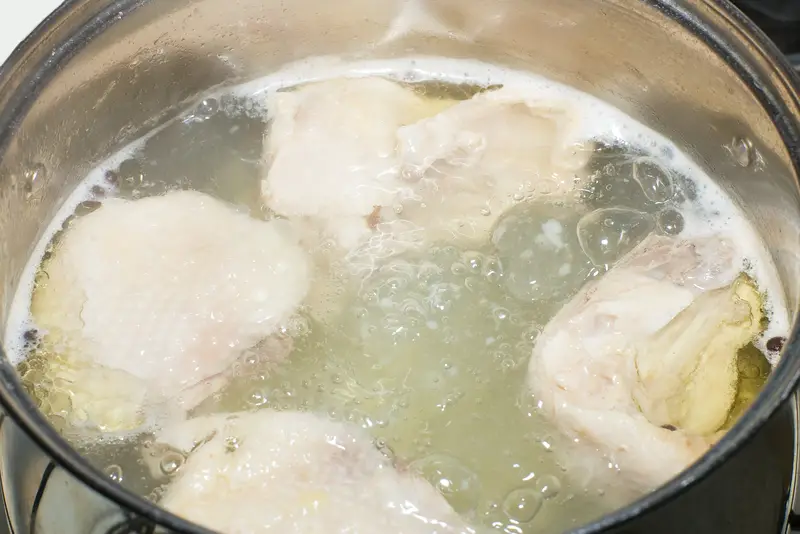
Baking and pan-frying aren’t the only cooking methods that produce white goo. When you boil chicken for soup or to shred for tacos, you’ll often see white foam floating on top of the water. That’s the same albumin protein, just appearing in a different way. As the chicken heats up in the boiling water, the muscle fibers contract and push out liquid. The proteins in that liquid coagulate immediately when they hit the hot water and float to the surface. They bond together to form a foamy layer that sits on top of your pot. Some people call this foam “scum,” which honestly doesn’t sound much more appetizing than “goo.”
If you’re planning to use the cooking liquid for soup or stock, you’ll want to skim off the foam with a strainer or spoon. The foam itself won’t hurt you or ruin the taste, but its rubbery texture might be weird in your final dish. If you’re just boiling chicken to shred it and you’re going to dump the water down the drain anyway, there’s no need to bother skimming. Just pour it all out when you’re done. To reduce the amount of foam that forms, try keeping the heat at medium-low so the water simmers gently instead of boiling rapidly. Lower heat means the chicken contracts more slowly, which gives it less chance to push out as much liquid.
Other meats do this same thing
Chicken gets most of the attention when it comes to weird white goo, but it’s not the only meat that does this. Pork chops, fish fillets, and even burgers can all produce similar protein leakage when you cook them. Albumin is found in all animal tissue, so any meat can potentially push out some of that protein when heat causes the muscle fibers to contract. You’ll see it most often with meats that have been previously frozen, just like with chicken. Fish is especially prone to this because most seafood sold in stores has been flash-frozen shortly after being caught to keep it fresh during shipping.
Salmon is probably the most common offender after chicken. When you bake or pan-sear a salmon fillet, you’ll often see white streaks or globs forming on the surface. That’s the same coagulated protein doing its thing. Ground meat products like burgers, meatballs, and sausages can also release white goo as they cook. Since grinding breaks down the meat’s structure, it’s even easier for liquid to escape when heat is applied. If you’ve ever grilled burgers and noticed white stuff oozing out around the edges, now you know what it is. The same rules apply: it’s safe to eat, but you can take steps to minimize it if you find it gross.
Lower heat helps prevent it from appearing
If you really want to avoid dealing with white goo, one of the best strategies is to turn down the heat. High temperatures cause meat to contract quickly and forcefully, which squeezes out more liquid in a shorter amount of time. When you cook chicken at a lower temperature for a longer period, the meat contracts more gradually. This gives the liquid inside more time to evaporate or redistribute rather than getting pushed out onto the surface where it coagulates into visible goo. Try lowering your oven temperature by about 25 degrees from what your recipe calls for, then adjust the cooking time accordingly.
Using a meat thermometer is really helpful here because cooking times will vary when you change the temperature. Chicken is done when it reaches 165 degrees Fahrenheit internally, regardless of whether you cooked it at 350 or 425 degrees. Lower and slower might take an extra ten or fifteen minutes, but you’ll end up with less visible protein leakage and often more tender meat too. This method works for pretty much any cooking technique, whether you’re baking, grilling, or using an air fryer. Just remember that gentler heat means the process takes longer, so plan your timing accordingly. You’ll need to experiment a bit to find the sweet spot for your particular oven or cooking equipment.
Pat your chicken dry before cooking it
Another simple trick to reduce white goo is to pat your raw chicken completely dry with paper towels before you start cooking. When there’s visible moisture sitting on the surface of the meat, that water adds to the liquid that will eventually get pushed out during cooking. By removing as much external moisture as possible, you’re giving yourself a head start on minimizing the final amount of goo. This step also has the bonus benefit of helping your chicken brown better. Wet surfaces steam instead of searing, which means you end up with pale, somewhat rubbery skin or exterior instead of that nice golden-brown color everyone wants.
Take your chicken out of the package and set it on a clean plate. Use several paper towels to pat all surfaces dry, including any crevices or folds in the meat. If you’re cooking bone-in pieces, make sure to dry around the bones too. Let the chicken sit at room temperature for about 15 minutes after patting it dry, which gives even more surface moisture a chance to evaporate. You can season it during this time. Just be sure to wash your hands thoroughly after handling raw chicken, and sanitize any surfaces the raw meat touched. This simple step takes less than a minute but makes a noticeable difference in both the appearance of your final dish and how well the outside browns.
Fresh chicken makes all the difference
The single most effective way to avoid white goo is to use fresh chicken that’s never been frozen. Fresh meat has intact cell walls that haven’t been damaged by ice crystals, so there’s much less liquid sitting between the muscle fibers waiting to escape. If you have access to a butcher or a store with a fresh meat counter, that’s your best bet. Ask when they get their deliveries and try to shop on those days to get the freshest possible product. Even chicken labeled “fresh” at regular grocery stores has often been kept very cold, right at the edge of freezing, which can still cause some cell damage over time.
When you do buy fresh chicken, plan to cook it within a day or two for best results. The longer it sits in your refrigerator, even at proper temperatures, the more the quality degrades. If you know you won’t be able to cook it right away, it’s actually better to freeze it yourself as soon as you get home rather than letting it sit in the fridge for several days. When you freeze it fresh and thaw it just once right before cooking, you’ll have less goo than chicken that’s been sitting around getting older. Of course, fresh chicken usually costs more than frozen, so you’ll need to decide whether avoiding the white stuff is worth the extra money to you.
The goo is totally natural and not a sign of bad chicken
Despite how weird it looks, white goo is not a sign that something’s wrong with your chicken or that it’s been pumped full of chemicals. It’s a completely natural result of cooking meat. The protein was already there inside the chicken when it was alive, just in liquid form. Heat simply changes its state from dissolved and invisible to coagulated and visible. Many people assume that only cheap or low-quality chicken produces this goo, but that’s not true. Even expensive organic, free-range chicken will do it if the meat has been frozen or if you cook it at high heat. It’s just basic food science at work.
That said, the appearance of white goo has nothing to do with whether your chicken is safe to eat. You still need to check that it’s been stored properly, doesn’t smell off, and reaches the correct internal temperature when cooked. White protein leakage is separate from food safety concerns. You could have perfectly safe chicken that produces lots of goo, or you could have contaminated chicken that doesn’t produce any visible goo at all. Don’t use the presence or absence of white stuff as your guide for whether the meat is good. Use your nose, check the color, look at the expiration date, and always cook chicken to at least 165 degrees internally. Those are the real indicators of whether your chicken is safe.
Now you know exactly what that strange white substance is and why it keeps showing up on your chicken. It’s just protein doing what protein does when exposed to heat, nothing more mysterious or concerning than that. Whether you choose to scrape it off or just eat it doesn’t really matter since it’s perfectly safe either way. If the appearance bothers you, stick with fresh chicken, pat it dry before cooking, and use gentler heat. Those simple steps will dramatically reduce how much goo you see. But if it doesn’t bother you at all, there’s absolutely no reason to worry about it or change anything about how you cook.

