

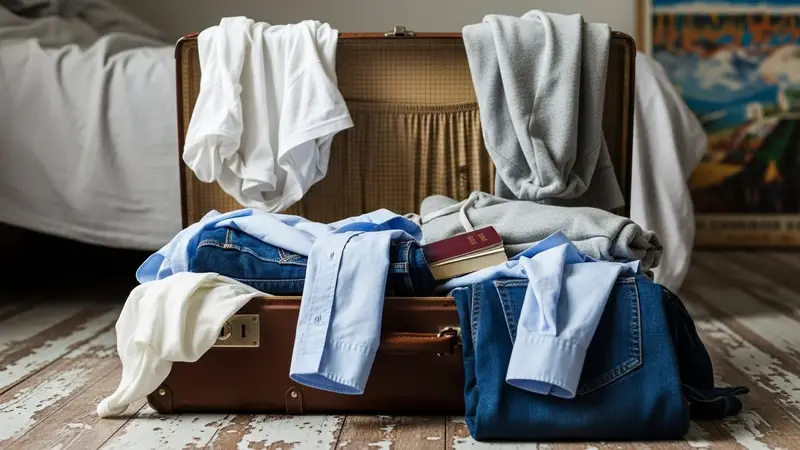
Most people think they’ve mastered airport packing when they squeeze every last item into their carry-on. One method that’s been all over social media shows travelers vacuum-sealing their clothes to save space. It looks amazing in videos, but this trick might actually cause problems at security checkpoints. Those tightly compressed bags can trigger extra screening, turning your quick airport run into a lengthy inspection process. Nobody wants to deal with a bag search when they’re trying to catch a flight.
Vacuum-sealed bags make scanning nearly impossible for security
When you vacuum-seal your clothes, they become so compressed that security scanners can’t see what’s inside. TSA officers need to identify every item passing through their machines, and these tight bundles just show up as dark, mysterious blobs on their screens. Think about it from their perspective: they’re responsible for keeping everyone safe, and they can’t let something unidentifiable pass through just because it might be clothes. The machine shows them an opaque mass, and protocol requires them to investigate further.
This means your bag gets pulled aside for manual inspection. An officer has to open those carefully sealed bags, rummage through your belongings, and verify everything is safe. All that time you saved by cramming more clothes into your luggage? You’ll lose it standing at the security checkpoint while an agent unpacks your stuff. Plus, once those vacuum bags are opened, good luck getting everything sealed and compressed again before your flight boards. You’ll be stuck trying to shove loose clothes back into an overstuffed bag.
Dense items block the view of everything else
Security scanners work by looking through your bag to identify shapes and materials. When you pack items too tightly together, whether it’s a stack of books, a bunch of electronics, or compressed clothing, these dense masses become opaque to the X-ray machine. The scanner can’t see through them to check what’s underneath or around them. This creates blind spots that officers can’t ignore. They’re trained to be cautious about anything they can’t fully see, which means your bag automatically becomes a candidate for additional screening.
Heavy books stacked together are notorious for this problem. So are multiple electronic devices piled on top of each other. Even tightly packed bags without vacuum-sealing can trigger the same response. The solution is to spread items out as much as possible and keep heavier objects near the top of your bag where officers can easily access them if needed. Think about organizing your bag so that if someone were to look at it from above, they could see most of what you packed without having to dig around.
Protein powder and similar substances need special attention
If you’re bringing protein powder, baby formula, or any powdered substance, you need to know the rules. Powders over 12 ounces in your carry-on will get extra screening, and officers might even prohibit them if they can’t figure out what they are. These substances can look suspicious on scanners because their density and texture make them hard to identify. TSA officers see powders flag all the time because they share similar characteristics with materials they’re trained to watch for. Your innocent protein shake mix could hold up the line for several minutes.
The best approach is to pack large amounts of powdered substances in your checked luggage instead. If you must bring them in your carry-on, separate them in a tray before your bag goes through the scanner. Let officers know what you have ahead of time. This transparency speeds up the process and shows you’re being cooperative. Some travelers transfer powders to clear containers to make identification easier, though this isn’t required. Just remember that being upfront about what you’re carrying always works better than trying to sneak things through.
Some solid foods actually count as liquids
This one surprises a lot of people. Peanut butter, despite being spreadable and seemingly solid, is classified as a liquid by TSA. The rule is that if something can be spread, poured, or pumped, it falls under liquid restrictions. That means your jar of peanut butter needs to follow the same rules as shampoo: containers must be 3.4 ounces or less and fit in your quart-sized clear bag. A regular 16-ounce jar of peanut butter won’t make it through security in your carry-on, even if it’s unopened and still sealed from the store.
Other foods that fall into this category include jams, jellies, honey, hummus, and any other spread. Cheese dips, salsa, and similar items also count as liquids. If you’re bringing back food souvenirs from your trip, check whether they’re spreadable before packing them in your carry-on. The safest bet is to put these items in checked luggage where liquid restrictions don’t apply. Nobody wants to surrender their fancy imported jam at security because they didn’t realize it counted as a liquid.
Snow globes have their own weird rules
Snow globes seem harmless, but they’re actually liquid containers. The water and sparkles inside count toward liquid restrictions. TSA only allows snow globes in carry-ons if they contain less than 3.4 ounces of liquid, which rules out most standard-sized globes. Even small ones need to fit in your quart-sized liquids bag along with your toiletries. This catches tons of tourists off guard when they’re trying to bring home a cute souvenir from their trip. That adorable snow globe from your vacation destination might need to go in checked luggage instead.
Larger snow globes will definitely get flagged at security. Officers have to measure the liquid content, and if it exceeds the limit, you’ll have to either mail it home, put it in checked luggage, or surrender it. Some airports have mailing services near security checkpoints specifically for situations like this, but they’re not cheap. If you’re planning to buy snow globe souvenirs, either check a bag or shop after security in the airport stores where anything you purchase can go straight on the plane with you.
Medical items get exceptions but still need declaration
Prescription medications, baby formula, and nutritional supplements don’t follow the standard 3.4-ounce rule. You can bring larger quantities of these items through security, which is a relief for anyone who needs medication or is traveling with an infant. However, you can’t just pack them and hope for the best. These items need to be declared at the checkpoint before your bag goes through the scanner. Officers may need to test the liquids to verify they’re safe, which adds a few minutes to your screening time.
The key is to pull these items out before you reach the X-ray machine and let officers know what you have. This proactive approach prevents confusion and speeds up the process. Keep medications in their original containers when possible, as this helps officers identify them quickly. If you’re bringing baby formula, you don’t need to bring a baby to justify it, but be prepared for questions. Medical liquids are completely allowed, but the declaration process is important. Think of it as a courtesy that helps everyone move through security more efficiently.
Compression cubes work better than vacuum bags
If you want to save space without triggering security concerns, compression cubes are the answer. These fabric organizers compress your clothes using zippers rather than removing all the air. They still save considerable space, but they don’t create those impenetrable dark blobs on security scanners. Officers can usually see through compression cubes well enough to identify clothing, which means your bag is less likely to get pulled for inspection. You get most of the space-saving benefits without the headache.
People who use compression cubes report smoother security experiences overall. The cubes also help keep your bag organized, making it easier to find things without unpacking everything. If security does need to inspect your bag, cubes make the process faster because items are already organized. You won’t end up with a messy pile of clothes to repack. Plus, compression cubes are reusable for years, while vacuum bags can tear or lose their seal. The investment pays off in convenience and peace of mind at security checkpoints.
Smart wardrobe planning beats overpacking every time
Instead of trying to cram your entire closet into a carry-on, think about coordinating your outfits. Choose clothes that mix and match well together. Six tops and three bottoms can create dozens of different outfit combinations if you plan it right. Add a cardigan or jacket that goes with everything, and you’ve got outfits for a week-long trip without needing vacuum-sealed bags. This approach also keeps your bag lighter, which matters when you’re hauling luggage through airports and onto overhead bins.
Overpacking is tempting, but it creates more problems than it solves. Heavy bags are harder to lift and maneuver. If your airline weighs carry-ons, you might have to check an overstuffed bag at the gate and pay extra fees. Coordinating your wardrobe also means less decision fatigue during your trip because everything already works together. You’ll spend less time figuring out what to wear and more time enjoying your destination. The real packing hack isn’t about compression, it’s about being strategic with what you bring in the first place.
Your packing choices affect other travelers too
Security lines are stressful for everyone, especially during busy travel periods. When your bag gets flagged for additional screening, it doesn’t just delay you. The officer who stops to inspect your vacuum-sealed clothes isn’t available to help keep the line moving. People behind you with tight connections might miss their flights because of the backup. This isn’t about blaming anyone, it’s just reality. Airport security is a shared space where everyone’s choices have ripple effects on others around them.
Being considerate means thinking about how your packing methods impact the line behind you. Simple steps like following liquid rules, avoiding suspicious packing methods, and organizing your bag for easy inspection help everyone move faster. You’ll feel better knowing you didn’t hold up someone who’s rushing to make a connection. The few minutes you save by vacuum-sealing clothes aren’t worth the potential 15-minute delay at security that affects dozens of other travelers. Pack smart, follow the rules, and everyone gets through security faster and with less stress.
Airport security doesn’t have to be complicated if you know what triggers extra screening. Skip the vacuum-sealed bags, be smart about powders and spreadable foods, and organize your carry-on so items are easy to identify. These simple changes make a huge difference in how quickly you get through checkpoints. Your fellow travelers will thank you, TSA officers will appreciate the cooperation, and you’ll start your trip without the stress of a bag inspection.

