

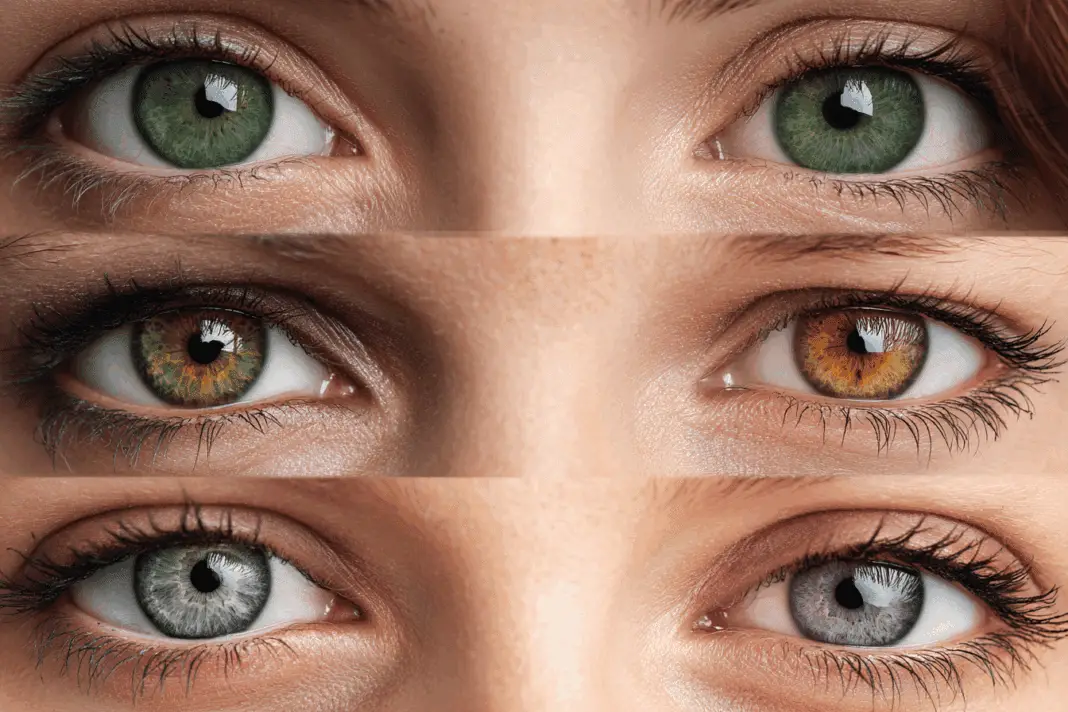
Most people think they know rare eye colors when they see them, but the truth about eye color rarity might surprise anyone who’s ever been mesmerized by an unusual pair of eyes. While brown eyes dominate globally at nearly 80 percent of the population, some eye colors are so uncommon that spotting them feels like finding a hidden treasure. The genetics behind these rare hues involve complex interactions that make certain combinations incredibly scarce, with some appearing in less than one percent of people worldwide.
Green eyes are rarer than most people realize
Green eyes might seem relatively common in movies and magazines, but they’re actually one of the rarest natural eye colors on Earth. Only about 2 percent of the global population has true green eyes, making them far more uncommon than many people assume. This rarity stems from a precise combination of moderate melanin levels and specific light scattering patterns in the iris that create that distinctive emerald appearance.
The genetics behind green eyes involves multiple genes working together in very specific ways, particularly the OCA2 and HERC2 genes that control melanin production. What makes green eyes especially fascinating is their uneven global distribution – they’re most common in Ireland, Scotland, and parts of Northern Europe, where up to 8 percent of the population might have them. In contrast, green eyes are virtually nonexistent in most of Africa and East Asia, occurring in less than 1 percent of people in those regions.
Hazel eyes change color depending on lighting
Hazel eyes represent one of nature’s most dynamic eye colors, appearing to shift between green, brown, and gold depending on lighting conditions and even clothing choices. These color-changing eyes occur in approximately 5 to 8 percent of the world’s population, making them significantly rarer than brown or blue eyes. The shifting appearance happens because hazel eyes contain moderate amounts of melanin distributed unevenly throughout the iris, creating different color zones that become more or less prominent under various lighting conditions.
The science behind hazel eyes involves the Rayleigh scattering effect, the same phenomenon that makes the sky appear blue. Light wavelengths interact differently with the varying melanin concentrations in hazel eyes, causing certain colors to become more prominent at different times. Many people with hazel eyes notice their eyes appear more golden in sunlight but shift toward green or brown in indoor lighting, creating an almost magical transformation that makes these eyes particularly captivating.
Amber eyes glow like liquid gold
Amber eyes possess an almost supernatural golden glow that sets them apart from all other eye colors. Unlike hazel eyes that contain multiple colors, true amber eyes maintain a consistent copper or golden honey color throughout the iris. This rare eye color appears in approximately 5 percent of the global population, with higher concentrations in South America, the Middle East, and parts of Asia. The distinctive golden appearance comes from yellow and russet pigments combined with relatively low melanin levels.
People often confuse amber eyes with light brown or golden hazel eyes, but true amber eyes have a much more uniform color distribution without the multicolored flecks typical of hazel eyes. The golden appearance remains consistent across different lighting conditions, though it may appear more intense in bright light. Some amber eyes contain such vivid golden pigments that they seem to glow from within, creating an almost otherworldly appearance that makes them instantly recognizable and highly prized for their unique beauty.
Gray eyes appear almost silver in certain light
Gray eyes rank among the rarest eye colors, occurring in only about 3 percent of the global population, with the highest concentrations found in Eastern Europe and Russia. These ethereal eyes contain very little melanin, similar to blue eyes, but the collagen fibers in the iris scatter light differently to create a gray rather than blue appearance. Gray eyes can range from light silver to deep charcoal, and they often appear to change intensity based on lighting conditions and surroundings.
What makes gray eyes particularly striking is their ability to appear almost metallic in certain lighting conditions, creating an silver-like shimmer that seems to reflect light rather than absorb it. Some people with gray eyes also have darker gray or blue rings around the outer edge of their iris, adding depth and complexity to their appearance. The rarity and unique appearance of gray eyes often make them appear almost supernatural, contributing to their association with mystery and otherworldliness in literature and popular culture.
Violet eyes exist but are extremely uncommon
True violet eyes represent one of the rarest eye colors in the world, occurring in less than 1 percent of the population. Most cases of violet eyes result from a specific type of albinism where very low melanin levels allow the underlying blood vessels in the iris to show through, creating a purplish tint. However, some people do possess naturally occurring violet eyes without albinism, though this is extraordinarily rare and often involves unique genetic variations that affect melanin distribution and light reflection.
The famous actress Elizabeth Taylor was often cited as having violet eyes, though experts debate whether her eyes were truly violet or simply a very unusual shade of blue that appeared violet under certain lighting conditions. Regardless of the exact mechanism, violet eyes create an almost ethereal appearance that seems to defy natural expectations. The rarity of this eye color has contributed to its mystical reputation and association with otherworldly beauty in various cultures and artistic representations throughout history.
Heterochromia creates two different colored eyes
Heterochromia represents one of the most striking and rare eye variations, where a person has two completely different colored eyes or different colors within the same eye. Complete heterochromia, where each eye is a different color, occurs in less than 1 percent of the population and can result from genetics, injury, or certain medical conditions. This dramatic difference can involve any combination of eye colors, such as one brown eye and one blue eye, or one green eye and one hazel eye.
Sectoral heterochromia, where different colors appear within the same iris, is slightly more common but still quite rare. This condition can be present from birth due to genetic variations in melanin distribution, or it can develop later in life due to injury or certain medical conditions. While heterochromia might seem concerning, it’s usually harmless and simply represents a unique genetic variation that creates one of the most distinctive and memorable eye appearances possible.
Red eyes occur primarily with albinism
Red or pink eyes represent the absolute rarest eye color, occurring almost exclusively in people with severe forms of albinism. This extremely uncommon eye color results from a complete or near-complete absence of melanin in the iris, allowing the blood vessels underneath to show through and create a red or pink appearance. True red eyes occur in far less than 1 percent of the population and are primarily associated with oculocutaneous albinism, a genetic condition that affects pigment production throughout the body.
People with red eyes often experience significant light sensitivity and vision challenges due to the lack of protective melanin in their eyes. The absence of pigment means their eyes cannot filter light effectively, making bright environments uncomfortable or even painful. While red eyes are often portrayed dramatically in fiction and popular culture, in reality, they represent a serious genetic condition that requires careful management and protection from bright light and UV exposure throughout a person’s life.
Eye color can change throughout life
Most people don’t realize that eye color isn’t necessarily permanent throughout life, especially during infancy and early childhood. Many babies are born with light blue or gray eyes because melanin production in the iris hasn’t fully developed yet. As children grow, typically between six months and three years of age, their eyes may darken to brown, hazel, green, or remain blue as melanin production increases and settles into its adult pattern.
Even in adulthood, eye color can undergo subtle changes due to lighting, emotions, clothing choices, and aging. Some people notice their eyes appear different colors depending on what they wear or their surroundings, particularly those with hazel or green eyes. However, dramatic changes in adult eye color, such as brown eyes becoming green, are extremely rare and usually indicate an underlying medical condition that should be evaluated by an eye care professional.
Geographic location affects eye color distribution
Eye color distribution varies dramatically across different geographic regions and ethnic populations, creating fascinating patterns of rarity and commonality around the world. While brown eyes dominate globally, comprising about 79 percent of all people, this percentage changes significantly by region. In Northern and Eastern Europe, blue and green eyes become much more common, while in Africa, Asia, and the Middle East, brown eyes are nearly universal, making any other eye color extremely rare in those populations.
This geographic distribution means that an eye color considered rare globally might be relatively common in specific regions, while being virtually nonexistent in others. For example, green eyes appear in up to 16 percent of people in Ireland but less than 0.1 percent in East Asia. Understanding these regional differences helps explain why certain eye colors seem more or less rare depending on where someone lives and the diversity of their local population.
The next time someone with unusual eye colors catches attention, remember that they’re likely carrying a rare genetic combination that appears in only a small fraction of the world’s population. From the color-shifting magic of hazel eyes to the ethereal beauty of true violet eyes, these rare combinations represent fascinating examples of human genetic diversity. Whether someone has the golden glow of amber eyes or the silver shimmer of gray eyes, they possess something truly special that connects them to the complex and beautiful science of human genetics.

