

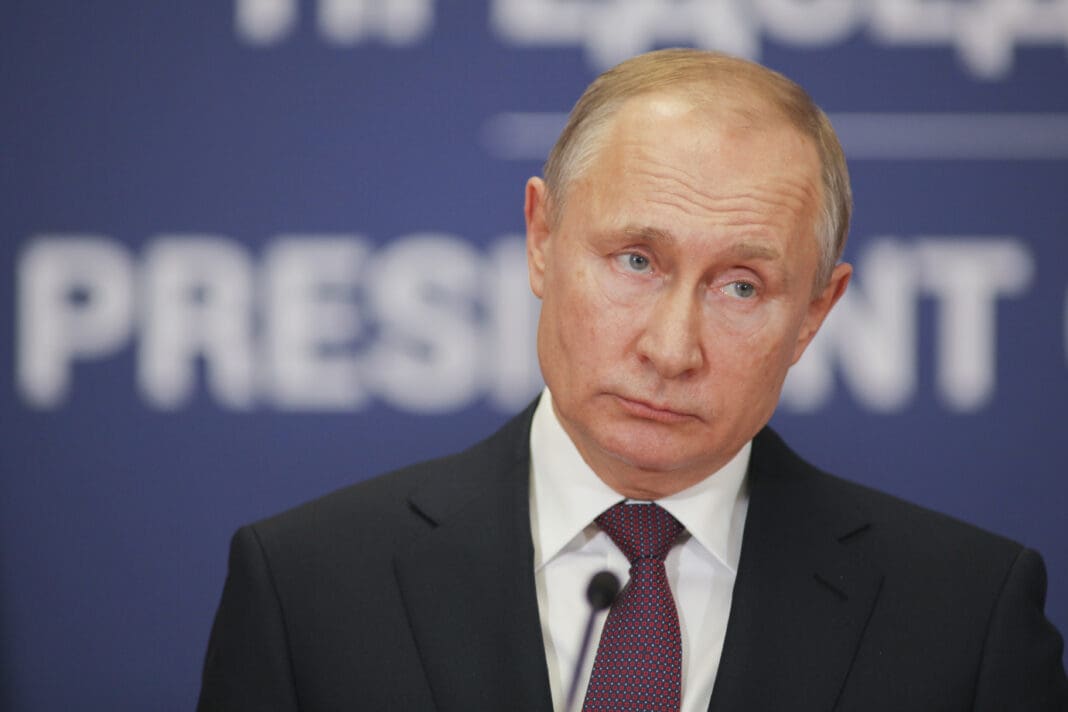
Vladimir Putin has been running Russia for over two decades, and during that time, he’s managed to fool a lot of people about who he really is. While he’s projected an image of a strong, traditional leader defending Russian values, the reality behind closed doors tells a completely different story. Recent investigations have revealed details about his private life, his connections to organized crime, and how he’s used fear and manipulation to stay in power. The man who started as a seemingly safe choice for Russia’s leadership has transformed into one of the world’s most repressive autocrats, and the warning signs were there from the very beginning.
His early connections to the criminal underworld shaped everything
Back in the 1970s, Putin wasn’t the polished strongman you see today. He was an awkward young man in Leningrad who found a mentor in Leonid Usvyatsov, his judo coach. The problem? Usvyatsov was a career criminal with a taste for violence. According to witnesses tracked down by investigative journalists, Putin learned his “appetite for risk and belief in force” from this convicted criminal. This wasn’t just a casual mentorship either. Usvyatsov apparently used his connections to help Putin get into the competitive Law Faculty at Leningrad University, quite a feat for someone who’d studied natural sciences in high school.
Putin stayed under Usvyatsov’s influence between the criminal’s two prison sentences, right up until Usvyatsov was killed in a gangland shooting in 1994. His headstone carries a chilling message: “At last I have died, but the mafia lives forever.” This early relationship with organized crime wasn’t an isolated incident. Later, when Putin became deputy mayor of St. Petersburg, he was a regular at Luna, a strip club protected by his personal bodyguard at the time, Roman Tsepov, another organized crime figure. A photograph of Putin dated December 1999 still hung on the club’s wall, showing just how comfortable he was mixing business with these questionable venues.
His private life contradicted everything he publicly preached
Putin has long positioned himself as a defender of traditional family values against Western decadence. That’s pretty rich considering what was actually happening in his personal life. By the mid-1990s, his marriage to Lyudmila Putina was falling apart. According to a memoir by Lyudmila’s German friend Irena Pietsch, by 1998 Lyudmila was experiencing “unimaginable pain” from “constant humiliation” and “treachery” in her marriage. The memoir paints Putin as someone obsessed with lavish interiors, expensive whisky, and finding ways to make “additional income” rather than focusing on his family.
Sources told investigators that Putin allegedly conducted affairs in a state-owned apartment. This didn’t stop him from orchestrating a honeytrap operation against Yuri Skuratov, the General Prosecutor who was investigating corruption involving the Yeltsin family and top officials. Skuratov’s tryst with prostitutes was captured on surveillance video and broadcast across Russia in March 1999. Putin, then head of the FSB security agency, was put in charge of the commission investigating Skuratov. The prosecutor who had started a corruption investigation known as the “Putin Case” was fired, despite serious questions about the video’s authenticity.
The West completely misjudged him from day one
When Putin took office on New Year’s Eve 1999, he promised to protect “freedom of speech, freedom of conscience, freedom of the mass media, ownership rights, these fundamental elements of a civilized society.” Western leaders ate it up. Bill Clinton met Putin in June 2000 and declared him “fully capable of building a prosperous, strong Russia, while preserving freedom and pluralism and the rule of law.” Looking back, these statements seem almost laughable. Within his first year in office, Putin had already started dismantling independent sources of power, asserting state authority, and using warfare in Chechnya to boost his popularity.
The warning signs were impossible to miss if anyone had been paying attention. He brought independent television networks under government control despite his promises about media freedom. He reinstated the old Soviet national anthem, an early signal to liberals that things were heading backward. His handlers crafted a strongman image with carefully staged photos of Putin on horseback, practicing judo, and famously posing shirtless in Siberia. As one of his spin doctors later admitted, the goal was to make “Putin correspond ideally to the Hollywood image of a savior-hero.” Many international observers dismissed these theatrics as pantomime villainy rather than recognizing the genuine threat he posed.
He built a fanclub among strongmen worldwide
Putin didn’t just fool average citizens and diplomats. He became a role model for rising strongman leaders and cultural conservatives around the globe. Rudy Giuliani praised Putin’s annexation of Crimea, saying “He makes a decision and he executes it, quickly. That’s what you call a leader.” Nigel Farage named Putin the world leader he most admired, calling his handling of Syria “brilliant.” Italy’s Matteo Salvini wore a Putin T-shirt in Red Square. Philippines President Rodrigo Duterte declared “My favorite hero is Putin.” These weren’t fringe figures but mainstream political leaders in their countries.
Most importantly, Xi Jinping became a confirmed admirer. His first state visit after becoming president of China in 2013 was to Moscow to meet Putin. By early 2022, they had held 38 summit meetings and announced a “no limits” partnership just 20 days before Russia invaded Ukraine. As Putin’s spokesman said in 2018, “There’s a demand in the world for special, sovereign leaders, for decisive ones. Putin’s Russia was the starting point.” This global influence shows how Putin’s model of authoritarian leadership inspired similar leaders worldwide, creating a network of autocrats who support each other against democratic values.
The myth of competence eventually crumbled
For years, Putin maintained support by delivering actual economic results. Russia’s GDP grew rapidly in the early 2000s thanks to rising oil prices, and living standards improved noticeably. Life expectancy for Russian men had fallen to below 60 by 1999 due to poverty, unemployment, and what a UN report called “rising self-destructive behavior.” Putin’s promise to restore stability and pride from the Soviet era appealed to people who’d lost everything in the chaotic 1990s. The economic windfall from oil and gas sales was directed into a national wealth fund, and Russia avoided some typical resource-curse problems like crushing debt.
But after 2008, the quality of governance started declining. Russia never matched the high growth rates of 2003 to 2008 again, even when oil prices rose. By 2012, when Putin returned to the presidency after a brief stint as prime minister, things had changed. The regime began relying less on spinning a narrative of competence and more on generating fear. Civil liberties were curtailed, opposition politics were restricted to the narrowest terms, and courts came under strict oversight. The myth of authoritarian competence that had sustained Putin’s regime was steadily undermined as actual governance worsened, forcing him to rely increasingly on repression rather than persuasion.
Repression replaced propaganda as the main control tool
The shift from persuasion to fear became obvious after 2012. In January 2021, Putin jailed opposition leader Alexei Navalny, then cracked down on public demonstrations. By December 2021, Russia’s oldest human rights group, Memorial, founded during Gorbachev’s reforms in 1987, was shut down. When Russia invaded Ukraine in February 2022, virtually all independent media sources closed or fled into exile as their leaders faced certain arrest. The state imposed heavy fines and jail time for anyone criticizing the “special military operation.” Fourteen thousand protesters were reportedly arrested in the weeks after the invasion began.
Activities that were legal a year before suddenly carried draconian penalties. The regime needed full censorship because it was imperative that Russians not discover how badly the military campaign was going. Should word of Russian losses spread and stir anger, the government was ready with harsh punishment to deter action. The Economist Intelligence Unit reported that Russia suffered “the biggest democratic decline of any country in the world” in 2022, dropping 22 places to rank 146th out of 167 countries. What started as gradual erosion of freedoms became a full assault on anyone who questioned the government’s narrative or actions.
His obsession with history revealed dangerous ambitions
Putin’s nostalgia for the Soviet Union went beyond just wanting economic stability. In a 2005 speech, he called the collapse of the Soviet Union “the greatest geopolitical catastrophe of the 20th century.” As years passed, he became increasingly fixated on Russian history and territorial restoration. In summer 2021, he published a lengthy essay titled “On the Historical Unity of Russians and Ukrainians.” Some observers saw this essay as a manifesto for invasion, though many refused to believe he’d actually go through with something so reckless.
The invasion of Ukraine in February 2022 showed that experienced Putin watchers had misjudged him again. Despite western intelligence warnings for months that Russia was preparing to attack, many experts refused to believe it would happen. They thought Putin was ruthless but rational, calculating and committed to Russia’s integration into the world economy. They were wrong. More than 10 million Ukrainians fled their homes within a month, thousands were killed, and cities like Mariupol were destroyed. Putin’s willingness to gamble everything on reclaiming territory he viewed as historically Russian showed that his private obsessions had become dangerous policy.
The journalists who exposed him paid a heavy price
The full story of Putin’s private life and rise to power comes from years of dangerous investigative work by Russian journalists Roman Badanin and Mikhail Rubin. Their book “The Tsar In Propria Persona” draws on anonymous sources, documents, news clips, and memoirs to create one of the most detailed portraits of Putin and his circle. These journalists worked for Proekt, an investigative outlet that has repeatedly exposed the commercial and personal relationships underpinning the Putin regime since 2018. Their reporting violated a decades-long Kremlin taboo on mentioning the Russian leader’s private life.
The consequences were severe. In 2021, Moscow police raided both journalists’ homes as part of a criminal libel investigation into their reporting on Ilya Traber, an alleged organized crime figure and Putin acquaintance. Badanin and Rubin now live in exile in the United States, running Proekt from abroad. “In a broad sense, this book cost us our homeland,” Badanin said. “The Russian government persecuted us for digging into Putin, his friends and their bad deeds.” Their work fills a void left by official biographies and silenced sources, but as Badanin noted, “most people in Russia know and remember very little of what happened under Putin, say 15 or 20 years ago” because “media have been destroyed, archives are closed and inaccessible, many witnesses are already dead.” The regime has successfully erased public memory of its own actions.
His bullying tactics were always hiding in plain sight
Putin’s approach to control has always involved a mix of intimidation and distraction. At a 2009 meeting with journalists in Davos, he demonstrated this perfectly. When an American journalist asked a question that seemed to annoy him, Putin deflected by commenting on the journalist’s large ring: “Why is the stone so large? You surely don’t mind me asking, because you wouldn’t be wearing something like that unless you were trying to draw attention to yourself.” The room laughed, the original question was forgotten, and Putin had successfully bullied someone while appearing almost playful.
This same tactic appeared again just before the Ukraine invasion. In a televised Kremlin meeting, Putin toyed with Sergei Naryshkin, head of foreign intelligence, making the feared official look like a stuttering fool. The pleasure Putin took in humiliating people in front of an audience was consistent across decades. The difference was that in 2009, western observers still treated him as a pantomime villain worth laughing at. By 2022, nobody was laughing anymore. Putin’s ability to radiate menace without raising his voice had always been there, but it took Europe’s biggest land war since 1945 for people to finally take the threat seriously.
The story of Vladimir Putin is a lesson in paying attention to who people really are rather than who they claim to be. His connections to organized crime, his disregard for the values he publicly championed, and his willingness to use violence and intimidation were all visible from the start. The world chose to see a rational actor who could be worked with, when the reality was a former KGB agent shaped by criminals and committed to restoring Russian power at any cost. Those who exposed the truth paid with their freedom and homeland, while those who believed the myth are now dealing with the consequences of decades of willful blindness.

