

You’d think ordering a pizza would be one of the last safe, simple transactions in American life. Call the number, pick your toppings, swipe your card, eat on the couch. Done. But a growing collection of cons — some shockingly low-tech, others disturbingly sophisticated — are turning your Friday night pizza order into a financial trap. And most people have absolutely no idea it’s happening.
The Phone Hijack That Started in Alabama
This one sounds like something out of a bad heist movie, except it’s real and it worked. The Better Business Bureau of Eastern North Carolina issued a warning about an elaborate scam targeting pizza shops. Here’s how it goes: a person walks into a pizza restaurant and asks to use the store’s phone. Maybe they say it’s an emergency. Maybe they look flustered. The staff, being decent humans, hand over the phone.
Except the person doesn’t make a call. They reroute the restaurant’s incoming phone lines to a different number — one controlled by scammers. From that point on, every customer who calls to place an order is actually talking to a thief. They give their credit card number, their address, their name. They hang up thinking dinner’s on the way. It never arrives.
Two Marco’s Pizza locations were hit by this, including one owned by franchise operator Jerry Schoo in Decatur, Alabama. Employees only caught on because the phones mysteriously stopped ringing on what should have been a busy night. When they contacted their phone company, they found out their lines had been redirected. The BBB warned this scam is easily replicable and could spread nationwide. Think about that — any pizza shop with a landline is a potential target.
Fake Pizza Websites That Look Exactly Like the Real Thing
If the phone hijack feels old-school, the digital version is worse. Cybersecurity researchers found a global phishing campaign that’s been running since 2023, specifically targeting pizza chains. The scam started getting attention after police in Singapore issued an advisory about fake Domino’s websites. Between November and December 2023, seven victims in Singapore lost about $27,000 Singapore dollars to a single variant.
The setup is disturbingly good. Scammers build near-identical replicas of real pizza delivery sites. When you try to place your order, the site asks for a one-time password — which feels like a security feature. But the OTP gets captured by the attackers, giving them access to your credit card. The fake sites use domain names that are just slightly off. One spoofed site for Domino’s used “domino-plzacom” — close enough that most people wouldn’t notice, especially on a phone screen at 9 PM when they’re hungry.
Here’s the part that should make you angry: the scammers reportedly paid for search engine advertising. That means their fake pizza sites appeared at the top of Google results. You could search for your local pizza place, click the first link, and land on a scam site. The attack spread far beyond Singapore, hitting Canadian pizza chains and raising alarms in multiple countries.
The Delivery Fee Shell Game
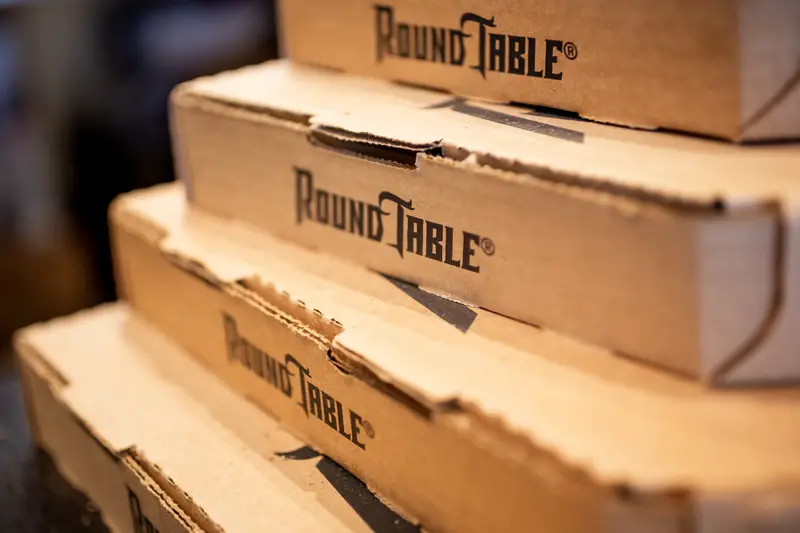
Not every pizza con involves a shadowy criminal enterprise. Some of them come straight from the restaurant itself. Delivery fees have been climbing for years, and they’ve become a quiet way of raising prices without touching the menu. Round Table Pizza tacks on an extra $5 delivery fee. Some independent shops charge $6. And here’s what most customers don’t realize: that fee almost never goes to the driver.
Almost all delivery drivers cover 100% of their own costs — gas, insurance, repairs, oil changes, tires, brakes, even the vehicle itself. The delivery charge mostly goes to the restaurant to offset rising food costs, employment taxes, and other expenses. But because customers see “delivery fee” and assume it’s a tip or driver compensation, they tip less. One driver reported that their hourly earnings dropped from $10-12 per hour to about half that as delivery fees increased but tips declined.
Then there are the truly creative fees. Lawsuits have targeted restaurants that add “fuel surcharges,” “temporary inflation fees,” “card swipe fees,” and “non-cash adjustments” to delivery orders. One place added a 3% “wellness fee” to supposedly cover employee health insurance. Another charged a “kitchen appreciation fee” — which is apparently a mandatory tip for kitchen staff that you didn’t agree to. These fees often aren’t obvious when you’re ordering, only showing up in the final total.
Your Frozen Pizza Is Getting Smaller and Nobody Will Admit It
DiGiorno has long sold itself as a homemade replacement for delivery pizza. “It’s not delivery, it’s DiGiorno” — you know the slogan. But Reddit users started noticing something was off. The boxes looked smaller. The pizzas inside had shrunk or changed shape. And the price? It went up. DiGiorno has not publicly responded to these accusations.
This is textbook shrinkflation — shrink the product, keep the price the same, and hope nobody notices. Consumer advocate Edgar Dworsky, a former assistant attorney general in Massachusetts who has tracked shrinkflation for decades, said we’re in a “tidal wave” of it right now. Companies don’t just shrink the box either. Some change ingredients. Others do flashy package redesigns so you don’t compare the old product to the new one. It’s all calculated to keep you from realizing you’re paying more for less.
Domino’s did something unusual in January 2022: they openly shrank their 10-piece chicken wings down to 8 pieces for the same $7.99 price, blaming the rising cost of chicken. At least they were upfront about it. Later, they ran a promotional deal called “MOREflation” in September 2024, letting customers upgrade a medium pizza to a large for free — basically marketing against the very problem they contributed to.
How a Restaurant Owner Scammed DoorDash Using Its Own System
This one flips the script entirely. A pizza restaurant owner and a finance guy named Ranjan Roy figured out that DoorDash had listed the restaurant on its platform without permission. DoorDash was scraping the restaurant’s website for menu data, and the technology misread the prices. A $24 specialty pizza was listed on DoorDash for $16 — the price of a plain cheese.
So they tested it. They ordered 10 pizzas from the restaurant through DoorDash, delivered to a friend’s house. They paid $160 total. But the DoorDash driver paid the restaurant $240 — the real price. After expenses, the restaurant netted $10 in profit from ordering its own food. Then they realized something: since the pizzas were going to themselves, nobody would complain about quality. They started filling the boxes with raw dough instead of actually making pizzas. That bumped the profit on a 10-pizza order from $10 to $75. Done a few times a night, that’s hundreds in pure profit.
DoorDash never caught on. Roy called the company part of the “WeWorkian class” — raise a ton of money, lose a ton of money, and destroy the basic economics of an entire industry in the process.
The $18 Pizza and the Death of Cheap Dinner
The average cost of a large cheese pizza in the U.S. hit $18.33 in February 2024, according to food delivery platform Slice’s annual report. That was up from $17.81 in 2023 and $16.74 in 2022. In Michigan, the average was $19.48 per pie — a 21.7% increase from 2022. Washington State holds the record at $25.75 for a large cheese. Nebraska is the cheapest at $13.91.
Big chains still offer cheaper options — Little Caesars sells a large round cheese for $7.29, Domino’s does a large one-topping for $7.99 — but independent shops can’t compete on price. A large cheese from Detroit’s Supino Pizza costs about $18. Buddy’s Pizza charges $17.99. The gap between chain prices and independent prices keeps widening, pushing customers toward the big names and squeezing local shops.
Meanwhile, the frozen pizza market has been booming: $7 billion in sales in 2024, up from $5.1 billion in 2019. When a delivery pizza costs $18 plus fees plus tip, a $6 frozen pie starts looking pretty reasonable. That math is reshaping the industry. Pizza has dropped from second to sixth among restaurant categories since the 1990s, now trailing coffee shops and Mexican restaurants. Chains like Pieology, Anthony’s Coal Fired Pizza, and Bertucci’s have filed for bankruptcy or closed locations.
Pizza still generates around $31 billion in annual restaurant sales, and about one in 10 Americans eat it daily. It’s not going away. But the days of cheap, simple, no-surprises pizza ordering? Those might be over. Between scammers hijacking phone lines, fake websites stealing your card info, hidden fees inflating your total, and the pizza itself literally getting smaller — your Friday night order has become a minefield of small rip-offs. Keep your eyes open. And maybe just pick it up yourself.

