

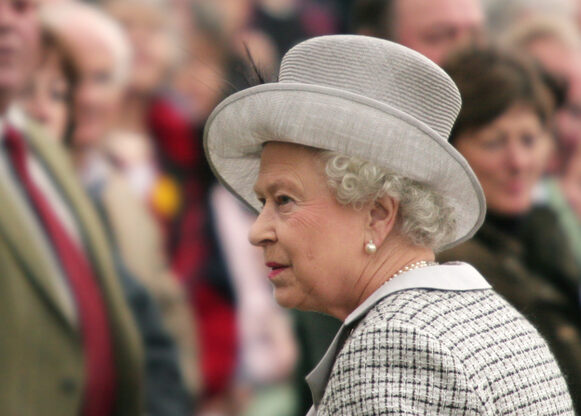
Queen Elizabeth II spent 70 years on the throne, weathering world wars, political scandals, family dramas, and even a global pandemic without breaking a sweat. She met with world leaders, handled economic crises, and kept her composure through some of the most challenging moments in modern history. But according to royal biographer Robert Hardman, there was one thing that genuinely scared her—and it wasn’t what anyone would expect. It wasn’t public speaking, international conflicts, or even the intense scrutiny that came with being the most famous woman in the world. Her fear was much more specific, and it created some serious tension within the royal family for decades.
Helicopters were the queen’s one true fear
Most people would assume the Queen feared something grand or historically significant, but royal biographer Robert Hardman revealed something entirely different. Speaking on the Daily Mail’s podcast “Queens, Kings and Dastardly Things,” Hardman explained that helicopters terrified Her Majesty throughout her entire reign. “She was only afraid of one thing, and that was helicopters,” he said. “She could put up with everything else. She’d been through the war, she’d been through heaven knows what, but she always had a thing about helicopters.” This wasn’t just a mild discomfort either—it was a genuine fear that stayed with her until the end of her life.
The irony wasn’t lost on anyone close to the royal family. Here was a woman who served as a mechanic and driver during World War II, who rode horses fearlessly well into her 90s, and who handled rattlesnakes and exotic animals during royal tours without flinching. Yet the thought of climbing into a helicopter made her genuinely nervous. Even more interesting is that this fear didn’t stop her from doing her duty when necessary. Throughout her reign, she occasionally had to travel by helicopter for security reasons or tight schedules, but she remained reluctant about using them, especially in bad weather or during winter months.
A tragic accident in 1967 triggered her phobia
The Queen’s fear wasn’t random or irrational—it stemmed from a real tragedy that hit close to home. In December 1967, her flight captain JHL Blount died in a helicopter crash along with three passengers. The Westland Whirlwind helicopter they were traveling in suffered a catastrophic mechanical failure when the main rotor hub and blade suddenly detached due to fatigue failure of the drive shaft. The helicopter crashed in a field while traveling from Oxfordshire to Somerset, killing everyone on board instantly. This wasn’t just a news story for Elizabeth—Blount was someone she knew personally, someone who had served her faithfully.
According to Hardman, the accident left “a very deep impression on the Queen,” and she was noticeably upset by the loss. From that moment forward, she tried to avoid helicopter travel whenever possible. The mechanical nature of the accident—a simple part failure that led to such devastating consequences—clearly stayed with her. She understood that even with the best pilots and maintenance crews, helicopters had vulnerabilities that planes didn’t. This wasn’t paranoia; it was a rational concern based on a real experience that had taken someone’s life right in front of her eyes, metaphorically speaking.
She had to face her fear during the Troubles
In 1977, Queen Elizabeth celebrated her Silver Jubilee, marking 25 years on the throne. She was determined to visit every corner of her realm, including Northern Ireland, which was experiencing some of the worst violence of the Troubles. The political situation was extremely dangerous, with the IRA actively targeting British officials and public figures. Security experts made it clear that traveling by car through Northern Ireland would be far too risky. The only safe way to move around the region was by helicopter, where she could be flown directly from secure location to secure location without exposure on the roads.
Hardman explained that the Queen “had no choice” in the matter. Despite her deep-seated fear, she climbed aboard a Royal Navy helicopter for the first time since the 1967 crash and allowed herself to be flown around Northern Ireland for her Jubilee tour. This wasn’t a short flight either—she spent considerable time in helicopters during that visit, moving between various cities and towns to greet her subjects. The experience didn’t cure her fear, though. Even decades later, she remained reluctant to use helicopters in challenging weather conditions. Her willingness to face this fear for the sake of duty showed the kind of dedication she had to her role as monarch.
Her own family members became helicopter pilots
The situation became even more complicated when several of the Queen’s own children and grandchildren decided to become helicopter pilots. Prince Charles, Prince Andrew, and Prince Edward all trained as Army helicopter pilots during their military service. Later, Prince William and Prince Harry followed in their footsteps. Harry even flew Apache helicopters during his deployments to Afghanistan, conducting combat missions in one of the most dangerous war zones in the world. William, who wasn’t allowed to serve in active combat zones as the heir to the throne, became a RAF search-and-rescue pilot instead.
The irony wasn’t lost on anyone—the one thing the Queen feared most became a career path for multiple members of her immediate family. Hardman noted that “she never liked them” flying helicopters, but she seemed to accept it as part of their military service. After all, the royal family has a long tradition of military service, and Queen Elizabeth herself had served during World War II. She understood that duty sometimes required doing things that made you uncomfortable. Still, knowing that her sons and grandsons were regularly flying helicopters must have caused her considerable anxiety, especially when they were in dangerous situations like Harry’s combat deployments.
She clashed with Prince William over his children
The Queen’s fear became a source of family conflict when Prince William started flying his own children in helicopters. As an experienced pilot, William frequently flew his family the 115 miles from Kensington Palace to Anmer Hall, their home in Norfolk. This was convenient and saved time, but it made the Queen extremely nervous. She had sharp words with her grandson about the practice, specifically warning him against flying with Prince George, who is second in line to the throne after William. Her concern wasn’t just about helicopter safety in general—it was about the line of succession.
Royal biographer Robert Jobson wrote in his book “Catherine, the Princess of Wales: A Biography of the Future Queen” that the Queen “did not hold back” when addressing William about this issue. She reminded him that he always had to be aware of the succession and the potential consequences if something went wrong. According to sources who spoke to The Sun, the Queen told close friends and courtiers that she wanted William to stop flying his family, particularly in bad weather. “It keeps the Queen awake at night and she is understandably very worried,” one insider revealed. The situation was serious enough that King Charles later made William sign a document acknowledging the risks and taking full responsibility if anything went wrong.
Royal travel rules exist to protect the succession
The royal family has a longstanding tradition that two heirs to the throne shouldn’t travel together on the same aircraft or helicopter. This rule exists to ensure that if a catastrophic accident occurs, the line of succession remains intact and the monarchy can continue. The rule typically applies to royals aged 12 and older, which means Prince George could potentially be banned from flying with his father starting in July 2025 when he turns 12. This isn’t just a suggestion—it’s a serious protocol designed to protect the institution of the monarchy itself.
William himself had to follow this rule starting on his 12th birthday in 1994, when he began flying separately from his father, then-Prince Charles. Graham Laurie, who flew the Queen during his career, discussed the travel rule in the podcast “A Right Royal,” saying he would expect the same protocol to apply to George. However, there is a workaround—if King Charles gives specific permission, the family can continue traveling together. It remains to be seen whether William and Kate will stick to the traditional rule or seek an exception from the King. The Queen’s concerns about helicopter safety make the succession rule even more significant, as it addresses both protocol and practical safety concerns.
She faced her fear for the 2012 Olympics
Perhaps the most public display of Queen Elizabeth confronting her helicopter fear came during the 2012 London Olympics opening ceremony. In a memorable sketch with Daniel Craig as James Bond, the Queen appeared to parachute from a helicopter into Olympic Stadium. While she obviously didn’t make the actual jump, she did film scenes that showed her apparently boarding a helicopter at Buckingham Palace. Director Danny Boyle revealed that they had asked for permission to use a double, possibly Helen Mirren, but the Palace came back with a surprising response—the Queen wanted to play herself.
The fact that she agreed to participate in a sketch involving a helicopter, given her well-documented fear, makes the moment even more remarkable. According to royal biographer Tina Brown in “The Palace Papers,” the Queen thought it would be “a great joke to amuse her grandchildren.” Her only real concern was keeping it secret until the ceremony. The sketch was such a closely guarded secret that even Prince Charles, Prince William, and Prince Harry didn’t know about it beforehand. When the film started playing during the ceremony, Charles looked confused until he realized it was actually his mother on screen. William and Harry were reportedly beside themselves with excitement, shouting “Go Granny!” as the sequence played out.
The fear never completely disappeared
Even after decades of occasionally using helicopters when necessary, Queen Elizabeth never fully overcame her fear. Hardman noted that “even at the end of her life, she was very reluctant to use helicopters in bad weather and at night and particularly during winter.” This wasn’t an irrational phobia that she could simply talk herself out of—it was a deeply rooted concern based on a real tragedy and a genuine understanding of the risks involved. She knew the statistics, she understood the mechanical vulnerabilities, and she had personally experienced the loss of someone in a helicopter accident.
Her continued wariness actually shows a kind of wisdom. Helicopters, while generally safe when properly maintained and operated, do have higher accident rates than fixed-wing aircraft. The Queen’s preference for other forms of transportation wasn’t paranoia—it was a calculated risk assessment. She would use helicopters when duty demanded it, such as for security reasons or impossible schedules, but she never pretended to be comfortable with them. This honesty about her limitations, combined with her willingness to face the fear when necessary, revealed a lot about her character. She wasn’t fearless; she was brave enough to acknowledge her fear and do what needed to be done anyway.
Her fear made her more relatable
Learning about Queen Elizabeth’s fear of helicopters actually made her more human and relatable to many people. For decades, she appeared almost superhuman in her composure and dedication to duty. She never seemed rattled, never showed weakness, and always maintained that famous stiff upper lip. Discovering that she had a genuine fear—and that it was something as specific and understandable as helicopters—made her seem more like a real person. Everyone has fears, whether it’s flying, heights, spiders, or public speaking. The difference is that most people don’t have to face their fears while representing an entire nation.
The Queen’s handling of her fear also provides a lesson in how to deal with things that scare us. She didn’t let her fear control her decisions when duty called. She didn’t create elaborate excuses or delegate responsibilities to avoid helicopters. Instead, she acknowledged her discomfort, took precautions when possible (like avoiding bad weather flights), and got on with what needed to be done. This approach—facing fear without pretending it doesn’t exist—is probably more effective than either giving in completely or denying the fear altogether. Her example shows that courage isn’t the absence of fear; it’s doing what needs to be done despite being genuinely scared.
Queen Elizabeth II’s fear of helicopters reveals a fascinating dimension of her personality that the public rarely saw. The woman who seemed unshakeable through wars, scandals, and political upheavals had a very human vulnerability rooted in a real tragedy. Her willingness to board helicopters when duty demanded it, despite never overcoming her fear, demonstrates the kind of quiet courage that defined her reign. Whether clashing with Prince William over his flying habits or agreeing to that memorable Olympics sketch, she showed that being brave doesn’t mean being fearless—it means facing your fears when it matters most.

