

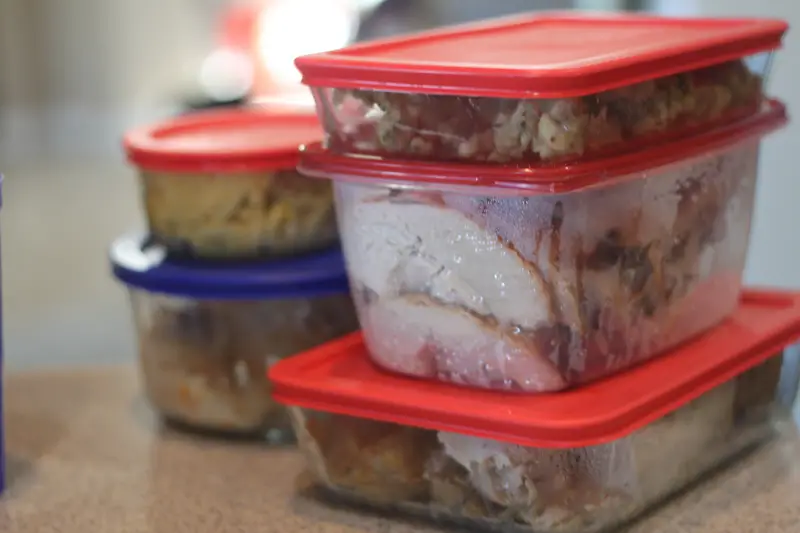
Americans throw away roughly 60 million tons of food every year, and one of the biggest reasons is that nagging voice in the back of your head saying, “Is this still good?” Most of the time, your leftovers are perfectly fine. But sometimes, that little voice is right — and the consequences aren’t just a mildly upset stomach. Some leftover foods can genuinely land you in the hospital, and the scary part is that reheating them won’t always save you.
Here’s what actually happens to certain foods after they sit around, and why the “just nuke it” approach doesn’t always work.
Leftover Rice Has Its Own Syndrome
This one catches people off guard more than anything else on this list. Rice — plain, boring, harmless-looking rice — is one of the most common culprits behind food poisoning from leftovers. It even has a nickname in the medical world: fried rice syndrome.
The problem is a bacterium called Bacillus cereus. Its spores live in uncooked rice and can survive being boiled or steamed. That’s right — cooking rice doesn’t kill the spores. Once the rice cools down and sits in the temperature range between 40°F and 140°F (known as the “danger zone”), those spores wake up, multiply, and start producing toxins. At around 86°F, a colony of B. cereus can double in size every 20 minutes. Leave a pot of rice on the counter after dinner while you watch a couple episodes of something on Netflix, and you might be dealing with serious nausea and vomiting six hours later.
Here’s the real kicker: the toxins B. cereus produces are heat-stable. Meaning reheating the rice — even blasting it in the microwave — won’t destroy them. You’ll kill the living bacteria, sure, but the toxins survive. Most people recover within 24 hours, but it’s a miserable 24 hours. The fix is simple: refrigerate cooked rice within two hours, store it in small shallow containers so it cools fast, and eat it within a day or two.
Pasta Has the Same Problem
If rice surprised you, pasta is the same deal. B. cereus doesn’t care if it’s penne or jasmine. It thrives on starchy foods left at room temperature. That container of spaghetti you cooked Sunday and left on the stove until Monday morning? It’s been sitting in bacterial paradise for hours.
In the 1970s, a string of food poisoning outbreaks linked to leftover rice and pasta brought B. cereus to public attention, but somehow the message never really stuck with everyday home cooks. People tend to treat pasta like it’s indestructible — something about it being dry and shelf-stable before cooking makes us assume the cooked version is equally tough. It’s not. The same rules apply: cool it fast, refrigerate it within two hours, and don’t reheat it more than once. If you’ve got leftover pasta that’s been reheated once already and you still have some left, throw it out.
Baked Potatoes Wrapped in Foil Can Breed Botulism
This one is genuinely alarming. If you’ve ever wrapped a potato in aluminum foil and baked it — which is about as American as it gets — there’s a specific risk you should know about. The foil creates a low-oxygen environment around the potato. That’s the exact condition where Clostridium botulinum, the bacterium that produces the toxin responsible for botulism, loves to grow.
The spores of C. botulinum can survive oven temperatures. So when you pull your foil-wrapped potato out of the oven and leave it on the counter to cool, those spores have a warm, oxygen-free environment to get to work. Botulism is no joke — it can cause paralysis and breathing problems, typically beginning 18 to 36 hours after eating contaminated food. And zapping a potato in the microwave for 30 to 60 seconds won’t destroy the toxin.
The solution: if you bake potatoes in foil, either eat them right away or get them into the fridge within two hours. Don’t let them sit on the counter overnight still wrapped up. That cozy little foil jacket is basically an incubator.
Leftover Chicken Is a Salmonella Time Bomb
Most people know raw chicken is risky. But leftover cooked chicken gets treated way too casually. The issue is that chicken tends to carry salmonella, and if it wasn’t cooked to a high enough internal temperature — 165°F all the way through — some of those bacteria survive. Then, when the leftovers sit out or get stored improperly, whatever survived starts multiplying.
Reheating is where people get sloppy. Microwaves are notoriously uneven — they create hot spots and cold spots. That means your leftover chicken breast might be scalding on one edge and barely warm in the middle, giving bacteria a safe pocket to hang out in. When you reheat chicken, turn the pieces so they heat evenly, and use a food thermometer to verify it hits 165°F throughout. And don’t reheat it more than once — if you’ve got leftover reheated chicken, it’s done. Make chicken salad or toss it.
Seafood Goes Bad Faster Than Almost Anything
Seafood was responsible for 28 percent of reported foodborne illness outbreaks in the U.S. in 2015, according to CDC data. That’s more than a quarter of all outbreaks, from a food category that makes up a small fraction of what Americans eat. Fish and shellfish carry bacteria like salmonella and vibrio vulnificus, and they spoil faster than most proteins.
The two-hour rule applies to seafood like everything else — don’t leave it at room temperature for more than two hours, or one hour if the room is above 90°F. But the window for eating cooked seafood leftovers is shorter than you might think. Most food safety experts say to toss leftover cooked seafood after just two days in the fridge, compared to the three-to-four-day window for most other leftovers. If it smells even slightly off, don’t debate it. Throw it away. Seafood can be expensive, but so is an ER visit.
Eggs With Runny Yolks Are Riskier Than You Think
Soft-scrambled eggs, sunny-side up, eggs over easy — these are breakfast staples for millions of Americans. The problem is that eggs almost always contain salmonella, according to food scientist Kantha Shelke, PhD. Methods that use gentle heat for short periods don’t necessarily kill the bacteria. Any method that results in a runny yolk is leaving the door open.
Now imagine making a batch of soft-scrambled eggs, not finishing them, and leaving them on the counter for a while before tossing them in the fridge. You’ve given salmonella ideal conditions to multiply. Eggs are one of those foods that people tend to be casual about — we leave them sitting in a pan on the stove, we bring them to brunch and set them on a buffet table. But bacteria multiply fast at room temperature, and eggs are one of the worst offenders. If you’re not eating them right away, refrigerate them immediately — and when you reheat them, make sure they’re thoroughly hot throughout.
Leftover Meat — Especially From Big Holiday Batches
Thanksgiving turkey. Christmas ham. Fourth of July cookout leftovers. Big batches of meat are an American tradition, and so is leaving them out on the counter while everyone eats, talks, and goes back for seconds over the course of several hours. That’s exactly where Clostridium perfringens comes in.
This bacterium is responsible for about 15 times the number of foodborne illnesses as B. cereus and is especially common around the holidays. It loves leftover roast beef and whole turkey. Like B. cereus, it forms spores that survive cooking, and it produces toxins as it grows on food left in the danger zone. The diarrhea usually shows up 6 to 24 hours after eating.
The fix for big batches: don’t put a giant pot of soup or a whole turkey in the fridge and hope for the best. Large masses of hot food cool slowly, keeping the center in the danger zone for way too long. Instead, divide it into smaller, shallow containers so it cools quickly. If you’re doing a buffet, keep meat above 140°F with a chafing dish or warming tray. And get those leftovers in the fridge within two hours.
The Toxin Problem Nobody Talks About
There’s a running theme here that most people completely miss: several of these bacteria produce toxins that survive reheating. We’ve been trained to think that cooking food to a high temperature makes it safe. That’s true for the bacteria themselves — heat kills them. But the poisons they’ve already produced? Those stick around.
Staphylococcus aureus is another major offender. It lives on the skin, in nasal passages, and on the hair of more than 50 percent of healthy people. It contaminates food easily — a cook touches their face, then handles your food, and the bacteria are transferred. If that food sits at room temperature, the bacteria produce a heat-stable toxin. You can reheat the food to 300°F and the toxin won’t budge. The CDC estimates more than 240,000 cases of Staph aureus food poisoning happen in the U.S. every year. It thrives in salty foods like ham and cheese, as well as meat, eggs, salads, dairy, and baked goods — basically everything on a party spread.
The takeaway from all of this isn’t to be paranoid about every leftover. It’s to understand that the two-hour rule exists for a reason, that cooling food quickly matters more than most people realize, and that reheating isn’t a magic fix. Treat your leftovers with a little respect, and they’ll treat you fine. Ignore the rules, and you might be spending the next 24 hours regretting that last-night rice.

