

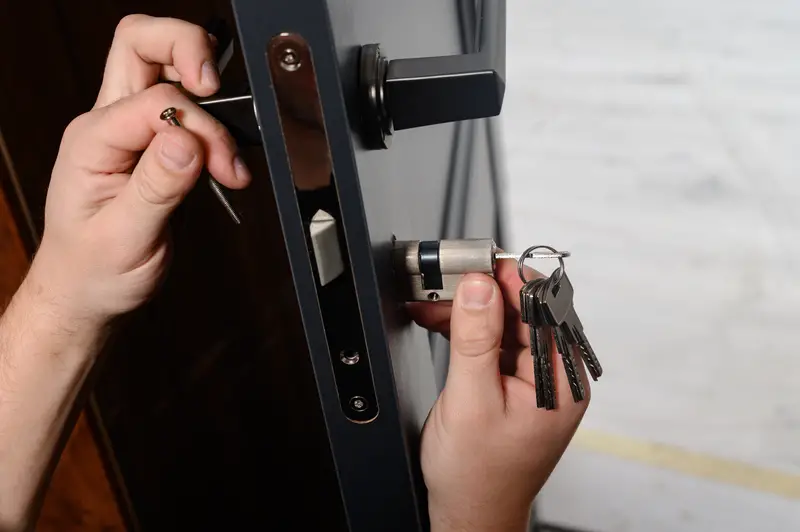
There’s that cold metallic scrape when the key slides in wrong — that tiny grinding sound you’ve been ignoring for months. You jiggle it, lean into the door with your shoulder, and eventually it catches. No big deal, right? Except to a locksmith, that sound is a story. And most of what they know about your front door, they’re keeping to themselves.
Your Deadbolt Was Probably Installed Wrong
Here’s something that would make a lot of homeowners uncomfortable: contractors mess up deadbolt installations all the time. Locksmiths see it constantly. The deadbolt is supposed to have at least a one-inch throw — that’s how far the bolt extends into the door frame. On the strike side, the security plate should be fastened with screws at least three inches long, anchored deep into the wood frame behind the trim. Most aren’t. A lot of the time, you’ll find short little screws barely gripping the soft wood of the door jamb. That deadbolt might look solid from the outside, but it’s basically decorative. An experienced locksmith can spot installation problems in seconds, but unless you’re paying them to inspect it, they probably won’t bring it up unprompted. Why would they? You called about a lockout, not a security audit.
Do You Have a Window Near Your Door?
A thumb-turn deadbolt — the kind where you just twist a little knob on the inside to lock or unlock it — feels secure enough when you’re standing in your hallway. But if there’s a window on or beside your front door, a burglar doesn’t need to pick anything. They break the glass, reach in, and turn the thumb latch. Done. The whole thing takes maybe ten seconds.
The fix is a double cylinder lock, which requires a key on both the inside and the outside. It’s not the most convenient thing in the world for daily use, and some local fire codes actually restrict them because they can slow down an exit during an emergency. But if your front door has sidelights or a big decorative window, it’s something worth seriously considering. Most locksmiths won’t volunteer this upgrade unless you ask.
That “Do Not Duplicate” Stamp Means Almost Nothing
You know those keys stamped with “Do Not Duplicate”? People assume that stamp carries some kind of legal weight. It doesn’t. Hardware store employees duplicate them all the time. There’s no law requiring them to refuse, and most minimum-wage key cutters aren’t exactly scrutinizing the fine print on your house key. If you genuinely need key control — say you’re a landlord, or you’ve got an employee situation — you should ask about high-security locks with patented key blanks that physically can’t be copied at a regular hardware store. That’s real protection. The stamp is basically a suggestion written in metal.
Why You Should Re-Key the Day You Move In
This one gets overlooked constantly. You buy a house, you’re handed a set of keys at closing, and you assume those keys are yours alone. But think about how many copies might exist. The previous owners had some. Their kids had some. The cleaning person, the dog walker, the neighbor who watered the plants during vacation — any of them could still have a working key to your new front door. And if the house was ever on a master key system (common in some developments), there could be a single key out there that opens multiple homes, including yours.
Re-keying is cheap. Usually under $100 for a few locks. A locksmith changes the internal pins so that old keys stop working and you get fresh ones. It takes maybe 20 minutes. Compared to the cost of, well, everything else involved in buying a house, this is pocket change for real peace of mind.
Those Cheap Locks from Big-Box Stores? They’re a Problem.
Locksmiths have a dim view of the budget locks lining the aisles at Home Depot and Lowe’s. Many are mass-produced by reputable manufacturers, sure, but they’re built to the lowest possible standards. They look like locks. They function like locks. But they can be defeated embarrassingly fast by anyone who’s watched a few YouTube videos. The industry rates locks by grade — Grade 1 is commercial quality, Grade 3 is basically just there to keep the wind from blowing your door open. You want at least a Grade 2 for residential use. Most of the bargain options sitting on store shelves don’t meet that bar. A $15 lock is protecting $15 worth of nothing.
Wait, Locksmiths Work with the Police?
This one surprised me. Some locksmiths do undercover work for law enforcement. They make keys for police officers and get them into buildings — sometimes at 3 a.m. — so surveillance equipment or listening devices can be installed. It’s not something they advertise, obviously. But it’s apparently common enough that multiple locksmiths have mentioned it as one of the more thrilling parts of the job. Your friendly neighborhood key-cutter might have a side gig you’d never guess.
The Housekeeper Key Trick
If you have a housekeeper, dog sitter, or anyone else who regularly needs access to your home, there’s a clever setup most people don’t know about. A locksmith can key your door so your master key works on both the deadbolt and the doorknob, while the housekeeper’s key only works on the knob. On the day she comes, you just lock the knob and leave the deadbolt unlocked. She gets in fine. Every other day, the deadbolt is engaged and her key is useless. No spare deadbolt key floating around. No awkward “I need that key back” conversations if things don’t work out.
Is Your Key Sticking? Try This Before Calling Anyone.
Remember that grinding noise from the beginning? A sticking key doesn’t always mean something is seriously wrong with your lock. Sometimes the internal pins just get jammed up — dust, grime, minor corrosion. A shot of WD-40 or silicone spray into the keyhole fixes the problem roughly 25 to 40 percent of the time. That’s a pretty decent success rate for something that costs about four dollars and ten seconds of effort. Also — and this one seems too obvious to mention, but locksmiths bring it up constantly — try the door before you call. They’ve shown up to lockout calls and found the door was already open. They still charge for the trip.
The Locksmith Scam That’s Growing Fast
There’s a dark corner of the locksmith world that doesn’t get enough attention. Scam operations — sometimes called “lead generators” — create fake websites for locksmith companies that don’t actually exist. They set up phony Google business listings with fabricated addresses and fake reviews. When you’re panicking at 11 p.m. because you’re locked out, you Google “locksmith near me,” call the first number, and get quoted a great price. Sounds legit.
Then the person who shows up isn’t really a trained locksmith. They can’t pick the lock, so they drill it — destroying it completely. Now you need a new lock, and surprise, they happen to have one in the van. It’s a $25 lock from Home Depot that they’ll install for $125 or more. They may insist on cash only to avoid any traceability. The whole operation is designed to exploit the exact moment when you’re least likely to ask questions. The Associated Locksmiths of America runs a directory at findalocksmith.com if you want to verify someone’s credentials before an emergency hits.
How to Spot a Fake Before They Start Drilling
A few red flags to watch for. A legitimate locksmith will answer the phone with their actual business name — not a generic “locksmith services.” Be wary of 800 numbers. In states that require locksmith licensing (Maryland is one), ask to see ID and a license when they arrive. Real locksmiths typically show up in a marked vehicle with company branding. If someone pulls up in an unmarked sedan and can’t produce identification, that’s your cue to say no.
And here’s the big one: if the price they quoted over the phone doesn’t match what they’re telling you at the door, don’t let them start working. A trustworthy locksmith will explain costs upfront and won’t get aggressive when you push back with questions. Scammers get frustrated fast. They want you flustered and compliant. Don’t be.
The 2 A.M. Surcharge Is Real (and Sometimes Creative)
Emergency locksmith calls in the middle of the night obviously cost more. That’s expected. But some locksmiths have admitted that the surcharge isn’t always strictly mathematical. One locksmith shared that if a guy calls because he’s locked out of his car at a strip club, the $55 service call automatically becomes $100. The reasoning is blunt and kind of hilarious: if he’s got money for the club, he’s got money for the locksmith. Is that fair? Debatable. But it happens. Late-night calls can also get awkward in other ways — locksmiths have walked into domestic disputes, divorce situations where both spouses call for lock changes within hours of each other, and, more grimly, welfare checks that end with discovering someone who passed away alone.
Your Car Dealer Is Overcharging You for Key Copies
This isn’t strictly about your front door, but it’s too useful to skip. Car dealers love to tell you that only they can duplicate your car key, especially the newer ones with chips and transponders. In most cases, that’s not true. An automotive locksmith can make you a working key — programmed and cut — usually for significantly less than the dealership charges. We’re talking hundreds of dollars in savings sometimes. The dealer isn’t lying about the key being complicated; they’re just omitting the part where someone else can do it cheaper.
So that grinding sound when you slide your key in tonight — maybe it’s nothing. A little WD-40, a quick jiggle, and you’re inside. But maybe it’s been telling you something for a while now. That the lock is cheap, or installed wrong, or that the pins are wearing down. Your locksmith would know exactly what’s going on. They just might not mention it unless you think to ask.

