

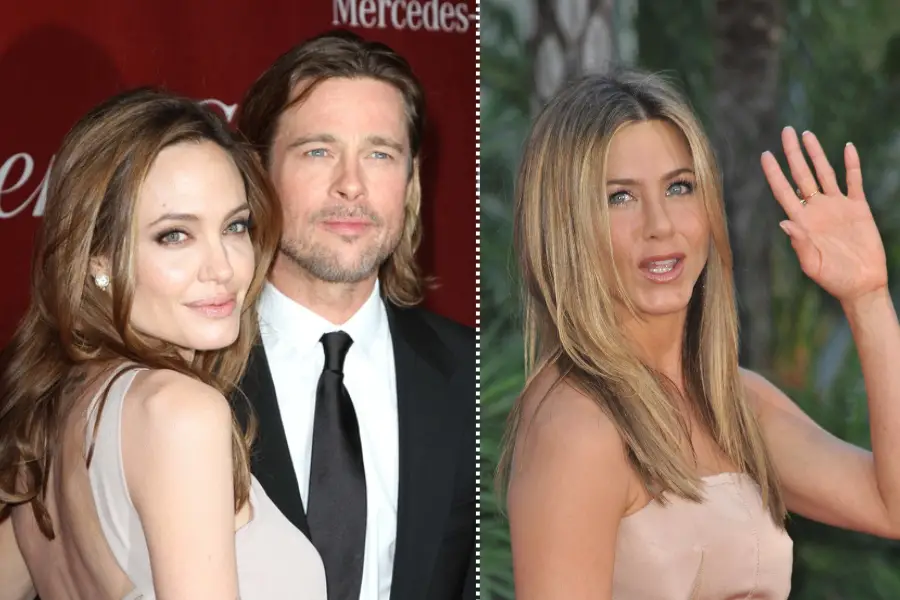
Jennifer Aniston rarely talks about her personal life, especially when it comes to her high-profile divorce from Brad Pitt. After nearly two decades of staying mostly silent, the beloved actress has finally shared some surprisingly candid thoughts about what she calls “the love triangle years.” Her recent comments reveal just how brutal the media circus really was and why she’s still carrying emotional scars from that chaotic period. Most fans remember the tabloid frenzy, but few understand the real human cost of living through Hollywood’s most talked-about breakup.
The vulnerable time that changed everything
When Aniston sat down with Vanity Fair for their September 2025 cover story, she looked back at her first major interview after the divorce. That 2005 Vanity Fair piece marked her return to public life following the split that dominated headlines worldwide. She describes the experience as “jarring” and admits she hasn’t revisited that article in years. The timing couldn’t have been more difficult, coming right after her marriage to Pitt ended and speculation about his relationship with Angelina Jolie reached fever pitch.
“It was such a vulnerable time,” Aniston revealed, calling the entire experience “one for the memoirs.” She remembers feeling exposed and raw during that interview process, still processing the end of her five-year marriage. The actress had to navigate deeply personal questions while the world watched and judged every word. That vulnerability extended beyond just one interview, shaping how she approached media interactions for years to come. The experience taught her harsh lessons about privacy and public scrutiny.
Making The Break-Up while breaking up
Perhaps the most surprising revelation involves how Aniston channeled her real-life heartbreak into her work. Shortly after separating from Pitt, she signed on to star in “The Break-Up” opposite Vince Vaughn. The timing seemed almost too perfect, or perhaps too painful. When the filmmakers approached her about the role, they worried about seeming insensitive given her recent split. Instead, Aniston saw an opportunity to transform her personal pain into professional growth. She joked about that “little separation” nobody would remember, showing her characteristic humor even when discussing difficult times.
The actress found the experience surprisingly therapeutic, describing it as “cathartic” to move directly from her real breakup into filming a movie about relationships ending. She believed the emotional authenticity would benefit both her healing process and her performance. Rather than avoiding projects that might remind her of her situation, she embraced the chance to explore those feelings in a controlled environment. The role allowed her to process grief, anger, and disappointment while doing what she loved most. This decision showed remarkable emotional intelligence and professional courage.
Living through the love triangle headlines
Aniston has her own term for the period when tabloids constantly covered her divorce and Pitt’s new relationship with Jolie. She calls them “the love triangle years,” acknowledging how the media framed their situation as entertainment for the masses. The constant speculation about who did what, when, and why became a source of endless fascination for readers hungry for celebrity drama. Every public appearance, every outfit choice, and every facial expression got analyzed for hidden meanings. The actress found herself living under a microscope, with strangers forming opinions about her most private moments.
“It was such juicy reading for people,” Aniston noted, understanding how her personal tragedy became public entertainment. She recognized that readers treated celebrity breakups like soap operas, following every twist and turn with eager anticipation. The comparison to soap operas feels particularly apt, given how the story had all the elements of dramatic television. There were alleged affairs, timing questions, and plenty of beautiful, famous people to photograph. However, unlike fictional drama, real people were getting hurt in the process.
When journalism felt like a blood sport
The media landscape of 2005 was vastly different from today’s social media-driven news cycle. Aniston describes that era’s journalism as feeling “more like a form of sport,” where reporters competed to get the most sensational angle or exclusive detail. There were fewer ethical guidelines around celebrity coverage, and paparazzi culture was reaching new extremes. The actress found herself dealing with photographers camping outside her home, following her to grocery stores, and shouting questions about her most painful experiences. Every mundane activity became a potential photo opportunity or story angle.
This aggressive approach to celebrity coverage took a serious toll on Aniston’s mental health. She admits to developing what she calls PTSD from the experience, making her wary of interviews even today. The actress worries about how her words might get twisted or taken out of context, a legitimate concern given her past experiences. Twenty years later, she still feels anxious about media interactions, wondering how journalists might misinterpret her statements. The lasting impact shows just how traumatic that period really was for someone trying to heal from a major life change.
The bootstrap mentality that got her through
When asked about her survival strategy during those dark months, Aniston revealed the simple but powerful self-talk that kept her moving forward. She told herself to “just pick yourself up by the bootstraps and keep on walking, girl.” This no-nonsense approach reflects her practical personality and determination not to let circumstances defeat her. Rather than wallowing in self-pity or retreating from public life entirely, she chose to keep working and moving forward. The advice sounds almost old-fashioned, but it worked for someone facing unprecedented public scrutiny and personal pain simultaneously.
This bootstrap mentality became Aniston’s anchor during the worst of the media storm. She focused on controlling what she could control, mainly her work and her attitude, while accepting that she couldn’t stop the rumors or speculation. The approach required incredible mental strength, especially when dealing with false stories and unfair characterizations. By concentrating on putting one foot in front of the other, she managed to survive a period that could have destroyed her career and personal well-being. Her resilience became a model for handling public crisis with dignity.
Taking the tabloid treatment personally
Despite her strong exterior, Aniston admits she didn’t have the emotional armor needed to deflect constant media attention. “I didn’t have a strong enough constitution to not get affected by it,” she confessed, showing rare vulnerability about her coping mechanisms. The actress took the rumors, speculation, and invasive coverage very personally, which only amplified the pain she was already experiencing. Unlike some celebrities who seem immune to public criticism, she felt every slight and every unfair characterization deeply. This sensitivity made the entire experience exponentially more difficult to endure.
The personal impact extended beyond hurt feelings into genuine psychological distress. Aniston struggled with the assumption that celebrities automatically consent to invasive coverage simply by choosing their profession. “We’re human beings, even though some people don’t want to believe we are,” she explained, pushing back against the idea that fame equals fair game. The actress rejected the notion that signing up for Hollywood means signing away basic human dignity and privacy. Her comments highlight an important distinction between professional public interest and personal exploitation that many people still don’t understand.
The friendship that survived the storm
One of the most surprising developments in recent years has been the apparent reconciliation between Aniston and Pitt. After years of avoiding each other at industry events, they’ve reconnected as friends, much to fans’ delight. Their 2020 backstage encounter at the SAG Awards went viral, showing genuine warmth between the former couple. They also participated in a virtual table reading of “Fast Times at Ridgemont High” during the pandemic, demonstrating their ability to work together professionally. These interactions suggest they’ve both moved past the bitterness and pain of their divorce.
Back in 2005, Aniston expressed hope that they could eventually be friends again, saying she would “love him for the rest of my life.” Her prediction proved accurate, as both actors have matured and found happiness in other relationships. Pitt is now dating jewelry designer Ines de Ramon, while Aniston has been linked to hypnotherapist Jim Curtis. The fact that they can interact warmly in public shows remarkable personal growth and emotional healing. Their ability to maintain mutual respect despite their painful history offers hope to anyone going through difficult relationship transitions.
Comparing notes with Gwyneth Paltrow
In one of the more amusing revelations from her Vanity Fair interview, Aniston confirmed that she and Gwyneth Paltrow do indeed discuss their shared romantic history with Brad Pitt. When asked directly if they talk about their mutual ex, she responded with characteristic humor: “Oh, of course. How can we not? We’re girls.” This candid admission shows how Aniston has learned to find lightness even in potentially awkward situations. The friendship between the two actresses demonstrates maturity and the ability to bond over shared experiences rather than let them create tension.
Paltrow dated Pitt from 1994 to 1997, before he met Aniston, making their current friendship particularly interesting. Rather than viewing each other as competition or sources of comparison, they’ve found common ground in their experiences with the same person. This dynamic probably provides both women with unique insights and perspectives they couldn’t get from other friends. Their ability to laugh about the situation and maintain a genuine friendship speaks well of both their characters. It also shows how time and perspective can transform potentially uncomfortable situations into sources of connection and humor.
Current life and future plans
Twenty years after her divorce from Pitt, Aniston has built a fulfilling life that extends far beyond romantic relationships. She maintains close friendships with people like Jason Bateman, who describes her as a “co-mom” to his daughters. The actress serves as an important figure in many people’s lives, celebrating milestones and offering support during difficult times. Her ability to nurture relationships shows growth from someone who once struggled with the public breakdown of her marriage. She’s created a chosen family that provides stability and joy without the complications of traditional romantic partnerships.
When asked about writing a memoir, Aniston said she’ll publish one “someday” when she has “more” to share. This suggests she’s still actively living and creating new experiences rather than just reflecting on past ones. Her continued work on projects like “The Morning Show” demonstrates ongoing professional ambition and creativity. The actress seems to have found peace with her past while remaining open to whatever the future might bring. Her journey from that vulnerable, heartbroken woman in 2005 to today’s confident, successful person offers inspiration to anyone facing their own difficult transitions.
Jennifer Aniston’s willingness to revisit such a painful chapter shows remarkable courage and growth. Her honest reflections remind us that celebrities face the same emotional challenges as everyone else, just with millions of people watching. Twenty years later, she’s transformed her vulnerability into wisdom and her pain into resilience. Her story proves that even the most public heartbreaks can eventually become sources of strength rather than shame.

