

Your bedroom is supposed to be a peaceful space where you relax and recharge after a long day. But most people fill this room with things that actually disrupt sleep and create unnecessary stress. From electronics that mess with your rest to clutter that makes it impossible to unwind, these common items might be sabotaging your bedroom’s main purpose. Making a few simple changes can transform your space into the restful retreat it should be. Here are the things that need to leave your bedroom as soon as possible.
Televisions turn your sleep space into an entertainment center
That massive TV mounted on your bedroom wall might seem like the perfect setup for late-night Netflix sessions, but it’s creating more problems than you realize. When televisions are turned off, they become giant black rectangles that dominate your room’s visual space and clash with most bedroom designs. More importantly, watching TV before bed exposes you to bright screens that can interfere with your ability to fall asleep naturally. The constant temptation to watch just one more episode keeps you up later than you intended, cutting into valuable rest time.
You don’t need to give up watching shows completely, but consider moving that habit to your living room instead. If you absolutely must watch something before bed occasionally, a portable projector works better than a permanent TV installation. Laptops and tablets offer more flexibility since they don’t need to be part of your bedroom’s permanent setup. These smaller screens can be stored away when not in use, keeping your bedroom focused on rest rather than entertainment.
Work desks blur the line between rest and responsibility
Setting up a workspace in your bedroom seems convenient, especially in smaller homes where space is limited. But bringing work into your sleep space creates a serious problem with boundaries. Your brain needs to associate your bedroom with rest and relaxation, not deadlines and stress. When you’re constantly reminded of work tasks while trying to wind down for the night, it becomes much harder to actually relax. Even when you’re not actively working, that desk serves as a visual reminder of everything you need to get done.
Studies show that half of workers admit to checking and responding to business emails while in bed. This habit prevents your mind from truly disconnecting from work mode. If you absolutely must have workspace in your home, find literally any other spot besides your bedroom. A corner of your living room, a section of your dining table, or even a closet converted to a small office works better than mixing work with your sleeping space.
Clutter makes your bedroom feel like another chore
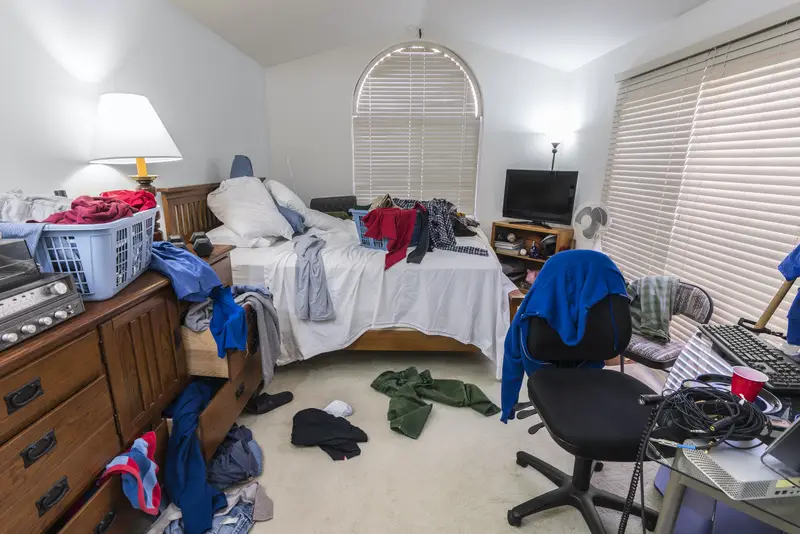
Piles of stuff scattered around your bedroom create a constant low-level stress that you might not even notice consciously. Your brain registers every item out of place as an unfinished task, making it harder to truly relax when you’re trying to sleep. Clothes draped over chairs, stacks of papers on the dresser, random items covering your nightstand—all of this visual noise keeps your mind from settling down. Even clutter hidden in drawers or shoved under the bed contributes to an overall sense of disorder in the space.
Creating a peaceful bedroom requires keeping surfaces clear and finding proper storage solutions for everything. Consider adding closet organizers, under-bed storage containers, or a wardrobe to handle items that currently live on visible surfaces. The cantaloupe rule suggests keeping only decorative items larger than a cantaloupe in your bedroom, which helps eliminate collections of tiny objects that create visual clutter. When everything has a designated home and surfaces stay mostly clear, your bedroom feels more like a sanctuary.
Bright colors make it harder to wind down
Those bold red walls or bright yellow bedding might look amazing in photos, but they’re working against you when it’s time to sleep. Bright colors naturally energize and activate your brain, which is the opposite of what you need in a bedroom. Red tones in particular can increase energy levels and make relaxation difficult. Orange and yellow in their most vivid forms create similar effects, keeping your mind alert when it should be calming down for the night.
Softer colors in shades of blue and green promote calmness and better sleep. Neutral tones like beige, gray, and soft white also create a peaceful atmosphere without being boring. You can still add pops of brighter colors through small accessories like throw pillows or artwork, but keep the main elements—walls, bedding, curtains—in calmer shades. This doesn’t mean your bedroom has to look bland or lack personality, just that the overall color scheme should support rest rather than stimulation.
Pets can seriously disrupt your sleep quality
Letting your dog or cat sleep in your bed feels comforting and cozy, and nearly half of dog owners allow this arrangement. Cats are even more common bedroom companions, with almost two-thirds sleeping on their owners’ beds. While the companionship is nice, pets move around during the night, make noise, and take up space that could be yours. Some people also discover they’re allergic to pet dander without realizing it, leading to poor sleep quality, morning congestion, and other issues.
About 15 percent of people are allergic to dogs and cats, whether they want to admit it or not. If you wake up with itchy eyes, a runny nose, or a sore throat, your beloved pet might be the culprit. Before completely banning your furry friend from the bedroom, try getting an air purifier to see if that helps. If you’re still not sleeping well, it might be time to set up a comfortable pet bed just outside your bedroom door instead.
Electronics flood your room with sleep-disrupting blue light
Smartphones, tablets, laptops, and other electronic devices have become permanent fixtures on most nightstands. But the blue light these screens emit interferes with your brain’s production of melatonin, the hormone that helps you fall asleep. Even if you’re just scrolling through social media or checking tomorrow’s weather, you’re making it harder for your body to recognize it’s time for rest. Constant notifications from phones create additional disruptions throughout the night, pulling you out of sleep even if you don’t fully wake up.
The stress from reading news, checking work messages, or dealing with social media drama right before bed also makes quality sleep nearly impossible. Try making your bedroom a device-free zone for at least two hours before sleep. Charge your phone in another room and use an actual alarm clock instead. Some devices offer a night mode feature that adjusts screen colors to warmer tones, but this technology is still too new to know if it actually helps enough to matter.
Exercise equipment creates guilt instead of motivation
That treadmill, elliptical machine, or exercise bike in your bedroom probably seemed like a great idea when you bought it. Having workout equipment so accessible would make it easier to stay in shape, right? In reality, most bedroom exercise equipment ends up serving as an expensive clothes rack. Every time you see it unused, you feel a pang of guilt about not working out. This negative feeling is exactly what you don’t need in a space meant for relaxation and rest.
Working out before bed can actually make it harder to sleep since exercise raises your heart rate and energy levels. Exercise equipment also tends to be bulky and unsanitary, collecting dust, sweat, and germs even if you’re the only one using it. If you have space elsewhere in your home, move that equipment to a basement, spare room, or garage. If space is really tight, consider getting a gym membership instead and keeping your bedroom focused solely on rest.
Sheer curtains let in too much light for proper rest
Light, gauzy curtains that flutter in the breeze look beautiful and romantic, but they belong in your living room rather than your bedroom. These thin curtains allow light from street lamps, neighboring houses, and early morning sun to flood into your room. This light pollution disrupts your body’s natural sleep-wake cycle, making it harder to fall asleep at night and easier to wake up too early in the morning. Your brain uses darkness as a signal that it’s time to produce sleep hormones.
Switching to blackout curtains creates the darkness your body needs for quality rest. These thicker curtains block outside light completely, helping you maintain better sleep patterns. You’ll feel like you’re staying in a nice hotel every night, where rooms are specifically designed to be as dark as possible. If blackout curtains feel too heavy or dark for your taste, look for room-darkening options that block most light while still allowing a small amount through.
Dirty laundry piles affect both appearance and air quality
Everyone generates dirty laundry, but letting it pile up in your bedroom creates multiple problems. An overflowing laundry basket makes your room look messy and adds to the cluttered feeling that prevents relaxation. When dirty clothes end up draped over furniture or scattered across the floor, the problem gets even worse. Your brain sees all this disorder as another task that needs attention, making it harder to truly unwind in the space.
Smelly dirty laundry also affects the air you breathe while sleeping, and damp clothes or towels can start growing mold in as little as one day. Keep your dirty clothes contained and out of sight by adding pullout hampers inside your closet. These hidden storage solutions keep laundry organized without taking up visual space in your bedroom. Make a habit of doing laundry before the basket overflows, so you’re never faced with an overwhelming pile of dirty clothes in your sleeping space.
Transforming your bedroom into a true rest space requires removing items that create stress, visual clutter, or sleep disruption. Most of these changes are simple and don’t require major renovation or expense. Start by evaluating what’s currently in your bedroom and honestly assessing whether each item serves the room’s primary purpose of providing quality rest. Your bedroom should be the most peaceful room in your home, not a storage unit for things that don’t have anywhere else to go.

