

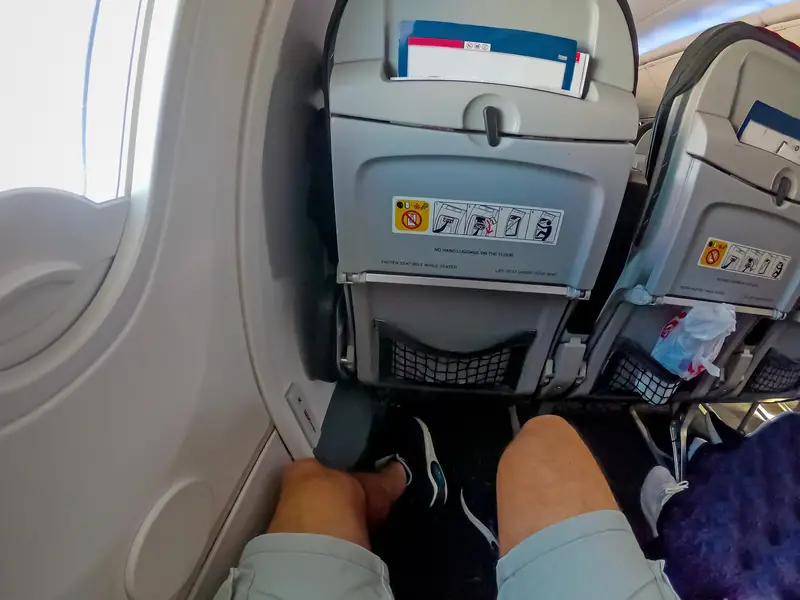
That pair of comfy shorts sitting in your carry-on might seem like the perfect choice for a long flight, but flight attendants and aviation experts have some surprising reasons why you should keep them packed away. The seats you’re about to sit on have seen more action than you’d like to imagine, and those cute summer shorts are leaving your skin exposed to surfaces that don’t get cleaned as often as you’d think. From safety concerns during emergencies to the gross reality of airplane hygiene, there are quite a few solid reasons to reconsider your in-flight wardrobe choices.
Airplane seats are dirtier than you think
Flight attendant Tommy Cimato doesn’t mince words when it comes to seat cleanliness. In his viral video, he explains that you never know how clean the seat is going to be, and wearing pants means less direct contact between your skin and whatever germs are lurking there. While planes do get a quick vacuum between flights, that doesn’t mean the seats are getting deep cleaned or sanitized. Think about how many people have sat in that exact spot before you, maybe eating messy snacks, wiping their hands on the fabric, or worse. Those seats see hundreds of passengers every week, and the cleaning crew has limited time between flights to tackle everything.
The reality is that airline cleaning schedules focus on quick turnarounds rather than thorough sanitization. Your bare legs in shorts are making full contact with fabric that might have absorbed spills, crumbs, and bodily oils from countless previous passengers. Some commenters on Tommy’s video suggested bringing disinfectant wipes to clean your area before settling in, which isn’t a bad idea. The upholstery on planes can harbor bacteria and germs that survive for days or even weeks. Wearing long pants creates a barrier between your skin and these surfaces, giving you an extra layer of protection from whatever microscopic nastiness might be waiting on that seat.
Emergency evacuations don’t mix well with bare legs
When Andrea Fischbach, an American Airlines flight attendant, talks about safety concerns, she’s not being dramatic. During an emergency evacuation, those inflatable slides can reach temperatures hot enough to burn exposed skin, or they might be deployed over rough terrain like asphalt or gravel. Your shorts-clad legs would be sliding down at high speed with nothing protecting them from friction burns or scrapes. In a real emergency, you might need to evacuate quickly over debris, broken glass, or hot metal surfaces. Those few extra inches of fabric coverage could make a real difference between minor injuries and serious burns or cuts that require medical attention.
Aviation expert Christine Negroni points out another sobering reality about emergencies. If you have to escape from an aircraft, the floor could be scorching hot, freezing cold, covered in fuel or oil, or literally on fire. In some cases, you might end up in a field or forest where you’ll need to walk through rough terrain to reach safety. Bare legs offer zero protection in any of these scenarios. The extra coverage from pants isn’t just about comfort or modesty. It’s about having a basic layer of protection when things go wrong. Even if you never experience an emergency evacuation, knowing you’re prepared for one makes the flight less stressful.
Temperature swings make shorts uncomfortable anyway
Anyone who’s flown more than a few times knows that airplane cabins can’t seem to decide if they want to be a sauna or a freezer. You might board a plane that feels like a tropical greenhouse, only to have it transform into an arctic tundra once you reach cruising altitude. Natalie Houston from Adventures of Matt and Nat explains that temperature regulation is tricky on planes, and having bare legs makes it harder to stay comfortable throughout the flight. Those thin airplane blankets they sometimes provide aren’t going to cut it when you’re sitting there in shorts with the air conditioning blasting directly on your legs for hours.
The temperature problems get even worse on longer flights where you’ll be exposed to these fluctuations for extended periods. Your body temperature naturally drops when you’re sitting still for hours, and having exposed skin makes it harder to maintain warmth. Etiquette expert Lisa Mirza Grotts mentions that layered clothing helps you adapt to these temperature changes without constantly asking flight attendants for extra blankets or fiddling with the air vent. Pants give you the flexibility to stay comfortable whether the cabin is warm during boarding or freezing at 35,000 feet. You can always roll up your pant legs slightly if you get too warm, but you can’t magically make your shorts longer when the temperature drops.
Your circulation suffers at high altitudes
The air pressure changes during flights do weird things to your body, and your clothing choices can either help or hurt the situation. Natalie Houston warns that your body naturally swells at altitude, which is why you want to avoid restrictive clothing like super-tight leggings or jeans. But shorts present a different problem because they don’t provide any compression or support to help your blood circulate properly during long periods of sitting. When you’re stuck in one position for hours, your legs need all the help they can get to keep blood flowing back to your heart, and having some light fabric coverage actually assists with this process.
Lisa Mirza Grotts emphasizes that loose, comfortable pants help prevent circulation issues without being restrictive. The key is finding that sweet spot between too tight and too bare. Comfortable pants made from breathable fabric give your legs gentle support while still allowing your body to expand slightly as cabin pressure changes. This becomes especially important on flights longer than a few hours, where sitting immobile can lead to uncomfortable swelling in your feet and ankles. The right pants can actually help minimize this swelling better than shorts ever could. Deep vein thrombosis might sound like something that only affects other people, but anyone sitting still for extended periods is at some risk, and proper clothing is one simple way to reduce that risk.
Bathroom floors are even grosser than seats
If you think the seats are questionable, the bathroom situation is even worse. When you’re wearing shorts and you sit down in that tiny airplane bathroom, your bare legs are touching surfaces that have seen some truly unspeakable things. Whitney Haldeman from Atlas Adventures describes airplane bathrooms as particularly challenging spaces that don’t get the thorough cleaning you’d hope for between flights. The floors, walls, and every surface in there have been touched, leaned on, and splashed by countless passengers, and your shorts leave your legs completely exposed to all of it. Long pants create a barrier that keeps your skin away from these contaminated surfaces.
The cramped quarters of airplane bathrooms mean you’re constantly bumping into walls, the sink, and the door while trying to maneuver in there. Natalie Houston compares planes to part gym floor, part mystery zone, noting that those carpets and bathrooms don’t get shampoomed nearly as often as you’d hope. When you’re wearing shorts, every surface you brush against is making direct contact with your skin. Some people bring their own disinfecting wipes to clean surfaces before using airplane bathrooms, but even that doesn’t completely eliminate the gross factor. Having pants on means one less thing to worry about when nature calls mid-flight. The peace of mind alone makes it worth choosing pants over shorts for your next trip.
Long hems drag through airport grime too
While we’re talking about clothing choices, it’s worth mentioning that not all pants are created equal for air travel. Natalie Houston specifically warns against wearing long dresses or pants that drag on the floor, because you’ll be brushing against surfaces you’d rather not think about. Airport floors and airplane aisles accumulate an impressive collection of dirt, spilled drinks, food particles, and things we won’t name. When your clothing drags through all of that, you’re essentially mopping the floor with your outfit and then bringing all those germs home with you. The ideal pants for flying have a proper hem that keeps the fabric off the ground while still covering your legs completely.
The same logic applies to baggy pants with extra fabric pooling around your shoes. Every time you walk down the airplane aisle or through the airport terminal, that excess fabric is picking up whatever nastiness is on the floor. Well-fitted pants that end right at your shoe line give you full coverage without turning your clothing into a dirt magnet. This is especially important in airplane bathrooms, where floors are often wet with substances you definitely don’t want soaking into your clothes. Getting the length right might seem like a small detail, but it makes a real difference in how much airport and airplane grime you’re carrying around with you. Nobody wants to get home and realize their favorite pants are covered in mysterious stains from dragging across dirty floors all day.
Tight clothing becomes torture at altitude
That pair of skinny jeans might look great in the airport, but they’ll feel like a torture device by the time you land. Natalie Houston strongly advises against super-tight clothing for long-haul flights because your body naturally swells at altitude, and restrictive clothes make that swelling even more uncomfortable. When your waistband is digging into your stomach and your pant legs are cutting off circulation to your calves, you’re going to have a miserable flight no matter how good you looked when you boarded. The pressure changes in the cabin cause your body to retain fluid and expand slightly, which means clothing that fit perfectly on the ground becomes increasingly uncomfortable as the flight progresses.
The solution is choosing pants made from stretchy, breathable materials that give your body room to expand without being baggy or sloppy looking. Etiquette expert Lisa Mirza Grotts recommends loose, layered clothing that adapts to your changing comfort needs throughout the flight. This doesn’t mean you have to wear pajamas to the airport, just that your clothing should have some give to it. Athletic pants, soft cotton trousers, or anything with a bit of stretch in the fabric works much better than rigid denim or tight synthetic materials. Your comfort level drops dramatically when you’re stuck in restrictive clothing for hours with no escape, and no fashion statement is worth that kind of misery during a long flight.
Flip-flops and sandals create their own problems
If shorts are a bad idea, their usual companion footwear is even worse. Steve Schwab, CEO of vacation rental company Casago, explains that flip-flops and sandals are never ideal for flying because they’re not secure on your feet and can easily slip off or trip you up during an emergency. Andrea Fischbach adds that these loose shoes can actually puncture evacuation slides if you’re wearing them during an emergency exit. Airlines even mention in their safety videos that high-heels and loose shoes need to come off before using the slides, which should tell you something about how seriously they take this issue. Beyond safety concerns, exposed feet in close quarters aren’t pleasant for your fellow passengers either.
Whitney Haldeman from Atlas Adventures points out that airports often require long walks, unexpected sprints to gates, and occasional climbs up airplane stairs when there’s no jet bridge available. None of these activities are fun in flip-flops or sandals that weren’t designed for actual walking. Your feet can also get surprisingly cold on planes, especially on longer flights where the temperature drops. Closed-toe shoes keep your feet warm, protected, and ready for whatever the travel day throws at you. The combination of shorts and sandals might scream vacation mode, but it’s the worst possible outfit for the actual process of getting to your vacation destination. Save the beach wear for when you actually reach the beach.
Rompers turn bathroom breaks into wrestling matches
Rompers and jumpsuits might look adorable, but Natalie Houston describes them as wildly impractical when you’re wrestling with them in a tiny airplane bathroom. The whole garment has to come off just to use the toilet, which means you’re standing there half-naked in a cramped space trying not to let your clothing touch any surfaces while also trying not to lose your balance as the plane hits turbulence. It’s a special kind of nightmare that you don’t fully appreciate until you’re living through it at 35,000 feet. The cute factor of a romper drops to zero when you’re doing gymnastics in a closet-sized bathroom with questionable cleanliness.
The problem gets worse on longer flights where you’ll need multiple bathroom trips, turning each visit into an ordeal. Simple two-piece outfits with comfortable pants and a top give you easy bathroom access without the acrobatics. This might seem like a minor inconvenience, but when you’re on a long international flight and need to use the bathroom several times, you’ll wish you’d chosen literally anything other than a romper. The lesson here is that function should win over fashion when it comes to airplane outfits. You can look put-together and stylish in separates that don’t require you to completely undress every time nature calls. Save the rompers for occasions where you have access to normal-sized bathrooms with doors that actually close properly.
The next time you’re packing for a flight, think twice before tossing those shorts into your carry-on as your go-to travel outfit. Between hygiene concerns, safety issues, and basic comfort factors, pants are the clear winner for air travel. You don’t need to sacrifice style for practicality either – plenty of comfortable, good-looking pants exist that will keep you covered, protected, and feeling good from takeoff to landing.

