

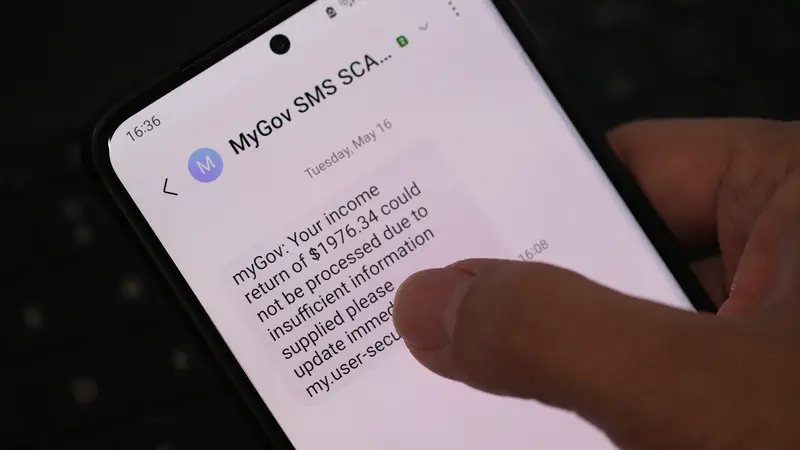
Your phone rings. The caller ID says it’s your bank. The person on the other end knows your account number, your balance, maybe even your last few transactions. They sound professional, calm, and concerned. They tell you someone has been draining your account and you need to move your money right now to keep it safe.
Everything about the call feels real. And that’s exactly the point. Because the entire thing is a lie, and it’s costing Americans billions of dollars a year.
The FBI just released its 2025 Internet Crime Report, and the numbers are staggering. Nearly $21 billion lost to cyber-enabled crime in a single year. Over a million complaints filed for the first time ever. And the single most reported type of complaint? Phone spoofing and phishing. This is the tech trap the FBI is begging you not to fall for.
The Phone Number on Your Caller ID Is a Lie
Here’s the thing most people don’t realize: it’s shockingly easy to fake a phone number. Scammers can make your caller ID display your bank’s actual customer service number. Not a number that looks similar. The real one. The same number printed on the back of your debit card.
In 2025 alone, there were more than 191,000 spoofing complaints filed with the FBI’s Internet Crime Complaint Center. Reported losses from those incidents topped $215 million. And that’s just the people who actually reported it. The real number is almost certainly much higher.
One Chase Bank customer named Jennifer Lichthardt got one of these calls. The scammers convinced her to move nearly $40,000 from her account into what they called a “secured” Chase account at her local branch, then transfer even more to another online bank. The money vanished. Chase confirmed the funds were withdrawn from the scammer’s account the same day they were deposited. Gone. Just like that.
The scariest part? The scammers already had her account numbers, routing numbers, and balance down to the penny. They didn’t guess. They knew.
Where Are Criminals Getting Your Account Info?
Two places, mostly. The first is data breaches. When a company gets hacked, your personal information ends up for sale on dark web marketplaces. Account numbers, Social Security numbers, login credentials, all of it. The second method is so low-tech it’s almost funny: digging through your trash. Bank statements, credit card offers, old bills. If you’re not shredding those, you’re making it easy.
Once criminals have even a few pieces of your financial information, they can construct a call that sounds incredibly convincing. They reference real details about your accounts, which makes you trust them. And then they start rushing you.
FBI Special Agent Robert Richardson from the Chicago field office put it bluntly: “They are already frazzled, and when they are making these decisions, the criminal then starts to rush them more. The more they are rushed, the more last-minute decisions they make.”
That urgency is the weapon. Not the technology. Not the spoofed number. The pressure to act right now before you have a chance to think.
The “Phantom Hacker” Is the FBI’s Biggest Concern Right Now
If you think a spoofed bank call sounds bad, wait until you hear about the three-phase version. The FBI calls it the “Phantom Hacker” approach, and it’s wiped out over $1 billion in a single year.
Phase one: You get a pop-up on your computer or a call from “tech support” saying your device has been compromised. They walk you through fake diagnostic steps and tell you hackers have accessed your financial accounts.
Phase two: You get transferred to someone claiming to be from your bank or investment firm. This person confirms the fake story and tells you to move your money to protect it.
Phase three: Someone claiming to be a federal government official, sometimes an FBI agent, calls to “seal the deal.” They use the authority of a government badge to convince you the transfer is necessary and legitimate.
By the time all three phases play out, victims have often emptied their entire savings, retirement accounts, and investment portfolios. A couple from Maine lost $1.1 million this way. They were told to download remote access software so “Microsoft” and “Fidelity” representatives could monitor their computer. The scammers then convinced them to wire their retirement savings to Coinbase and even take out a home equity line of credit to send more funds for “safekeeping.”
A woman in Massachusetts lost $200,000 after a pop-up told her she’d been “hacked.” Over several weeks, she wired money from her bank, credit union, and retirement accounts into accounts under other people’s names. The scammers told her not to tell anyone about them because “the hackers and scammers were all around her.”
AI Has Made Everything Worse
For the first time in its nearly 25-year history, the FBI’s Internet Crime Complaint Center added a section specifically tracking artificial intelligence. In 2025, there were more than 22,000 AI-related complaints totaling $893 million in losses.
Voice cloning is a huge piece of this. Criminals can now generate audio that sounds exactly like a family member, same voice, same speech patterns, same cadence. They use it to call grandparents and pretend to be a grandchild in trouble, begging for emergency money. Victims lost more than $5 million to these distress calls in 2025 alone.
Deepfake videos are another growing problem. Scammers create convincing footage of celebrities and financial experts endorsing fake investments. They use these videos in social media ads and even in live video calls. AI-generated text produces polished, professional-sounding emails that impersonate company executives. Businesses reported more than $30 million in confirmed AI-assisted losses.
Aaron Rose, a security architect manager at cybersecurity firm Check Point Software, pointed out that criminals also use AI to scrape social media. If you post about your hobbies, your travel plans, your family milestones, that information gets fed into AI tools that generate incredibly personalized messages. It’s not just a generic phishing email anymore. It’s a targeted message that references things you actually care about.
Scammers Are Even Impersonating the FBI Itself
This one is almost too brazen to believe. Criminals are now impersonating FBI employees, specifically people who work at the Internet Crime Complaint Center. Between December 2023 and February 2025, the FBI received more than 100 reports of this exact scheme.
The scammers reach out via email, phone, and social media. They target people who have already been victimized by other fraud. They claim they’ve recovered the victim’s lost funds or can help get the money back. It’s a re-victimization scheme, going after people who are already desperate and vulnerable.
In one version, scammers create fake female profiles on social media and join groups for financial fraud victims, pretending to be fellow victims. They build trust, then steer people toward fake recovery services that steal even more money.
Government impersonation complaints overall nearly doubled between 2024 and 2025, jumping from about 17,300 to nearly 32,500. Losses from those schemes hit $797 million. Scammers pose as FBI agents, IRS officials, Social Security Administration employees, you name it. They provide fake badge numbers, send documents on what looks like official government letterhead, and use the weight of federal authority to scare people into compliance.
Americans Over 60 Are Losing Billions
The age group getting hit the hardest is Americans 60 and older. In 2025, seniors reported approximately $7.7 billion in losses, up 37% from the previous year. Investment fraud accounted for $3.5 billion of that. Tech support fraud took another $1 billion. Confidence and romance fraud added $584 million.
Phishing complaints from seniors nearly doubled year over year, jumping from about 23,000 to 48,000. Investment fraud complaints among seniors rose 79%.
In South Carolina alone, seniors reported over $9 million lost to tech support fraud from January through November 2025. The FBI has investigated numerous cases where scammers instructed elderly victims to liquidate their savings, buy gold bars, and hand them over to couriers who showed up at their homes. The scammers even gave victims passcodes to relay to the couriers during pickup, adding another layer of fake legitimacy.
The One Rule That Stops Almost All of These
The FBI’s advice is simple, and they keep repeating it because it works: “Take a Beat.” Slow down. That’s it. That’s the whole strategy.
Every single one of these schemes depends on pressure. They need you panicking. They need you making decisions before you’ve had time to think. The moment you slow down and verify independently, the whole thing falls apart.
If someone calls claiming to be your bank, hang up. Call the number on the back of your card yourself. If you get a pop-up saying your computer is compromised, close it. Don’t call the number on the screen. If anyone, ever, tells you to move your money to a “safe” account, that person is trying to steal from you. Banks don’t do that. The FBI doesn’t do that. The government doesn’t do that.
Never give remote access to your computer if someone contacts you unexpectedly. Never share one-time verification codes over the phone. Never download software because a stranger told you to. And if you’ve already been victimized, file a complaint at ic3.gov. If you’re 60 or older and need help filing, call the DOJ Elder Justice Hotline at 1-833-FRAUD-11.
The IC3 receives nearly 3,000 complaints every single day. That’s not a typo. Three thousand people a day are reporting that someone tried to steal from them online. The technology behind these attacks keeps getting more sophisticated, but the defense stays remarkably low-tech: just stop, think, and verify before you do anything with your money.

