

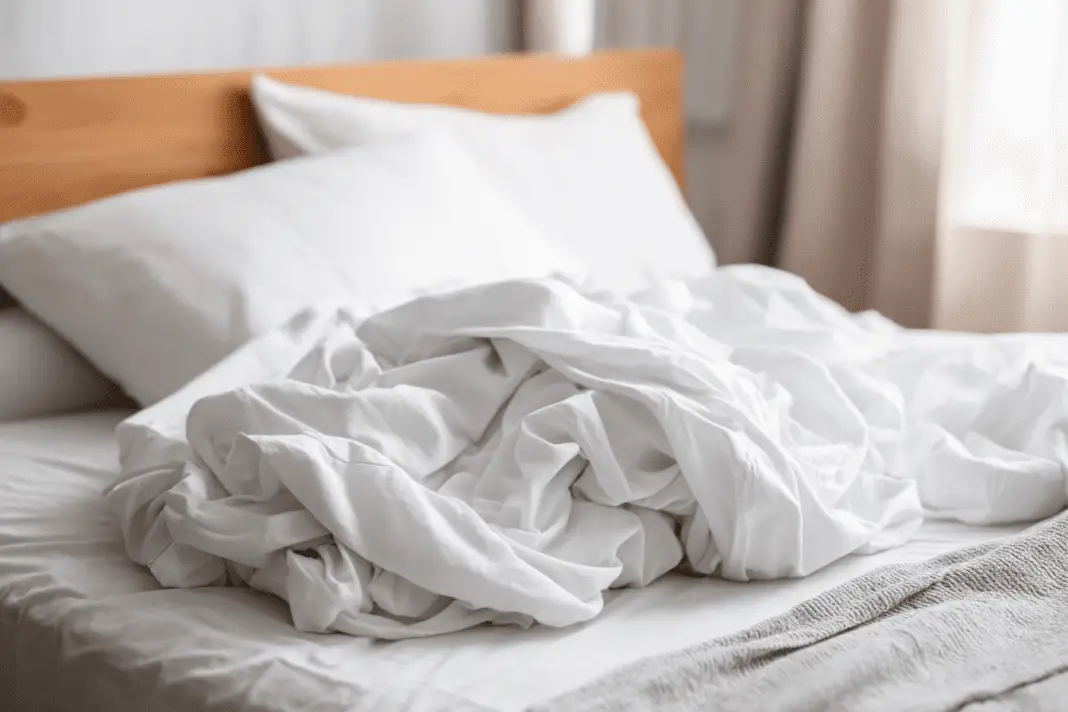
I’m going to go out on a limb here and guess that your sheet-washing routine looks something like this: strip the bed, ball everything up, toss it in the washer with whatever else needs cleaning, dump in some detergent, hit start, and forget about it for three hours. Maybe four. Maybe you find it the next morning and rewash it because it smells like a wet dog.
No judgment. I was doing the exact same thing for years. But it turns out there’s a surprisingly long list of ways most of us are sabotaging our sheets every single laundry day — and some of these mistakes are actively making our beds kind of gross.
You’re Probably Not Washing Them Often Enough
Let’s start with the uncomfortable truth. The average person spends seven to eight hours a night in bed. That’s roughly 50 to 60 hours a week with your face pressed into fabric that’s collecting sweat, body oil, dead skin cells, dirt, and dust mites. If you wear makeup to bed, have a pet that sleeps with you, or — let’s be honest — eat leftover pizza under the covers at 11 p.m., it gets worse faster.
Most sleep and cleaning experts say you should be washing sheets once a week. If your dog shares the bed? Every three to four days. If someone in the house is sick, you should ideally be swapping sheets daily or every other day. The longest you should ever push it is two weeks, according to Carolyn Forte, director of the Cleaning Lab at the Good Housekeeping Institute.
And yet — be honest with yourself — when’s the last time you changed yours?
Dirty Sheets Can Actually Make You Sick
This isn’t just about sheets feeling a little stale. According to the BBC, dirty sheets can lead to real health problems, including staph infections, forms of yeast like jock itch, and folliculitis — an infection of the hair follicles that causes red bumps and intense itching. If you already deal with eczema, sleeping on unwashed sheets can trigger flare-ups. They can also cause hives and worsen asthma symptoms.
And then there are the dust mites. These microscopic creatures feed on dead skin cells — the ones you’re shedding all night long — and while they don’t bite, their droppings are a major allergen. If you wake up stuffy or sneezy and can’t figure out why, your pillowcase might be the culprit.
Stop Washing Your Sheets With Your Towels
This one surprised me, because I’ve been combining sheets and towels into one big load my entire adult life. It seems logical — they’re both big, they’re both cotton, they both need washing. But putting them together is one of the worst things you can do for your sheets.
Here’s why: towels absorb way more water than sheets, so they take significantly longer to dry. When you throw them together in the dryer, your sheets are getting blasted with heat long after they’re already dry, while the towels are still damp. That over-drying causes shrinkage and damages the fabric fibers over time.
But it gets worse. In the wash, towels produce lint — a lot of it — which clings to sheets and causes pilling. Those fluffy towel loops also physically rub against the finer sheet fabric, wearing it down with every cycle. The same goes for any heavy items like mattress pads, or clothes with zippers, rivets, or buttons that can snag and tear delicate weaves.
Sheets should always get their own load. Period.
You’re Using Too Much Detergent (And the Wrong Kind)
More soap doesn’t mean cleaner sheets. In fact, using too much detergent is one of the most common laundry mistakes people make, and it can actually cause your sheets to wear out faster. A quarter-cup of liquid detergent is typically enough for a regular-sized load of sheets. If they’re particularly dirty, add a little more — but don’t go overboard.
The type of detergent matters too. Many people reach for the heavy-duty stuff, thinking stronger chemicals equal a deeper clean. But harsh detergents can break down fabric fibers, especially on high-quality sheets. A gentle, pH-neutral formula with enzymes will clean and remove stains without trashing the material.
And here’s something almost nobody knows: you should also skip the fabric softener on bed sheets. Fabric softener — including dryer sheets — affects the absorbency of natural fabrics like cotton. Your sheets end up with a waxy coating that traps heat and feels less breathable. The irony is that the thing you’re using to make sheets feel softer is actually making them less comfortable to sleep on.
Hot Water Isn’t Always the Answer
For decades, the conventional wisdom was: wash whites and sheets in hot water. Your mom probably told you that. Her mom probably told her. But one of the biggest shifts in modern laundry is the move toward cold water as the default setting for pretty much everything, including sheets.
Katie Elks, director of design and product development at Brooklinen, recommends washing all sheets in a cold or cool cycle. Brian Sansoni, senior vice president at the American Cleaning Institute, backs her up: most laundry can now be done in cold water. Cold water preserves color, prevents shrinkage, and is gentler on fabric. Hot water, while effective at killing germs, causes sheets to wear out faster over time.
The smart play? Use cold water as your default, and save the hot wash for specific situations — like cold and flu season, or when sheets haven’t been washed in a while and are heavily soiled. For cotton sheets specifically, water around 140°F is effective at reducing dust mites, bacteria, and allergens. But making that your everyday setting will shorten the life of your sheets considerably.
You’re Overcrowding the Washing Machine
Here’s a mistake that seems harmless but matters a lot. Stuffing sheets into a packed washing machine means they don’t have room to move freely. Water and detergent can’t fully penetrate the fibers, which means your sheets come out looking clean but aren’t actually getting thoroughly washed. In extreme cases, overloading can even damage the machine motor.
Sheets need space to agitate properly. That’s why experts unanimously recommend washing them in a separate load — not just away from towels, but away from everything. One set of sheets per wash. If you have a king-size bed, that fitted sheet, flat sheet, and pillowcases are a full load all on their own.
Also worth noting: wash light and dark sheets separately to prevent color bleeding. If you absolutely must combine them, toss in a color catcher sheet to grab any loose dyes before they stain your white pillowcases.
The Dryer Is Where Most of the Damage Happens
Even if you nail the washing part, the dryer is where people really mess things up. Over-drying is a serious problem, according to Forte. When that buzzer goes off and you think “eh, I’ll give it another ten minutes just to be safe,” those extra minutes are shrinking and weakening the fabric. Over time, that damage is permanent.
The ideal approach is tumble dry on low heat for the shortest time possible. Yes, this takes some trial and error. Mary Zeitler of Whirlpool recommends using the “less dry” or “damp alert” setting, which stops the cycle before sheets are bone dry. This reduces shrinkage and wrinkling, and gives you a chance to check if the sheets have balled up into a tangled knot (which prevents them from drying evenly).
A great trick: throw in wool dryer balls, rubber dryer balls, or a couple of tennis balls tied in a cotton sock. They bounce around and keep the sheets separated so air can circulate properly. And if you pull your sheets out and they’re a wrinkled disaster because you forgot about them for two hours? Toss a damp towel in and run a short cycle. The steam will smooth things out.
Lemon Juice, Vinegar, and Baking Soda Actually Work
Before you roll your eyes at what sounds like a Pinterest hack from 2014 — these are legitimately recommended by textile and cleaning professionals.
Half a cup of lemon juice in the wash cycle brightens white sheets naturally and leaves a light, clean scent — without the fiber damage that bleach causes. One cup of white vinegar added to the rinse cycle strips out any lingering detergent residue, which is a game for anyone in the house with sensitive skin or allergies. And for brand-new sheets, some experts recommend a first wash with one cup of baking soda at the start, followed by one cup of white vinegar in the rinse. Just that once — it removes factory chemicals and softens the fabric.
For protein-based stains like sweat and blood (common on sheets), an enzymatic stain remover works much better than regular spray-and-wash products. And for sheets that have gotten dingy over time, soaking them in an OxiClean solution before laundering can bring them back to life.
Own More Than One Set of Sheets (Seriously)
This might be the most practical tip of all. Experts recommend owning two to three sets of sheets per bed. It sounds like overkill until you think about it. Having backup sets means you can change the sheets immediately when someone’s sick, when the kid climbs in with chocolate-covered hands, or when the dog has a mishap — without needing to do laundry that exact minute.
Rotating between multiple sets also extends the life of each one, since no single set is getting washed 52 times a year. Think of it as an investment. Good sheets aren’t cheap, and treating them right means you’re not replacing them every year.
So the next time you strip the bed, take an extra thirty seconds to think about what you’re doing. Separate the sheets. Use less detergent. Go easy on the heat. Skip the fabric softener. Your sheets will last longer, feel better, and — maybe most importantly — actually be clean when you climb back into them.

