

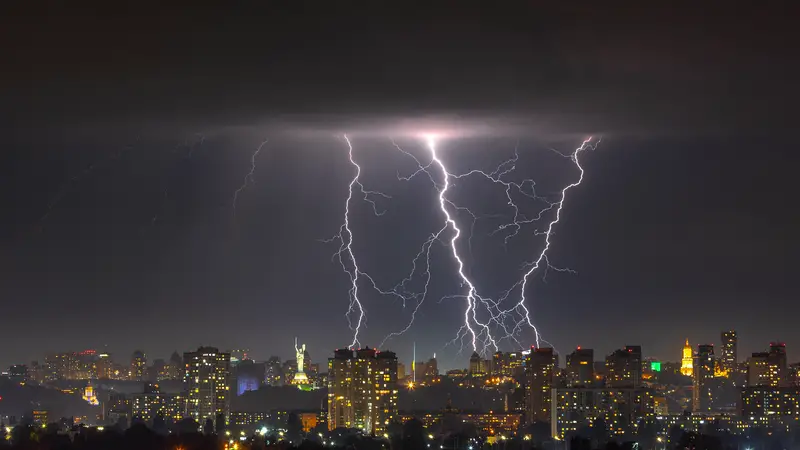
I grew up thinking the whole “don’t shower when it’s storming” thing was made up. Like something my mom said to keep me from wasting hot water, right up there with “you’ll catch a cold if you go outside with wet hair.” So imagine my face when I found out this one is completely real, and the science behind it is honestly kind of terrifying. Every big weather and medical group in the country agrees. When thunder is rumbling, stay out of the shower. Here is why, plus a pile of lightning facts that made me say “wait, really?” out loud.
Your Grandma Was Right About the Shower
The quick version: lightning can move through your home’s plumbing and reach you while you are standing under the water. The CDC says it flat out. Do not shower, do not take a bath, do not wash dishes, and do not even rinse your hands during a thunderstorm. When lightning hits a building, it wants to reach the ground, and it takes the easiest road it can find. Metal pipes full of water make a perfect road. You standing barefoot in a wet shower stall basically finish the circuit. This is not some rare freak thing that only happens in movies either. It is a documented, repeating event that safety experts track every single year.
Lightning Treats Your House Like a Shortcut
Here is the part that shocked me the most. Lightning does not even have to hit your house to get inside it. A strike can land hundreds of feet away and still send current racing along the utility lines that connect to your home. That includes your electrical wiring, your cable and phone lines, and the metal water and gas pipes running underground. Once that charge gets in, it can jump between systems, hopping from your electrical wires over to your water pipes. That jump has a name. It is called a side flash. So even if the storm looks like it is a few blocks over, your kitchen faucet is still connected to the same network the current is using to reach the dirt.
Plastic Pipes Won’t Save You Either
My first thought was, “okay, but my house is newer, I probably have plastic pipes.” Nice try, me. Older homes with copper or steel pipes are the worst case because metal is a fantastic conductor. But plastic PVC does not make you bulletproof. The water inside the plastic still carries a charge, and that current can reach the metal parts you actually touch, like the showerhead, the faucet handles, and the drain. As one physics writeup put it, a shower gives lightning both things it loves, water and metal, in one convenient spot. Tap water is not pure. It is full of minerals that turn it into a solid conductor. Being wet also drops your body’s natural resistance, which is the opposite of what you want in that moment.
The 30-Minute Rule Almost Nobody Waits Out
Doctors have a simple guideline for this, and it costs you nothing. Wait at least 30 minutes after the last clap of thunder before you turn on the water. A Cleveland Clinic emergency physician put it perfectly: “When thunder roars, go indoors and hang out with a book.” There is also the 30-30 rule for the storm itself. If you see lightning and hear thunder within 30 seconds, the storm is close enough to be dangerous. Thunder travels about one mile every five seconds, so a 30-second gap means the storm is roughly six miles away, still well inside striking range. Here is the catch people miss. If you hear one more rumble, you reset the clock and start counting the 30 minutes all over again.
A Bolt Can Reach You From 10 Miles Away
You know how the sky can look totally clear and blue while a storm sits off in the distance? There is a real phenomenon called a “bolt from the blue,” where lightning shoots out of a storm and strikes as far as 10 miles away from any rain. Ten miles. That is why so many lightning injuries happen before a storm even arrives or after it seems to have moved on. The rule of thumb the weather folks repeat is dead simple: if you can hear thunder, you are close enough to get hit. It does not matter that the sun is out over your yard. The danger zone is way bigger than the puddle you are standing in.
One-Third of Lightning Injuries Happen Inside
This stat rearranged my brain a little. About one-third of all lightning injuries happen indoors. We think of being inside as automatic protection, and for the most part being in a well-built building is one of the better places to ride out a storm. But “inside” only helps if you stay away from the stuff lightning likes to travel through. Every year in the United States, somewhere between 10 and 20 people get shocked while touching household water or appliances during a storm. Now, to keep it honest, the odds of any specific person getting hit are tiny. A 2023 review found indoor water-related strikes made up less than one percent of injuries. But it is a risk you can dodge for free by just waiting.
The Kid Who Got Zapped at a Water Fountain
If the pipe thing still sounds like a myth to you, here is a real case. A 14-year-old walked up to a school water fountain during an afternoon storm to wash his hands. Lightning current traveled through the plumbing, and the electricity went right up his arm. He heard a huge boom and felt the shock move through his hand. He stayed conscious, went to the hospital, and got released the same day with no major damage, which is a lucky ending. Storm sensors detected thousands of lightning pulses within 25 miles of that school in the hours around the incident. There was even a tornado warning going. That is a normal water fountain in a normal school building doing something you would never expect.
Other Stuff to Skip When Thunder Rolls
Once you know how lightning moves through a building, the rest of the list makes sense. Stay off corded phones and anything plugged into a wall outlet. Do not lean against concrete walls or lie on a concrete floor, because concrete usually has metal rebar or wire mesh baked inside it that carries current. Keep your distance from windows and doors, since lightning can jump through glass. The good news, per a Geisinger emergency doctor: your cell phone is totally fine to scroll as long as it is not plugged into a charger. And RV owners, you are not off the hook. The same rules apply, so no showering in the camper during a storm. One more thing that broke my heart a little: doghouses are not safe shelters. Bring your pets inside before the weather hits.
Lightning Facts That Stuck With Me
A few closers that are just plain interesting. The Empire State Building gets hit by lightning about 25 times a year, which sounds insane until you remember it is basically a giant metal lightning rod on purpose. Men make up roughly four times as many lightning victims as women, and no, science has not fully explained that beyond the fact that guys tend to stay outside longer. Most strikes happen in summer, especially July, in the afternoon and evening. Florida and Texas are the top states for lightning deaths, so residents there should take this stuff seriously. And a myth worth killing: metal and water do not actually “attract” lightning, according to the medical reference guides. They just conduct it extremely well once a strike happens nearby. Your shower is not pulling lightning toward you. It is simply the last thing you want to be touching if a bolt finds its way into your walls. So the next time thunder starts up, do the easy thing. Grab a book, leave the faucet alone, and let the storm pass. Your shower will still be there in half an hour.

