

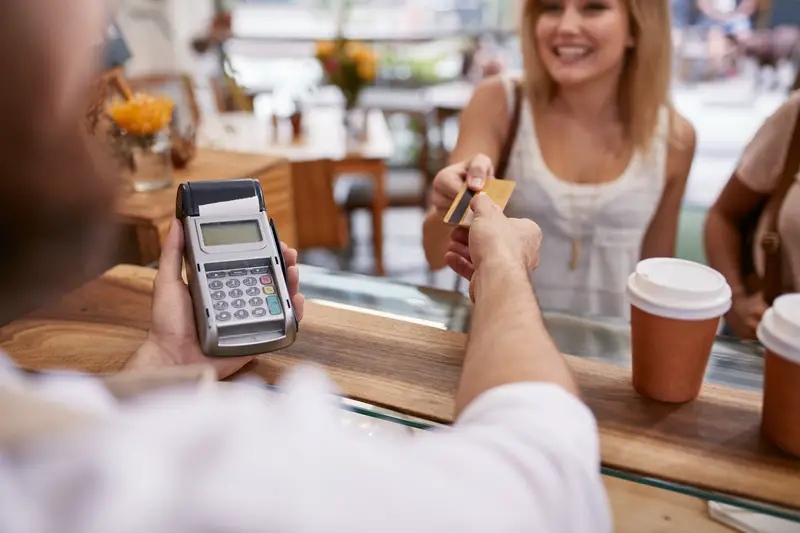
You know that moment. The screen swivels toward you, the barista staring politely at the ceiling, and suddenly you’re choosing between 18%, 20%, 25%, or the dreaded “Custom” button while the line behind you grows. You panic. You tap 20%. You grab your $6 iced coffee and walk away feeling slightly robbed.
Tipping in America has become a psychological minefield — sorry, a mess. And most of us are throwing money at people who genuinely don’t expect it, don’t need it, and in some cases, shouldn’t be receiving it at all. There’s one specific person who etiquette experts have long said you should stop tipping. And no, it’s not your waiter.
Stop Tipping The Business Owner
Here’s the rule that surprises almost everyone: if the person performing your service is the owner of the business, you are not expected to tip them. This isn’t some new hot take. It’s a longstanding etiquette rule that’s been around for decades, backed by everyone from Miss Manners to Dear Abby.
The logic is pretty straightforward. Tipping exists to supplement the wages of employees who don’t control how much they get paid. A server at Applebee’s doesn’t set the menu prices. A hairstylist working at a salon chain doesn’t decide what a cut-and-color costs. But a business owner? They set their own rates. They’ve already baked their desired income into what they charge you. When you add a 20% tip on top of that, you’re essentially paying them twice for the same work.
Think about it this way: the independent nail tech who rents her own chair and charges $65 for a gel set has already decided that $65 is the right price for her time and skill. The plumber who owns his own company and quotes you $200 for a repair — that $200 includes his profit. You wouldn’t hand your electrician an extra $40 after he fixes your outlet, so why are we doing it at the hair salon?
If you want to show appreciation to a small business owner, etiquette experts suggest booking regular appointments, leaving a five-star Google review, referring friends, or giving a holiday gift like a bottle of wine. That stuff actually helps their business grow, which is worth more than a $15 tip.
The Awkward Problem Nobody Talks About
Now, here’s where it gets tricky. A lot of salon owners work right alongside their employees, doing the same haircuts and blowouts. You might not even know if the person holding the scissors owns the place or just started last month. And in that uncertainty, most of us default to tipping because the alternative — not tipping someone who actually is an employee — feels awful.
This gray area has caused the old “don’t tip the owner” rule to soften a bit in recent years. Some people split the difference: they tip the owner less than they’d tip an employee. Others just tip everyone equally and don’t think about it. But the traditional etiquette? It’s clear. The owner doesn’t get a tip.
59% Of Americans Are Fed Up With Tipping
If you’re frustrated by how often you’re asked to tip, you have a lot of company. A 2025 survey of 2,445 U.S. adults found that 59% of Americans view tipping negatively. And more than one in three — 35% — believe tipping culture has gotten “out of control,” up from 30% the year before.
The numbers tell a clear story: Americans are tipping less across the board. Only 70% of people always tip their server at a sit-down restaurant now, down from 75% in 2021. Hair stylists and barbers? Only 54% always get tipped, compared to 66% in 2022. Food delivery drivers dropped from 59% to 52%. Coffee shop baristas? Just 18%, down from 23%.
People aren’t becoming stingier for no reason. They’re exhausted by being asked for tips everywhere they turn.
The Self-Checkout Tip Screen Is The Last Straw
If the tipping fatigue wasn’t bad enough, businesses have started asking for tips at self-checkout machines — places where you literally serve yourself. Airports, bakeries, sports stadiums, and coffee shops have all rolled out the self-serve tipping option, sometimes suggesting 20% even when you haven’t interacted with a single employee.
At Newark International Airport, a public relations worker named Garrett Bemiller was asked to tip at a convenience store self-checkout and called it “a bit of emotional blackmail.” A woman went viral on TikTok after being prompted to tip at Subway. Another posted about being asked to tip at a self-checkout at an airport, asking the very reasonable question: who am I even tipping?
Here’s the part that should make your blood boil: according to Holona Ochs, a Lehigh University professor who has co-written two books on tipping, federal laws requiring employers to pass tips along to employees don’t apply to machines. There is literally no guarantee that the tip you leave at a self-checkout goes to an actual worker. It could go straight into the company’s pocket. And there’s no fine print on the screen telling you either way.
Why The Screen Keeps Asking You For More
There’s a financial reason those tip prompts keep getting more aggressive. Sean Jung, a professor at Boston University’s School of Hospitality Administration, has pointed to three drivers behind what he calls “tipflation.”
First, payment companies like Square take a cut of every transaction — including the tip. So the software is literally designed to encourage you to tip more because it means more money for the payment processor. Second, the tight job market has pushed businesses to offer workers better compensation, and tips are an easy way to do that without raising prices on the menu. Third, inflation itself drives businesses to squeeze extra revenue wherever they can.
Tips in the U.S. have crept up to nearly 20% on average according to restaurant payment system Toast, and in cities like New York, San Francisco, and Chicago, it runs even higher. The screen isn’t asking you to be generous. The screen is doing math.
Gen Z Has A Tipping Problem (In Both Directions)
Here’s a stat that’s hard to square: only 35% of Gen Z always tips at sit-down restaurants, compared to 86% of Baby Boomers. Meanwhile, 71% of Gen Z works in the restaurant industry. So the generation most likely to depend on tips is also the generation least likely to leave them.
One college student was called out for tipping just 45 cents on a $20 meal at Red Robin despite getting great food and service, claiming she “didn’t have the money to tip.” That math doesn’t quite work — if you can afford to eat out, the tip is part of the cost. At least, that’s how the system works right now in America, whether we like it or not.
For hair stylists and barbers, the generational gap is even wider: only 25% of Gen Z always tips compared to 71% of Boomers. The younger generations aren’t necessarily being cheap on purpose — many of them are simply rejecting a system they see as broken. But the people getting hurt are their own peers behind the counter.
A New Study Says Tips Barely Improve Service Anyway
The whole argument for tipping has always been that it motivates better service. Pay your server well, get treated well. But a new paper in Management Science from researchers at Tel Aviv University found that’s barely true. Tips do seem to encourage slightly better service, but the effect is “very limited.”
What actually drives tipping, the researchers found, is social pressure. People tip because they’re afraid of being judged, not because they’re rewarding good work. Those who genuinely appreciate the service tip above average, and then everyone else matches those amounts just to avoid looking cheap. Over time, this ratchet effect pushes average tips higher and higher in cultures where tipping is expected.
The study also uncovered some uncomfortable truths: tipping can encourage sexist behavior toward female servers, who may tolerate things they shouldn’t because they’re afraid of losing their tip. And people tend to tip more when a server is the same ethnicity as them. The whole system, it turns out, is as much about bias as it is about gratitude.
Where You Actually Don’t Need To Tip
Let’s get specific. According to a Toast study, only 17% of restaurant guests tip when they order at a counter and pick up the food themselves. Just 12% tip at a drive-thru, and 11% at a self-checkout kiosk. The majority of Americans are already skipping these tips, and etiquette experts say that’s perfectly fine.
Traditional fast food places like McDonald’s, Burger King, Wendy’s, and Taco Bell don’t expect tips. Their workers earn regular hourly wages — federal minimum wage is $7.25, but it ranges up to $13 in states like California. These aren’t tipped workers making $2.13 an hour plus whatever customers feel like leaving.
Counter-service spots like Panera, Chipotle, and Mod Pizza also fall into this category. Their employees get standard pay. You don’t owe them a tip when the iPad swivels around, no matter how guilty you feel. At fast-casual places, if you want to tip, 10-15% is more than enough — or just a dollar or two on a small order.
And here’s one more: open bars at events. If someone invited you to a wedding or corporate party with a hosted bar, the host has already covered gratuity. Tipping the bartender on top of that means they’re getting tipped double. Same goes for all-inclusive resorts and prepaid event packages where service charges are already baked in.
The short version? Tip your sit-down restaurant server. Tip your barber if they don’t own the shop. And stop feeling guilty about pressing “No Tip” on a screen at a place where you poured your own coffee.

