

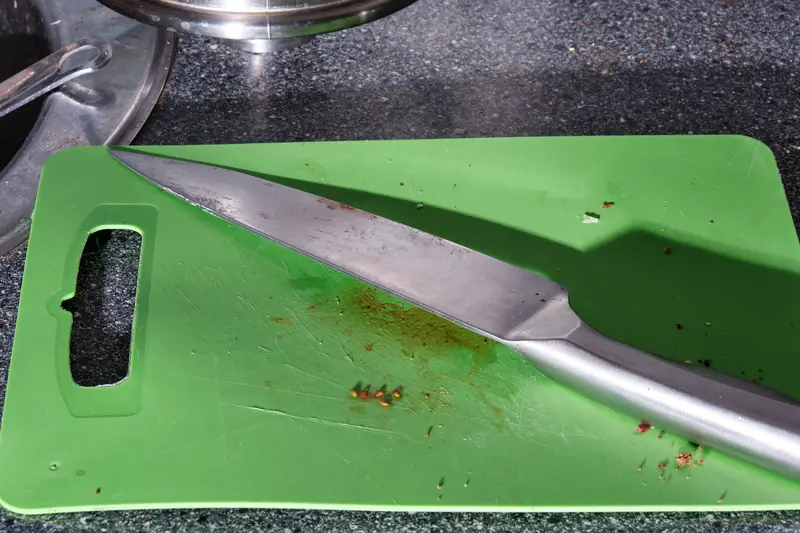
Here’s something that might make you rethink your kitchen habits. That cutting board sitting on your counter right now could be harboring more bacteria than your toilet seat. Yes, you read that correctly. The same surface where you slice tomatoes and chop onions for dinner might be one of the dirtiest spots in your entire home. Most people wash their cutting boards after use and assume everything is fine. But the reality is a lot more complicated than a quick rinse under the faucet. From the type of material to those deep grooves from years of knife work, there are plenty of reasons your board needs more attention.
Those knife marks are actually tiny bacteria hotels
Every time you drag a knife across your cutting board, you create tiny grooves in the surface. These might look harmless to the naked eye, but they’re actually perfect hiding spots for germs. Think about it this way. When you slice raw chicken, juices seep into those little cuts and scratches. Even when you wash the board, soap and water can’t always reach deep into those crevices. The bacteria just sit there, waiting for your next meal prep session. Over time, these grooves get deeper and more numerous, making the problem even worse.
The older your cutting board gets, the more of these tiny pockets it develops. A brand new board has a smooth surface that’s easy to clean. But after months or years of use, it starts looking like a road map of cuts and scratches. Each one of those marks is a potential problem area. This is why food safety experts often recommend replacing plastic cutting boards once they become heavily scarred. The board that’s been with you for five years might feel like an old friend, but it could be working against you in ways you can’t see.
Plastic boards aren’t as easy to clean as you think
Many people choose plastic cutting boards because they seem like the easy, low-maintenance option. You can toss them in the dishwasher and call it a day, right? Well, not exactly. While plastic boards do have some advantages, they also come with hidden drawbacks that most people don’t consider. Plastic cutting boards break down over time from repeated knife use and washing. When this happens, tiny pieces of plastic can actually mix with your food. Those same scratches that harbor bacteria also make the surface harder to sanitize properly with each wash.
The dishwasher might seem like the ultimate solution, but high heat can actually warp plastic boards. A warped board doesn’t sit flat on your counter, which makes cutting more dangerous and less efficient. Plus, that warping can create even more places for moisture and bacteria to collect. If you do use plastic boards, check them regularly for signs of wear. When you start seeing deep cuts, discoloration, or warping, it’s time for a replacement. Your cutting board shouldn’t look like it survived a sword fight if you want it to stay clean.
Wood boards have a surprising advantage
Here’s something that might surprise you. Wooden cutting boards can actually be safer than plastic ones in some ways. Wood has natural properties that help fight bacteria. When bacteria gets into the tiny cuts in a wooden board, the wood fibers actually trap and kill them over time. This doesn’t mean you can skip washing, of course. But it does mean that a well-maintained wooden board can be a solid choice for your kitchen. Many professional chefs prefer wood for this exact reason.
Unlike plastic boards that need frequent replacement, a good wooden board can last for years and actually get safer with time. The key is proper care. You need to oil wooden boards regularly to keep them from drying out and cracking. Hand washing is also essential since the dishwasher will ruin them. If you invest in a quality wooden board from brands like John Boos or Totally Bamboo, and take care of it properly, you’ll have a reliable kitchen tool that fights bacteria naturally. It’s one of those cases where the old-fashioned option might actually be better.
Using one board for everything is a mistake
How many cutting boards do you own? If the answer is one, you might want to reconsider your setup. Using the same board for raw meat and fresh vegetables is a recipe for trouble. Even if you wash the board between uses, you’re still taking a risk. Cross contamination mostly matters when bacteria from raw foods get transferred to items you won’t cook thoroughly. That salad you’re making doesn’t get the same heat treatment as a chicken breast, so any lingering germs will end up on your plate.
The smart move is to have at least two cutting boards. Use one exclusively for raw meats and another for everything else. Some people even go further, having separate boards for poultry, beef, vegetables, and bread. Color-coded boards make this system even easier. Red for raw meat, green for vegetables, and so on. This might seem like overkill for a home kitchen, but it’s a simple change that eliminates a lot of risk. Plus, having multiple boards means less time washing in between tasks when you’re cooking a complicated meal.
A quick rinse is never enough
We’ve all done it. You finish chopping something, run the board under water for a few seconds, and set it aside to dry. This seems reasonable when you’re just cutting bread or an apple. But even for simple tasks, a quick rinse doesn’t do much to eliminate what’s living on your board. Water alone doesn’t kill bacteria. It might wash away some food particles, but the germs that matter most are clinging to the surface. Without soap and some actual scrubbing, you’re basically just giving your cutting board a shower.
The proper way to wash a cutting board takes a little more effort. Use hot water and dish soap, and actually scrub the surface with a brush or sponge. Pay special attention to any grooves or cuts in the board. After washing, let it air dry completely before storing. Stacking wet boards or putting them away while still damp creates the perfect environment for bacteria and mold to grow. A few extra seconds of proper washing can make a real difference in how clean your board actually is.
The toilet seat comparison is actually real
You’ve probably heard people say that cutting boards have more bacteria than toilet seats. This sounds like one of those made-up facts people share on social media, but there’s actually real research behind this claim. Studies have found that the average cutting board can harbor significantly more germs than a typical toilet seat. The reason makes sense when you think about it. Toilet seats get cleaned regularly with harsh chemicals. Cutting boards often just get a quick wash with mild dish soap.
This comparison might seem gross, but it serves an important purpose. It highlights how often we underestimate the cleanliness of everyday kitchen items. We assume that because cutting boards touch food, they must be kept clean. But the reality is that they’re constantly exposed to raw ingredients, moisture, and organic matter. All of these things promote bacterial growth. Meanwhile, toilet seats are actually cleaned more thoroughly and sit unused most of the time. Sometimes the things we worry about least need the most attention.
Sanitizing goes beyond regular washing
Washing your cutting board is important, but sanitizing takes things a step further. These are two different processes. Washing removes visible dirt and some bacteria. Sanitizing actually kills the germs that washing might leave behind. For plastic boards, you can create a simple sanitizing solution using one tablespoon of bleach mixed with one gallon of water. Apply this to the board after washing, let it sit for a few minutes, then rinse and dry. This extra step is especially important after cutting raw meat.
For wooden boards, bleach isn’t the best choice because it can damage the wood fibers. Instead, try white vinegar or a mix of lemon juice and salt. Spray the vinegar on the board, let it sit for a few minutes, then wipe clean. The lemon and salt method involves sprinkling coarse salt on the board and rubbing it with a cut lemon half. This combination helps remove stains, odors, and bacteria. Do this cleaning routine regularly and you’ll notice your board stays fresher and cleaner over time.
Where you store your board matters too
After all that washing and sanitizing, don’t ruin your hard work with bad storage. Where and how you store your cutting board can affect how clean it stays. Laying boards flat in a cabinet might seem like a space-saving solution. But if the board isn’t completely dry, moisture will get trapped underneath. This creates the perfect conditions for mold and mildew to grow. You might pull out your board for breakfast and find mysterious dark spots or a funky smell.
The best way to store cutting boards is upright, in a position that allows air to circulate around all sides. A simple board rack or even leaning it against the backsplash works well. Just make sure it’s in a dry spot, away from the sink where splashes might hit it. Also, avoid storing boards in closed cabinets until they’re completely dry. If you’re short on counter space, at least prop the board up at an angle in the cabinet so air can reach both sides. A little attention to storage keeps your board fresh and ready for its next use.
Knowing when to replace your board saves trouble
Even with perfect care, every cutting board has an expiration date. The question is knowing when that date has arrived. For plastic boards, the signs are pretty clear. Deep grooves, permanent staining, warping, and a lingering smell that won’t go away are all indicators that it’s time to shop for a replacement. If your board looks like it’s been through a lot, it probably has. Trying to salvage a heavily damaged board isn’t worth the risk when a new one costs less than a meal at a fast food restaurant.
Wooden boards are a bit more forgiving. Many can be sanded down and refinished to remove surface damage and give them new life. However, if you see deep cracks that can’t be sanded out, or if the board has warped significantly, it’s time to let go. As a general rule, inspect your boards every few months. Run your hand over the surface and look for damage. Check for smells after washing. A board that smells even when clean is telling you something. Listen to what your kitchen tools are saying, and don’t hesitate to upgrade when necessary.
Your cutting board works hard every day, helping you prepare meals for yourself and your family. It deserves more attention than most of us give it. The good news is that keeping your board clean doesn’t require fancy equipment or hours of effort. Simple habits like proper washing, occasional sanitizing, smart storage, and knowing when to replace worn boards can make a huge difference. Next time you reach for that familiar board, take a second look at its condition and ask yourself if it’s really as clean as you assumed.

