

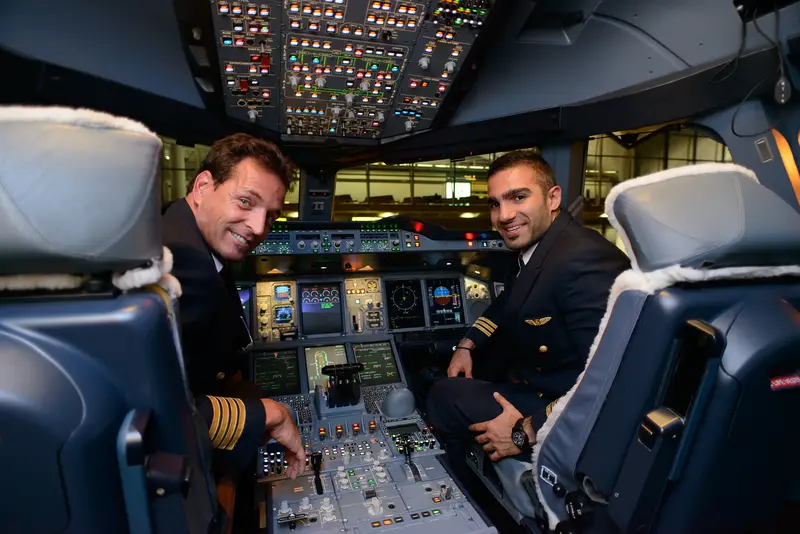
Ever notice how airline pilots almost always look clean-shaven? It’s not just about maintaining that crisp, professional appearance you see in movies. The real reason behind the no-beard policy at most major airlines comes down to something far more serious than style preferences. While you might assume it’s all about looking sharp in that uniform, the truth involves oxygen masks, emergency procedures, and safety regulations that date back decades. Here’s what actually happens behind the scenes when airlines make grooming decisions for their pilots.
Oxygen masks won’t seal properly with facial hair
The main reason pilots can’t grow beards relates directly to emergency equipment. When a plane loses cabin pressure at high altitude, pilots need to put on oxygen masks immediately. These masks must form a tight seal against the face to work correctly. Even a small amount of facial hair can prevent that seal from forming, which means oxygen leaks out instead of going into the pilot’s lungs. This isn’t just a minor inconvenience—at cruising altitude, pilots have only seconds to get oxygen flowing before they lose consciousness.
Research from 1987 found that beards caused anywhere from 16% to 67% leakage in oxygen masks. That’s a huge amount of wasted oxygen during an emergency when every breath counts. The study specifically noted that crew members with beards couldn’t secure their masks quickly enough, and the masks wouldn’t seal effectively even when properly positioned. Since pilots might need to perform physically demanding tasks during emergencies—which increases breathing rates—the leakage problem becomes even more dangerous. Airlines simply can’t risk having their pilots pass out because a beard prevented their safety equipment from working.
The FAA published guidance about beards decades ago
Back in 1987, the Federal Aviation Administration released an advisory circular that specifically addressed facial hair concerns. This document included a study called “The Influence of Beards on Oxygen Mask Efficiency” which became the foundation for most airline beard policies. The FAA circular stated clearly that bearded crew members should understand their oxygen masks won’t work as well with facial hair present. While this isn’t an official regulation that airlines must follow by law, it gave companies solid justification for implementing strict grooming standards.
Today, an FAA spokesperson explained that they don’t have clean-shaving regulations on the books, but many airlines create their own policies to ensure oxygen masks fit snugly when needed. The agency requires that oxygen masks remain functional, and airlines often interpret this requirement as needing pilots to be clean-shaven or have minimal facial hair. This gray area means each airline makes its own decisions about what’s acceptable. Some carriers allow small, trimmed mustaches while others prohibit any facial hair whatsoever. The 1987 guidance remains relevant because no newer studies have definitively proven that beards are safe with modern oxygen mask designs.
Different airlines enforce wildly different beard rules
If you’re hoping to fly planes for a living while keeping your beard, your options are limited but they do exist. Hawaiian Airlines allows full, trimmed beards, making them one of the most lenient major carriers. Air Canada permits beards as long as they’re trimmed to less than 12.5 millimeters. Allegiant Air also allows some facial hair under certain conditions. Meanwhile, major carriers like Delta and American Airlines maintain strict no-beard policies for pilots, though Delta allows mustaches in some cases. Southwest Airlines permits mustaches as long as they don’t cover more than half of the upper lip.
United Airlines currently prohibits facial hair on pilots, citing the same safety concerns about oxygen mask sealing. These policies can change over time as airlines update their employee handbooks and respond to shifting cultural expectations. The inconsistency between carriers shows there’s no universal standard—what’s acceptable at one airline might get you sent home from another. Some airlines make exceptions for religious reasons, allowing pilots to maintain beards if their faith requires it. Finding accurate, current information about specific airline policies can be challenging since these rules appear in internal documents rather than public announcements.
Military aviation set the standard for pilot appearance
The clean-shaven pilot look didn’t start with commercial airlines—it came from military aviation. For decades, most experienced airline pilots came from military backgrounds, particularly after World War II. These former service members brought military grooming standards with them into civilian flying jobs. The United States Air Force still doesn’t allow beards except for medical conditions or religious observances. This military influence created the classic pilot image: short haircuts, perpetually smooth faces, leather jackets, and aviator sunglasses. The look became so iconic that it shaped public expectations about what pilots should look like.
Some theories suggest that oil in men’s beards could pose fire risks when using oxygen equipment, though this concern traces back to older military safety practices. The military connection explains why airline pilot uniforms still feature elements like epaulet stripes, formal hats, and dark suit-style jackets. These visual cues communicate authority and competence to passengers. Airlines recognized that maintaining this professional appearance helped nervous flyers feel more confident about their safety. The military roots of aviation created grooming expectations that lasted for over a century, even as society’s views on facial hair changed dramatically in other professions.
Airlines prioritize passenger perception and company image
Beyond safety equipment concerns, airlines care deeply about how their pilots look because these employees serve as the company’s most visible representatives. When passengers see the flight crew, they form immediate impressions about the airline’s professionalism and safety standards. A nervous grandmother in the back row expects to see a certain type of person walking into the cockpit—someone who looks authoritative, trustworthy, and competent. Airlines invest heavily in maintaining brand images, and pilot appearance plays a significant role in that strategy. Clean-shaven faces align with traditional expectations of what a professional pilot should look like.
This focus on appearance isn’t unique to pilots—flight attendants and gate agents also follow strict grooming codes. However, pilots receive extra scrutiny because they’re responsible for hundreds of lives on every flight. Airlines know that projecting professionalism through appearance translates to customer confidence and satisfaction. A polished, uniform look helps passengers relax and trust that they’re in capable hands. Some airlines have started relaxing these standards slightly to reflect changing social norms, but most legacy carriers maintain conservative policies as part of their established brand identities. The question of whether appearance truly indicates competence remains debatable, but airlines believe it matters enough to enforce detailed grooming requirements.
Cargo and corporate flying jobs offer more flexibility
If you’re set on becoming a pilot without sacrificing your beard, commercial passenger airlines aren’t your only option. Cargo carriers often have more relaxed grooming policies since pilots don’t interact directly with passengers. Corporate aviation—flying private jets for companies or wealthy individuals—also tends to be more flexible about facial hair. These sectors still require professionalism, but the definition of what looks professional varies more than at major airlines. Charter operations, agricultural flying, and flight instruction positions may also allow beards depending on the specific employer.
The trade-off is that these jobs often pay less than major airline positions, at least initially. Career advancement opportunities might also differ from the traditional airline pilot path. However, for pilots who value personal appearance choices, these alternatives provide viable career options. Some pilots start at airlines, build experience, and then transition to corporate or cargo flying where they can grow out their facial hair. Others begin in more flexible flying jobs and never move to airlines. The aviation industry is diverse enough that pilots can usually find employment that matches both their career goals and personal preferences about grooming.
Changing a beard is easier than removing tattoos
Compared to airline policies on tattoos, beard restrictions are relatively easy to accommodate. Pilots can shave their beards before work and grow them back during vacation time. Tattoos, on the other hand, require expensive and painful removal procedures that don’t always work completely. Most airlines still require that tattoos remain hidden under the standard uniform, meaning they can’t appear on the face, neck, or hands. A few carriers like United and Alaska Airlines have adopted a “badge rule” where visible tattoos can’t be larger than the uniform badge.
Virgin Atlantic made headlines in 2022 by allowing unlimited visible tattoos of any size for all crew members, as long as the designs are tasteful. Despite these shifts at some airlines, the overall industry maintains conservative policies about body art. Aspiring pilots considering tattoos should think carefully about placement—keeping ink on areas that uniforms cover provides the most career flexibility. Some pilots wear long sleeves and jackets constantly to conceal existing tattoos. The good news is that facial hair policies can be followed without permanent changes to your body, unlike tattoo restrictions that might require laser treatments or limit your airline options significantly.
No new studies have proven beards are safe
The 1987 FAA guidance on beards and oxygen masks still influences airline policies today because no comprehensive modern research has contradicted its findings. Airlines operate in an industry where safety concerns always win over personal preferences. Without multiple reliable studies proving that facial hair doesn’t interfere with oxygen mask effectiveness, carriers have no incentive to change their policies. The potential liability of a pilot becoming incapacitated during an emergency because their beard prevented proper mask sealing far outweighs any benefits of allowing facial hair.
Some pilots and aviation experts argue that oxygen mask technology has improved since the 1980s, potentially making the beard concern outdated. However, airlines aren’t willing to take chances based on speculation. Until definitive research demonstrates that modern masks seal effectively on bearded faces during the intense physical activity of emergency procedures, most carriers will maintain their current restrictions. The conservative approach makes sense from a risk management perspective—airlines face enormous consequences if something goes wrong during a flight. Safety concerns about oxygen delivery will likely keep beard policies in place for the foreseeable future unless new technology or research changes the equation.
Religious and medical exceptions sometimes apply
While most airlines enforce strict no-beard policies, some make exceptions for religious or medical reasons. Pilots whose faith requires maintaining facial hair may be able to negotiate accommodations with their employers. Similarly, pilots with certain skin conditions that make shaving painful or dangerous might receive medical exemptions. These exceptions aren’t guaranteed and typically require documentation from religious leaders or doctors. Airlines evaluate these requests on a case-by-case basis, balancing the individual’s needs against safety requirements and company policies.
When exceptions are granted, airlines often require that the beard be kept very short and neatly trimmed to minimize interference with oxygen masks. Some carriers might assign these pilots to routes or aircraft where emergency oxygen scenarios are less likely, though this practice is uncommon. The process of requesting an exception usually involves human resources departments, union representatives if applicable, and sometimes legal reviews. Pilots considering this route should research their specific airline’s accommodation policies and prepare thorough documentation. The aviation industry’s focus on standardization means exceptions remain rare, but they do exist for pilots with legitimate religious or medical needs that conflict with standard grooming requirements.
The clean-shaven pilot look isn’t going anywhere soon, despite changing attitudes about facial hair in other professions. Safety equipment designed for smooth faces, decades of aviation tradition, and airline branding concerns all reinforce the no-beard policy at most carriers. For aspiring pilots, understanding these restrictions before starting flight training helps avoid disappointment later. The good news is that shaving regularly is a small price to pay for a career that offers good pay, travel opportunities, and the satisfaction of flying aircraft. And for those who absolutely can’t part with their beards, alternative aviation careers exist where facial hair won’t ground your dreams.

