

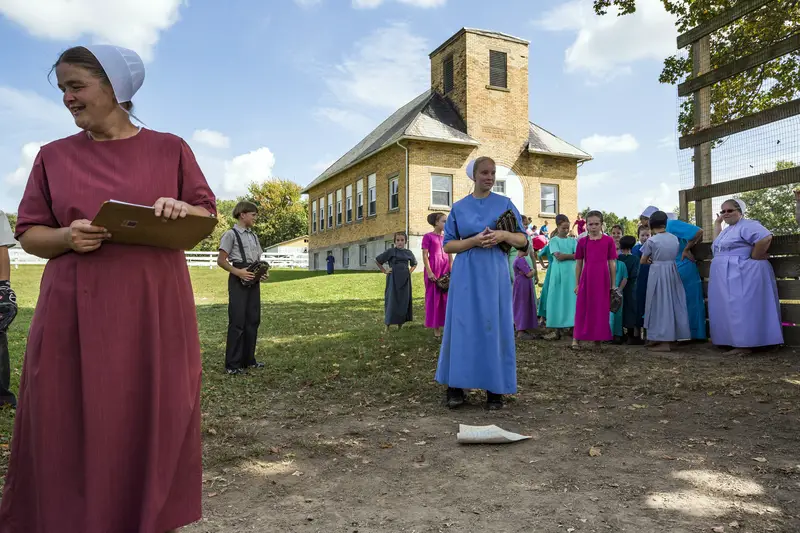
Most people think losing all your teeth is something that happens when you’re old, but in many Amish communities, young women are getting full sets of dentures before they turn 20. This isn’t some made-up story or exaggeration. When a young woman named Rebecca appeared on a reality show, she revealed she had all her teeth pulled at 19, shocking viewers who couldn’t understand why anyone would choose this. The truth behind this practice has nothing to do with religious rules or ancient traditions like many assume. Instead, it’s rooted in practical concerns about money, access to care, and a completely different way of thinking about dental health that most of us have never considered.
The cost of dental care makes extraction seem practical
When you don’t have dental insurance and a simple filling costs hundreds of dollars, the math starts looking very different. For Amish families living on modest incomes from farming or furniture-making, a single root canal can represent weeks of earnings. Multiply that by several problem teeth, and you’re looking at thousands of dollars for ongoing treatments that might need to be repeated years later. The Amish approach to this problem is straightforward: pull all the teeth in one appointment and get dentures that should last for years.
This might sound extreme to someone with good insurance coverage, but think about it from their perspective. One major dental expense versus decades of preventive cleanings, fillings, crowns, and emergency visits adds up quickly. Many Amish families see full extraction and dentures as the most sensible long-term investment. The dentures themselves can be made relatively cheaply within the community, sometimes on the same day as the extraction. For someone facing constant toothaches and mounting dental bills, the appeal of a permanent solution becomes clear, even if it means losing your natural teeth decades earlier than most Americans would.
Getting to a real dentist office isn’t simple
Imagine needing emergency dental work but having to ride in a horse-drawn buggy for an hour or more just to reach the nearest dentist’s office. That’s the reality for many Amish families living in rural areas where dental clinics are few and far between. When you don’t drive cars and rely on traditional transportation, even a routine dental appointment becomes a major undertaking. You need to arrange your entire day around the trip, potentially take someone along to help, and hope the weather cooperates. For someone dealing with multiple dental problems requiring several visits, this logistical challenge becomes overwhelming.
Some Amish do hire drivers from outside their community to take them to medical appointments, but that adds another expense to an already costly dental bill. The combination of distance, transportation difficulties, and time away from farm work or other responsibilities makes regular dental care impractical for many families. When local community members offer dental extractions right in the neighborhood, the convenience factor can’t be ignored. This accessibility issue particularly affects women, who often have primary responsibility for childcare and can’t easily spend entire days traveling to distant medical appointments for themselves.
Dentures don’t carry the same stigma in Amish culture
In mainstream American society, having dentures at 20 would be considered tragic, something to hide or feel embarrassed about. But Amish communities view dental health through a completely different lens. Physical appearance and vanity aren’t priorities in a culture that values humility and practicality above all else. When many people in your community have dentures, including young adults and even teenagers, it becomes normalized rather than shameful. Nobody is judging you for missing teeth or wearing dentures because the emphasis isn’t on having a perfect smile for social media or career advancement.
This cultural difference fundamentally changes the calculation about whether to save natural teeth or opt for extraction. Without the social pressure to maintain a certain appearance, the decision becomes purely functional. Can you chew your food? Then the dentures are doing their job. The revelation from Rebecca about getting all her teeth pulled at 19 shocked people outside the Amish community precisely because it challenged assumptions about beauty and dental health that don’t exist within Amish culture itself. For young Amish women, getting dentures isn’t seen as losing something valuable but rather as solving a problem efficiently.
Unlicensed community dentists offer cheap local service
Within many Amish settlements, certain community members have taken on the role of informal dentist, offering tooth extractions using basic tools like pliers and drills. These individuals have no formal dental training, no license, and no dental degree. They learned by watching others and through practice. To outsiders, this sounds horrifying and dangerous, but for Amish families with limited options, these local practitioners fill a crucial need. They’re available, affordable, and understand the community’s preferences. Some don’t even use numbing agents during extractions, though practices vary between different operators.
The legal status of these unlicensed dentists is murky at best, and some have faced prosecution for practicing dentistry without proper credentials. But prosecuting them creates tension because they’re serving a population that might otherwise go without any dental care at all. These practitioners typically work on a donation basis rather than charging set fees, making their services accessible even to the poorest families. They focus exclusively on extractions and don’t offer more complex procedures like root canals, crowns, or bridges. For someone wanting to prevent future dental problems by having all their teeth removed at once, these community dentists provide exactly the service needed at a fraction of what a licensed dentist would charge.
Preventive dental care isn’t emphasized in childhood
A study in Geauga County, Ohio revealed a startling disconnect between perception and reality regarding Amish children’s dental health. Nearly 88% of Amish parents believed their children had very good oral health, but over 88% of those same children actually had untreated tooth decay. Only about a third had seen a dentist in the past year, and more than a quarter had never been to a dentist at all. This isn’t neglect in the traditional sense but rather reflects different priorities and understanding of dental health. When you grow up seeing tooth loss as normal and inevitable, preventing cavities doesn’t seem as urgent.
Basic oral hygiene practices that most American children learn early aren’t consistently taught or reinforced in many Amish households. Research shows that most Amish brush their teeth less than once daily, with only 1.3 percent brushing twice or more each day. About 2.6 percent reported never brushing their teeth at all. Without fluoride toothpaste, regular dental checkups, or emphasis on cavity prevention, children grow up with dental problems that compound over time. By the time they reach young adulthood, many already have significant decay and damage. For young women especially, choosing extraction and dentures starts to seem like the inevitable endpoint rather than a drastic measure.
Education limits don’t allow professional dental careers
No Amish person can become a licensed dentist while remaining in the community because Amish education stops at eighth grade. Becoming a dentist requires completing high school, getting a bachelor’s degree, taking the Dental Admission Test, attending four years of dental school, passing national board examinations, and obtaining state licensure. The Amish oppose formal education beyond eighth grade because they believe high school and college expose young people to worldly influences that contradict their faith and way of life. This creates an impossible situation where no one from within the community can gain the credentials to provide professional dental care.
If an Amish person wanted to become a licensed dentist, they would have to leave their church, family, and everything they’ve known. This educational limitation means Amish communities will always depend on either outsiders for professional dental care or unlicensed community members for basic services. It perpetuates a cycle where dental knowledge and skills within the community remain limited to folk remedies and crude extractions. Without anyone qualified to provide education about preventive care or perform complex procedures, the pattern of poor dental health and eventual full extraction continues from one generation to the next. The education restrictions, while serving important cultural purposes, inadvertently guarantee ongoing dental health challenges.
The practice affects women more than men
While both Amish men and women sometimes choose full extraction and dentures, the practice appears to be particularly common among young women. The reasons for this gender difference aren’t entirely clear, but several factors likely contribute. Women may have less access to transportation for regular dental appointments since they typically don’t travel as far from home for work. They also bear children, and pregnancy can affect dental health in ways that might make existing problems worse. Additionally, in communities where women marry young and start families early, dealing with ongoing dental problems while caring for small children becomes especially burdensome.
The story of Rebecca getting all her teeth removed at 19 brought this issue to public attention, but she’s far from unique. Some Amish girls interviewed for studies have mentioned that many in their community lost their teeth young, suggesting it’s an accepted pattern specifically for young women. Getting the dental issues resolved before marriage and childbearing might be seen as practical timing. Once you have dentures, you don’t need to worry about dental emergencies while you’re pregnant or caring for a newborn. From this perspective, extraction in the late teens or early twenties serves as a form of preventive planning, eliminating a potential source of pain and expense during the busy childbearing years ahead.
This isn’t actually a religious requirement or tradition
Despite what many people assume when they first hear about this practice, pulling teeth isn’t a religious ritual or cultural tradition specific to the Amish. The Ordnung, which is the unwritten set of rules governing Amish life, doesn’t mandate tooth extraction or prohibit dental care. In fact, Amish church teachings allow members to seek modern medical and dental care when needed. The decision to have teeth pulled is driven by practical considerations about cost and convenience rather than religious doctrine. If affordable, accessible dental care were readily available, many Amish would likely choose to keep their natural teeth just like anyone else would.
The confusion arises because the Ordnung does emphasize values like simplicity, humility, and separation from the modern world, which influence how people approach healthcare decisions. Choosing a straightforward solution like extraction over complex ongoing treatments aligns with these values, but that’s different from saying the religion requires it. Different Amish communities have varying practices, and what’s common in one settlement might be rare in another. Some more progressive Amish groups are increasingly using licensed dentists and embracing preventive care. The practice of early tooth extraction reflects circumstances and choices rather than religious obligation, though outsiders often misunderstand this distinction.
Some communities are slowly changing their approach
Not all Amish communities follow the same dental practices, and some are gradually adopting more preventive care approaches. Younger generation members in certain settlements now regularly visit licensed dentists for checkups and minor work. Mobile dental clinics have started visiting Amish areas, providing basic treatments and education about oral health. These clinics discovered that while many children they served had never received prior dental care, introducing services like fluoride treatments and sealants can make a real difference. Some Amish are becoming more open to modern diagnostic tools like X-rays and accepting recommendations for fillings when problems are caught early.
More conservative districts still prefer traditional approaches, including home remedies like homemade toothpaste from baking soda and salt, or natural treatments like oil pulling. But the trend toward accepting professional dental care is growing, especially as success stories spread within communities. When people see neighbors keeping their natural teeth longer with proper care, attitudes can shift. The change happens slowly because Amish culture values tradition and community consensus over individual choices. But as younger Amish adults experience the benefits of preventive dentistry, they’re more likely to ensure their own children receive regular dental care. This gradual evolution suggests that widespread tooth extraction among young people may become less common in future generations, though it will likely remain a reality in more isolated and conservative settlements for years to come.
The practice of young Amish women having their teeth pulled stems from a complex mix of financial constraints, limited access to care, and cultural attitudes that differ sharply from mainstream American values. It’s not about religion or tradition but about practical problem-solving within a system that doesn’t provide easy answers. Understanding this helps explain a practice that initially seems incomprehensible to outsiders.

