

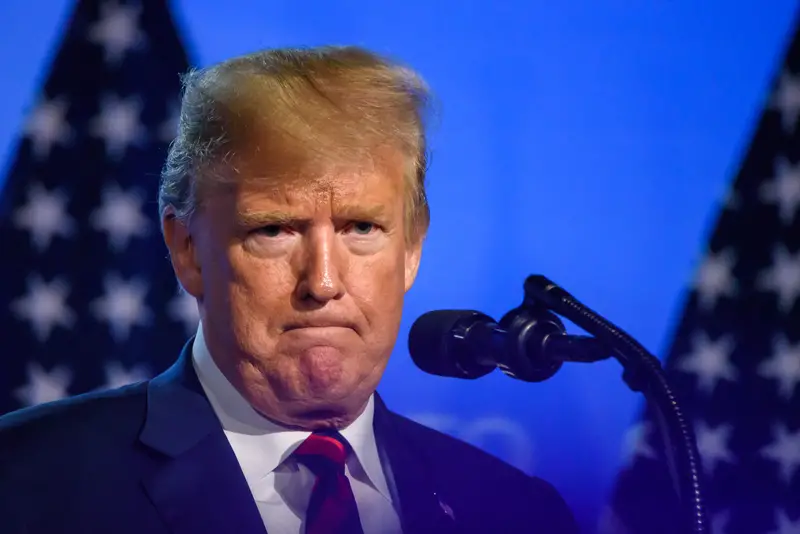
At 79 years old, Donald Trump holds the distinction of being the oldest person ever inaugurated as president. While that’s a historical footnote on its own, it raises a more sobering question: what happens if he doesn’t make it through his term? Only two presidents in the past century died from health conditions while serving, and Trump’s age puts him in rare territory. The last time a sitting president died from natural causes was 1945, when Franklin D. Roosevelt suffered a massive cerebral hemorrhage. If Trump were to pass away in office, he’d break a record that’s stood for 80 years, making him the oldest president to die during his term.
Trump is already the oldest inaugurated president
When Trump took the oath of office for his second term, he was 78 years old and five months. That made him slightly older than Joe Biden, who was also 78 at his inauguration in 2020. The difference might seem small, but in presidential history, every month counts when you’re setting records. Trump’s age puts him in uncharted territory for American leadership, and it’s sparked conversations about what that means for his ability to serve a full four-year term. Health experts have pointed out that while Trump has certain advantages, his age alone creates statistical risks that can’t be ignored.
Based on actuarial tables for American men his age, Trump has about a 79 percent chance of surviving through his current term. That might sound reassuring, but it also means there’s a one-in-five chance he won’t make it to the end. For context, that’s higher odds than flipping a coin twice and getting heads both times. Age brings inevitable health risks, and even with the best medical care in the world, nobody gets a free pass. The presidency is demanding, and while some argue the job’s stress could take a toll, historical data actually shows that presidents tend to live longer than average men their age.
His health records remain mostly secret
Unlike most politicians who release detailed medical information, Trump has kept his health status largely under wraps for more than a decade. We know he’s been described as morbidly obese in the past, but current details about his cardiovascular health, diabetes risk, or other conditions remain unknown. His personal physician claimed in late 2023 that Trump was in “excellent” health with “exceptional” cognitive test results, but these statements came without supporting documentation. Previous reports mentioned he was taking medications for cholesterol, cardiac health, and hair loss, though it’s unclear if that regimen continues today.
The secrecy extends to significant health events during his presidency. Trump’s mysterious rush to Walter Reed Medical Center in November 2019 was never fully explained, and details about his COVID-19 illness in 2020 remain vague. Even after the recent assassination attempt, the only information released came from a single memo that provided minimal details about his injuries. His former White House physician, now a congressman, has said Trump doesn’t drink or smoke, which theoretically helps his longevity. But without transparent medical records, Americans are essentially flying blind about the health of their oldest-ever president. That lack of transparency makes it impossible to accurately assess his risks.
Only two presidents died from illness in 100 years
Presidential deaths from natural causes are actually quite rare in modern history. The last time it happened was when Franklin D. Roosevelt died from a cerebral hemorrhage in 1945, just months into his fourth term. Before that, Warren Harding died from a heart attack in 1923. Since then, despite having presidents of various ages and health conditions, none have died from disease while in office. That’s partly because medical care has improved dramatically over the past century, and presidents receive the absolute best healthcare available. They have entire medical teams on standby 24/7, ready to respond to any emergency within seconds.
The rarity of presidential deaths from natural causes might give some comfort, but it doesn’t eliminate the statistical reality of Trump’s age. Roosevelt was 63 when he died in office, significantly younger than Trump is now. Harding was only 57. If Trump were to die during his current term, he’d become the oldest president ever to pass away while serving, breaking a record that has nothing to do with political achievement. The question isn’t whether it could happen, but what would happen if it did. Recent speculation about his health has already shown how quickly rumors can spread when a president goes quiet for a few days.
Social factors might work in his favor
Despite his age, Trump has several factors that typically predict longer life. He’s financially comfortable, which correlates with better health outcomes and access to quality care. He’s married, and having a partner or live-in companion is associated with increased longevity. His education level exceeds the average, which studies show matters for lifespan. And most importantly, he’s never smoked or consumed alcohol, eliminating two major health risk factors that plague many Americans his age. These advantages aren’t trivial. They’re the kinds of things that gerontologists look for when assessing someone’s likelihood of reaching their 80s and beyond.
Social engagement might be Trump’s biggest health asset. Research consistently shows that isolation kills, while regular interaction with friends and family extends life. As president, Trump occupies one of the most socially connected positions on Earth. He’s constantly surrounded by people, engaged in conversations, making decisions, and staying mentally active. A 2011 study found that American presidents actually live longer than average, and every living president has either exceeded their expected lifespan or is on track to do so. Jimmy Carter just turned 100, proving that presidential longevity is possible. The daily demands of the job might actually keep Trump sharper and more engaged than retirement would.
His known risk factors are concerning
Trump’s advantages don’t erase his disadvantages. His weight has long been a topic of discussion, with past reports describing him as morbidly obese. Excess weight significantly increases risks for heart disease, diabetes, stroke, and numerous other conditions that become more dangerous with age. His coronary calcium score, which measures plaque buildup in arteries and predicts heart disease risk, was reportedly “very high” during his previous term. High coronary calcium scores at his age are serious warning signs. They indicate existing cardiovascular disease that could lead to heart attacks or other cardiac events.
Then there’s his diet, which doctors have diplomatically suggested could use improvement. He’s known for preferring fast food and avoiding exercise routines, both of which work against longevity. His former physician recommended a diet lower in fat and carbohydrates along with regular exercise, advice that apparently went unheeded. The combination of age, weight, poor diet, lack of exercise, and high coronary calcium creates a concerning health profile. Add in the unknowns about his current blood pressure, cholesterol levels, and other vital health markers, and you’ve got a situation that would worry any doctor. These aren’t abstract risks. They’re concrete factors that increase the likelihood of major health events.
Vice President Vance would take over
If Trump dies in office, J.D. Vance would immediately become president under the 25th Amendment. At 41 years old, Vance would be one of the youngest presidents in American history, taking over under the most difficult circumstances possible. His experience is limited compared to most vice presidents who’ve assumed the top job. He served just two years as a senator before becoming vice president, and his resume before that includes work as an author, venture capitalist, and political newcomer. That’s not exactly the deep political background you’d want in someone suddenly thrust into the most powerful position in the world during a crisis.
Vance has publicly stated he’s received good on-the-job training and feels confident he could step in if needed. During a recent interview, he acknowledged that “terrible tragedies happen” while maintaining Trump is in good health. But confidence and experience aren’t the same thing. The transition from Trump to Vance would mean more than just a change in leadership. It would mean a fundamental shift in how the administration operates, who holds power, and how decisions get made. Without Trump’s personality dominating every room, the administration’s various factions would likely start fighting for control. Cabinet members with minimal qualifications would suddenly have even less supervision, potentially leading to chaos across federal agencies.
The power vacuum could create chaos
Trump runs his administration like many strongmen leaders do: everything flows through him, and his word is final. That creates stability of a sort, but it also means there’s no real structure beneath him. If he suddenly disappeared, the resulting power vacuum would be immediate and severe. Cabinet secretaries and advisors who owe their positions entirely to Trump’s personal favor would suddenly be operating without their patron. Stephen Miller, Pete Hegseth, Kristi Noem, Tulsi Gabbard, and others would still be in their positions, but without anyone who can actually control them or force them to work together. The predictable result would be infighting, backstabbing, and bureaucratic warfare.
The situation in Congress wouldn’t help. The House Republican majority is razor-thin and split into multiple factions. Without Trump to strongarm votes and force unity, passing legislation would become nearly impossible. The Senate faces similar problems, with no obvious leader who commands the respect and fear that Trump does. Meanwhile, Trump’s recent policies have already created fractures in his base. Immigration policy reversals, weapons shipments to Ukraine, and other decisions have confused and angered different groups of supporters. A President Vance would inherit these divisions without the personal loyalty Trump commands. It’s the kind of situation that brings out the worst in Washington, where everyone starts looking out for themselves instead of governing.
International consequences could be severe
Foreign adversaries pay close attention to American political stability. If Trump died in office, you can bet that China, Russia, Iran, and North Korea would immediately start calculating how to exploit the situation. A brand-new president with minimal experience would be an tempting target for testing America’s resolve. Would China make moves in Taiwan? Would Russia escalate somewhere? Would Iran become more aggressive in the Middle East? These aren’t paranoid fantasies. They’re strategic calculations that hostile governments make when they sense weakness or distraction in Washington.
Even allies would be concerned. NATO countries, Asian partners, and other friendly nations rely on American leadership and consistency. A sudden change in administration would create uncertainty about commitments, treaties, and ongoing operations. Military commanders overseas would be wondering if their orders might change. Diplomats would be scrambling to understand the new power structure. And America’s enemies would be watching carefully for any sign of confusion or hesitation they could exploit. The death of a sitting president always creates a dangerous moment in international relations. When that president is 79 years old and leading a deeply divided country, the risks multiply. It’s the kind of scenario that keeps national security professionals awake at night.
Recent health concerns sparked death rumors
In late August 2025, Trump went several days without public appearances, triggering immediate speculation about his health. Photos from an August 25 White House briefing showed noticeable discoloration on his right hand, which some interpreted as a potential sign of serious health problems. Others pointed to his swollen ankles in various pictures, suggesting possible circulation issues. The rumors got so intense that Trump felt compelled to address them directly. On August 31, he posted on Truth Social in all caps: “NEVER FELT BETTER IN MY LIFE.” The need to make that statement at all shows how quickly concerns about his health can spiral into full-blown speculation.
Even Trump’s own comments have fed the concerns. During an August appearance, he made cryptic statements about trying to get to heaven and hearing that he wasn’t doing well spiritually, calling himself at “the bottom of the totem pole.” While he was clearly joking about his religious standing, the timing combined with his reduced public schedule made people nervous. Vice President Vance tried to calm things down by insisting Trump was in “incredibly good health,” but his simultaneous comments about being ready to take over “if terrible tragedies happen” didn’t exactly inspire confidence. The whole episode revealed how sensitive the topic has become. When the oldest president in history goes quiet for a few days, people notice and worry.
If Trump does die in office, he’ll break a record nobody wants to hold. Being the oldest president to pass away during their term isn’t a legacy achievement, but it’s a real possibility given his age and the limited information about his health. The implications go far beyond historical footnotes. They involve questions about succession, governmental stability, international security, and America’s ability to function during a crisis. Whether Trump serves out his full term or not, his age has already made him a presidential outlier in ways that matter for everyone.

