

You’ve planned the perfect trip for months. Hotel reservations are confirmed, tours are booked, and you’ve already mentally packed your bags three times. But there’s one detail that could send your vacation plans crashing down before you even board the plane. Many travelers assume their passport is good to go as long as the expiration date hasn’t passed. That assumption has left countless families stranded at airports, watching their dream vacations disappear. The real rule is much stricter than most people realize, and it catches experienced travelers off guard every single year.
Your passport needs way more time than you think
Most people check their passport expiration date and figure they’re all set if it doesn’t expire during their trip. That’s where the problem starts. The reality is that many countries won’t let you enter if your passport expires within six months of your travel dates. Even if you’re only planning a week-long vacation and your passport expires in five months, you’re getting turned away at the gate. Airlines won’t even let you board because they face fines for transporting passengers who get refused entry at their destination. This six-month validity rule applies to popular vacation spots that millions of Americans visit every year.
The list of countries requiring six months of validity includes China, Egypt, India, Indonesia, Singapore, Thailand, Turkey, and the United Arab Emirates. Some European countries are slightly less strict but still require at least three months of validity, including Denmark, France, Germany, Greece, Italy, Spain, and Sweden. Even if you’ve already paid for your ticket, cleared security, and made it to your gate, airline staff will deny you boarding if your passport doesn’t meet these requirements. They don’t care if it’s your honeymoon, your birthday celebration, or a trip you’ve been planning for years. The rules don’t bend for anyone’s special occasion.
Airlines catch this problem at check-in, not before
Many travelers assume that if there was a problem with their passport, someone would have notified them when they booked their flight. That’s not how it works. Airlines and booking sites like Expedia don’t check your passport information when you purchase tickets. They only verify it when you show up at the airport to check in for an international flight. That means you can spend months excitedly planning and paying for your trip, completely unaware that your passport won’t get you on the plane. The confirmation emails often include warnings about checking entry requirements, but most people don’t read through all that fine print.
When the gate agent discovers your passport doesn’t meet the validity requirements, your options are extremely limited. Some airlines will mark you as a no-show, which means you forfeit your entire ticket with no refund or credit. Other airlines might allow you to rebook for a later date, but you’ll pay change fees plus any price difference between your original ticket and the new one. Last-minute international flights are rarely cheap, so that price difference can easily run into hundreds or thousands of dollars per person. Either way, you’re going home instead of on vacation, and you’re out a significant amount of money.
Your passport needs blank pages for stamps
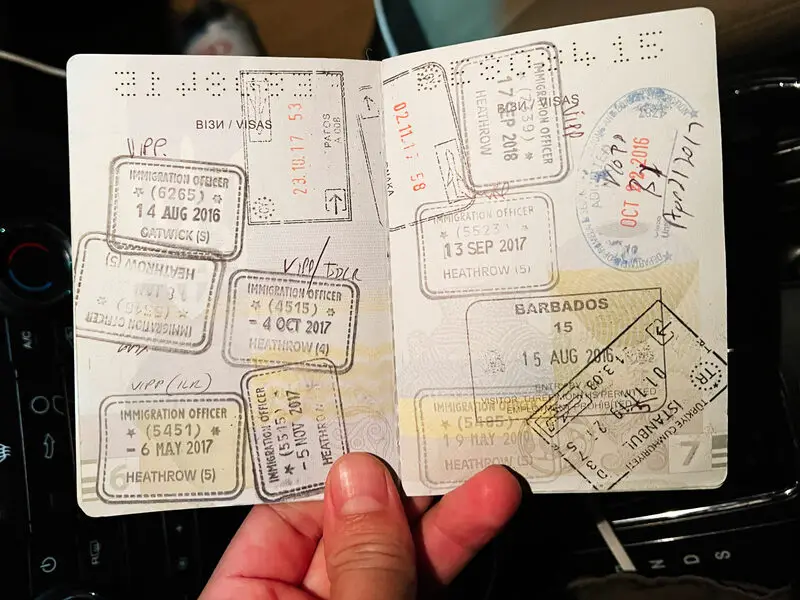
The expiration date isn’t the only thing that can invalidate your passport for travel. Many countries require that your passport has multiple completely blank pages available for entry and exit stamps. The U.S. State Department warns that some countries demand two to four blank visa or stamp pages, and immigration officials are very particular about what counts as blank. A page with a small stamp in the corner or some faded marks doesn’t count as blank, even if there’s technically room for another stamp. African, Asian, and Middle Eastern countries tend to be especially strict about this requirement.
If you’re a frequent traveler who has accumulated lots of stamps over the years, you might run out of blank pages before your passport expires. Unfortunately, the U.S. no longer allows you to add extra pages to an existing passport. Your only option is to renew your passport and get a fresh one with empty pages. If you know you’ll be traveling extensively, you can request a large passport book when you apply or renew. The large book contains 52 pages instead of the standard 28 pages, giving you much more room for stamps without requiring early renewal. This option doesn’t cost any extra and just requires checking a different box on your application.
Passport damage you didn’t know about can stop you
Your passport might look perfectly fine to you but still be considered damaged and invalid for international travel. Water damage is one of the most common problems, including any stains, mold, or warping from liquid exposure. Other damage that can get your passport rejected includes significant tears, unofficial markings on the data page where your photo and information appear, missing or torn-out visa pages, hole punches, or even bite marks. If you have kids or pets, your passport should be stored somewhere they absolutely cannot access it. One curious toddler or playful puppy can destroy your passport in seconds.
Normal wear and tear is acceptable, though. Your passport can be bent from sitting in your back pocket, and the pages can show signs of being opened and closed many times. Those things won’t get you turned away. But anything that affects the readability of your information or the integrity of the security features will cause problems. If you’re not sure whether damage to your passport is acceptable, don’t wait until you’re at the airport to find out. Contact the U.S. State Department or visit a passport acceptance facility to have someone review it. A damaged passport must be replaced before you can travel, and that takes time.
Name mismatches between tickets and passports cause major problems
The name on your airline ticket must match your passport exactly, character for character. If your passport says John A. Smith, your ticket can’t say John Adam Smith or just John Smith. Airlines are incredibly strict about this because security regulations require it. This issue comes up most often after someone gets married or divorced and changes their name but hasn’t updated their passport yet. It also happens when people accidentally enter their name differently when booking than it appears on their passport. Maybe you go by your middle name in daily life, but your passport uses your legal first name.
Some travelers have run into trouble with middle names appearing on one passport but not on a renewed passport. This happens when someone doesn’t include their middle name when filling out the renewal application. Border control computer systems in countries with strict entry controls sometimes flag this inconsistency between old and new passports, creating unnecessary complications. When you’re booking any international flight, pull out your actual passport and copy the name exactly as it appears on the identification page. Don’t rely on memory or how you usually write your name. Triple-check before you finalize the purchase because fixing a name mismatch later can be expensive or impossible.
Some countries require visas that Americans often forget about
The American passport is one of the most powerful in the world, allowing visa-free entry to many countries. But that doesn’t mean all countries welcome Americans without additional paperwork. Popular destinations like Brazil, China, India, and Vietnam all require U.S. citizens to obtain visas before traveling. Some visas can be obtained online fairly easily, while others require submitting your passport by mail weeks in advance. Showing up at the airport with a valid passport but no required visa will get you denied boarding just as quickly as an expired passport would.
Many travelers assume that if they need a visa, the airline or booking site would have told them when they purchased tickets. Airlines aren’t responsible for informing you about visa requirements, though some include general warnings in confirmation emails. It’s entirely your responsibility to research and obtain any necessary visas before your travel date. The U.S. State Department website has detailed information about entry requirements for every country, including whether Americans need visas and how to obtain them. Check this information as soon as you start planning your trip, not the week before departure.
You might need proof of onward travel to enter certain countries
Some countries won’t let you enter unless you can prove you’re planning to leave within a certain timeframe. This usually means showing a return flight ticket or an onward ticket to another destination. The rule exists to prevent people from entering on tourist visas and then staying indefinitely. Airlines are particularly careful about this requirement because they face fines if they transport passengers who are then refused entry at immigration. Even if you have a valid passport with plenty of validity remaining, not having proof of onward travel can get you denied boarding.
This requirement catches travelers who book one-way tickets because they’re still deciding on their return date or planning to travel around for a while. Some people try to enter countries with tourist visas while actually planning to figure out long-term stays later. Immigration officials and airline staff are trained to spot these situations. If you’re booking one-way international travel, research whether your destination requires proof of onward travel. You might need to book a refundable return flight just to show at check-in, or purchase a cheap onward ticket to a neighboring country. Having your travel plans organized and documented prevents a lot of headaches at the airport.
Passport cards don’t work for international flights anywhere
The U.S. offers two types of passports: the traditional passport book and the smaller passport card. The passport card is a wallet-sized plastic card that costs less than a passport book. It works perfectly fine for land and sea crossings to Canada, Mexico, Bermuda, and Caribbean countries. But here’s what many people don’t realize: the passport card is not valid for any international air travel whatsoever. It doesn’t matter if you’re flying to one of the approved countries. If you’re getting on a plane, you need a passport book.
Some travelers apply for passport cards because they’re cheaper and more convenient to carry around. If you only take road trips to Canada or cruise to the Caribbean, a passport card serves your needs fine. But the moment you decide to book an international flight, even to nearby countries, that passport card becomes useless. You can’t use it to board the plane, and you’ll need to apply for a full passport book. The processing time is the same as any other new passport application, typically four to six weeks under normal circumstances. That’s why many people choose to get the passport book even if they only need the card right now. Having the book gives you flexibility for any future international travel plans.
Renewing your passport takes longer than most people expect
Let’s say you’ve discovered your passport doesn’t have enough validity for your upcoming trip. How quickly can you get a new one? Under routine processing, getting a new or renewed passport takes four to six weeks from the date the government receives your application. That’s assuming everything is filled out correctly and there are no issues with your photos or documentation. If you need your passport faster than that, expedited processing costs an extra $60 and takes two to three weeks. That’s still not exactly quick if your trip is coming up soon.
If you’re traveling internationally within the next two to three weeks and need a passport urgently, you can make an appointment at a regional passport agency or center for emergency service. You’ll need to bring proof of your immediate international travel, such as flight confirmations. These appointments can be difficult to get, especially during busy travel seasons. The best approach is to check your passport validity as soon as you start planning any international trip. If your passport expires within the next year, renew it right away before you book anything. Passport renewal is now available online for many adults, making the process easier than ever. Don’t wait until a few weeks before your trip to realize your passport isn’t valid.
Planning a vacation should be exciting, not stressful. But the simplest way to ruin months of planning is to overlook your passport’s fine print. Check the expiration date and make sure it extends at least six months beyond your return date, verify you have blank pages, and confirm your name matches your ticket exactly. These steps take five minutes but can save you from watching your vacation disappear at the airport check-in counter. Your passport is your ticket to the world, but only if you make sure it actually works before you need it.

