

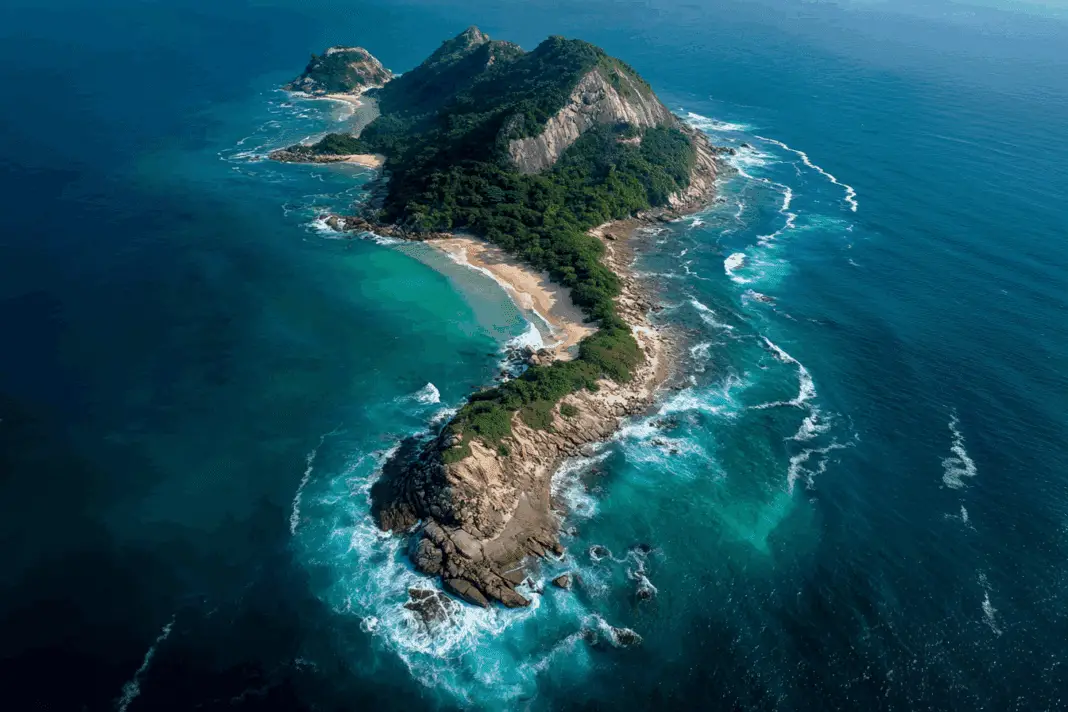
Most people think the biggest travel worry is lost luggage or delayed flights, but some places around the world are so dangerous that governments have banned tourists entirely. These aren’t just areas with travel warnings – they’re completely off-limits destinations where stepping foot could literally be your last mistake. From snake-infested islands to isolated tribes that attack outsiders, these forbidden places prove that some vacation spots are better admired from very, very far away.
Snake Island has 4,000 deadly serpents per square mile
Ilha da Queimada Grande, better known as Snake Island, sits off the coast of Brazil and holds the terrifying record for the highest concentration of venomous snakes anywhere on Earth. The Brazilian government has made it completely illegal for civilians to visit this 110-acre island, and for good reason. Every square meter contains at least one golden lancehead viper, whose venom can kill a human within an hour. These snakes evolved to be extra deadly because they needed to kill birds quickly before they could fly away.
The island’s isolation created a perfect storm for these serpents to multiply unchecked. Estimates suggest around 4,000 golden lanceheads call this place home, making it impossible to walk anywhere without encountering multiple deadly snakes. The only people allowed on the island are Brazilian Navy personnel who maintain the lighthouse, and even they require special permission and medical teams on standby. Local legends claim the snakes are so aggressive that they’ve killed lighthouse keepers in the past, leading to the lighthouse becoming automated.
North Sentinel Island residents attack anyone who approaches
The Sentinelese people have lived on North Sentinel Island in the Andaman Sea for over 50,000 years, and they want absolutely nothing to do with the outside world. This isolated tribe has violently rejected every attempt at contact, shooting arrows at helicopters, boats, and anyone who dares set foot on their shores. The Indian government has declared the island completely off-limits and maintains a three-mile exclusion zone around it. Even fishermen who accidentally drift too close risk being killed by the tribe’s warriors.
What makes this forbidden island particularly dangerous is that the Sentinelese have no immunity to common diseases, making any contact potentially deadly for both sides. In 2018, an American missionary was killed when he tried to reach the island to convert the tribe to Christianity. The Indian Coast Guard had to recover his body from the beach while dodging arrows. The tribe’s hostility isn’t just cultural – it’s a survival mechanism that has kept them alive for millennia in complete isolation from modern civilization.
Heard Island contains two active volcanoes and impossible weather
Located in the middle of nowhere between Antarctica and Madagascar, Heard Island represents one of the most hostile environments on Earth. This Australian territory features two active volcanoes that regularly spew lava and toxic gases, while hurricane-force winds exceeding 200 mph can strike without warning. The entire island consists of volcanic debris and limestone formations that create unstable terrain impossible to navigate safely. Temperatures rarely rise above freezing, and the weather can change from calm to life-threatening in minutes.
The Australian government has banned all tourism to preserve the island’s fragile ecosystem, but even if it were legal, reaching Heard Island would be nearly impossible for regular travelers. The remote location requires expensive specialized expeditions, and the violent seas around the island have claimed multiple vessels over the years. The few scientists who do visit must bring emergency shelter and communication equipment, as rescue operations in this region are extremely difficult. Most research trips are cancelled due to dangerous weather conditions that can trap visitors for weeks.
Surtsey Island’s fragile ecosystem cannot handle human visitors
Born from a massive volcanic eruption that lasted four years in the 1960s, Surtsey Island off Iceland’s coast represents a unique natural laboratory that scientists are desperate to protect. This newest piece of land on Earth is slowly developing its own ecosystem as plants and animals naturally colonize the barren volcanic rock. However, human presence could completely destroy this delicate process by introducing foreign bacteria, seeds, and organisms that don’t belong. Even the few scientists allowed to visit must follow strict decontamination procedures.
The Icelandic government has banned all tourism to ensure this volcanic island can develop naturally without human interference. Visitors could accidentally bring seeds on their clothing or shoes, disrupting millions of years of evolutionary processes happening in real-time. The island’s surface remains unstable, with loose volcanic rock that could easily injure inexperienced hikers. Scientists studying Surtsey wear specially sterilized equipment and follow protocols similar to those used in space missions to avoid contaminating this natural experiment in ecological succession.
North Brother Island harbors dangerous structures and protected wildlife
This abandoned island in New York City’s East River once housed a quarantine hospital where Typhoid Mary lived in isolation, but now it’s become a crumbling death trap surrounded by dangerous waters. The old hospital buildings are slowly collapsing, with rotting floors, exposed asbestos, and unstable walls that could cave in at any moment. Sharp debris and rusted metal create additional hazards for anyone foolish enough to attempt an unauthorized visit. The waters around the island feature strong currents and hidden obstacles that have caused numerous boating accidents.
Beyond the physical dangers, North Brother Island now serves as a protected bird sanctuary where human presence could disrupt nesting patterns of several endangered species. The New York City government strictly prohibits all public access, and the Coast Guard regularly patrols the area to prevent trespassers. Urban explorers who attempt to reach the island face arrest, hefty fines, and serious injury risks from the deteriorating infrastructure. The island’s isolation in busy shipping lanes also makes rescue operations complicated and dangerous for emergency responders.
Niihau Island maintains total isolation from outsiders
Known as the “Forbidden Island,” Niihau off Hawaii’s coast operates under some of the strictest access restrictions in America, with only 160 residents who live completely cut off from modern society. The Robinson family, who owns the island, has banned all outside visitors except for US Navy personnel and relatives of residents. This policy exists to preserve Native Hawaiian culture and protect the island’s unique ecosystem from outside contamination. Trespassers face immediate arrest and prosecution, with no exceptions made for tourists or researchers.
The isolation isn’t just legal – it’s practical and dangerous for unauthorized visitors. Niihau Island has no commercial flights, hotels, or tourist infrastructure, and the surrounding waters contain strong currents and shark populations that make swimming extremely risky. Residents speak primarily Hawaiian and may not be able to communicate with outsiders in emergency situations. The island lacks modern medical facilities, meaning any injury or illness could become life-threatening before help arrives. Even scheduled supply deliveries sometimes get cancelled due to rough seas and weather conditions.
Area 51 shoots first and asks questions later
This highly classified military installation in Nevada’s desert has become synonymous with conspiracy theories, but the real danger lies in the shoot-to-kill policy enforced by heavily armed security forces. Signs around the perimeter clearly warn that deadly force is authorized against trespassers, and guards take this threat seriously. Motion sensors, cameras, and patrol teams monitor every inch of the boundary, making detection inevitable for anyone who attempts to breach the facility. The consequences aren’t just legal – they’re potentially fatal for anyone who ignores the warnings.
Beyond the security risks, Area 51 conducts dangerous military testing that could expose trespassers to toxic chemicals, experimental aircraft, or weapons systems. The desert environment itself presents additional hazards, with extreme temperatures, venomous wildlife, and vast distances that make survival difficult without proper preparation. Even approaching the outer perimeter results in immediate detention and federal charges that can include hefty prison sentences. The military maintains this extreme security not just for secrecy, but because the facility genuinely poses multiple dangers to unauthorized personnel who lack proper safety training and equipment.
Dulce Base hides underground experiments behind military security
Located near the Colorado border in New Mexico, this secretive underground facility allegedly conducts classified experiments that require absolute security and isolation from the public. While conspiracy theories abound about what actually happens inside Dulce Base, the documented reality involves heavy military presence and restricted airspace that makes unauthorized access extremely dangerous. Armed patrols and sophisticated surveillance systems protect the facility, with security protocols that treat any trespassers as potential threats requiring immediate neutralization.
The remote desert location creates additional survival challenges for anyone attempting to approach Dulce Base on foot, including extreme temperature variations, dangerous wildlife, and communication dead zones where cell phones don’t work. Military aircraft regularly patrol the area and will intercept any unauthorized vehicles or aircraft that enter the restricted zone. Local law enforcement coordinates with federal agencies to arrest anyone found in the vicinity without proper clearance. The combination of legal consequences, physical dangers, and military security makes this one of the most effectively protected forbidden locations in North America.
These dangerous destinations prove that some places are forbidden for very good reasons – usually involving immediate threats to human life. While the mystery surrounding these locations might seem appealing, the governments and organizations protecting them aren’t trying to spoil anyone’s fun. They’re preventing deaths, preserving irreplaceable ecosystems, and maintaining security that keeps everyone safer. Sometimes the best vacation spot is one you can only visit through documentaries and articles.

