

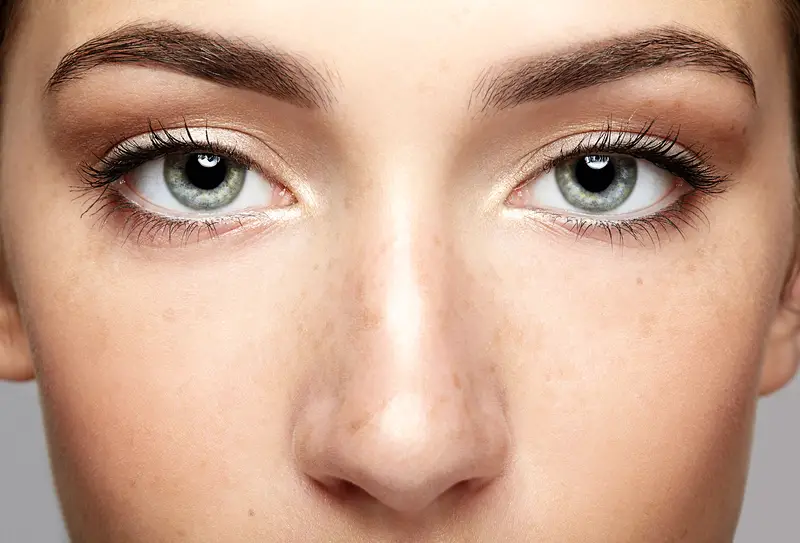
When you look in the mirror each morning, you probably don’t think much about your eye color. It’s just there, part of who you are. But what if we told you that some eye colors and combinations are so rare that fewer than one percent of people on Earth share them? While most of us have brown eyes—around 70% to 80% of the world’s population, actually—there are some truly remarkable eye traits out there that make certain people incredibly unique. Some combinations are so uncommon that spotting someone with them feels like finding a needle in a haystack!
Gray eyes might be rarer than you think
Most people assume blue or green eyes are the rarest, but gray eyes are actually more uncommon than both. Only about 3% of the world’s population has gray eyes, making them one of the most unique eye colors you can have. These eyes can appear in various shades, from dark gray to gray-blue or even gray-green. What makes them particularly interesting is how they seem to shift in appearance depending on lighting, clothing colors, or even the person’s mood. When pupils dilate due to strong emotions or certain medications, gray eyes can look darker, creating an almost mystical quality.
The science behind gray eyes is still somewhat mysterious. Researchers believe the genetics are similar to those behind blue eyes, but with a slight twist. Gray eyes may contain just enough melanin in the front layer of the iris to dim the blue wavelengths of light that reflect back. The fibers in the stroma—the connective tissue in the middle of the iris—might also scatter light in a way that creates that distinctive gray appearance. Unlike brown eyes that have melanin in both the front and back layers of the iris, gray eyes have minimal melanin overall, which is what makes them so light and reflective.
Red hair and blue eyes are the ultimate rarity
If you have red hair and blue eyes, congratulations—you’re part of an incredibly exclusive club. This combination occurs in only 0.17% of the population, making it the rarest hair and eye color pairing in the world. The reason this combo is so uncommon comes down to genetics. Both traits are recessive, meaning you need to inherit specific genes from both parents to have them. But there’s more to it than that. A gene variant called HERC2 can actually shut off the redhead gene while expressing blue eyes and blonde hair, making the simultaneous appearance of red hair and blue eyes even less likely to occur.
Red hair itself is already rare, found in only about 1-2% of the global population. It’s caused by variants in the MC1R gene, which controls how much of two types of melanin your body produces. Redheads make mostly pheomelanin instead of eumelanin, which results in that distinctive fiery color. When you combine this with the genes needed for blue eyes—which require very little melanin production in the iris—you’re dealing with an astronomical long shot. Most people with red hair have brown, hazel, or green eyes instead, making those blue-eyed redheads genuinely one in a million.
Green eyes are more uncommon than people realize
While blue eyes get a lot of attention, green eyes are actually rarer. According to surveys from the American Academy of Ophthalmology, only about 9% of Americans have green eyes, compared to 27% with blue eyes and 45% with brown eyes. Green eyes result from a combination of light brown pigmentation in the iris and the way light scatters through the eye. They’re not a single solid color but rather a complex mix that can include gold, brown, and even blue tones. This is why green eyes often appear to change color depending on lighting conditions or what the person is wearing.
The genetics behind green eyes are complex and involve multiple genes working together. Scientists used to think eye color was controlled by just one dominant gene, but we now know that at least eight different genes play a role in determining eye color. The OCA2 gene is about 75% responsible for eye color, while the HERC2 gene controls how OCA2 functions. Other genes fine-tune the amount of melanin in the iris, creating that perfect balance needed for green eyes. Because so many genetic factors need to align just right, green eyes remain relatively rare worldwide, though they’re more common in certain populations, particularly in Northern and Central Europe.
Having two different colored eyes is extremely unusual
Heterochromia is the medical term for having two different colored eyes, and it’s far less common than you might think. This condition affects less than 1% of the population and occurs when there’s an irregular distribution of melanin in the irises. There are actually different types of heterochromia. Complete heterochromia means each eye is a completely different color—one might be brown while the other is blue. Central heterochromia involves a different color around the pupil than the rest of the iris. Sectoral heterochromia features a section or wedge of a different color in one eye.
Most cases of heterochromia are harmless and present from birth, caused by genetic factors that affect melanin distribution during development. However, heterochromia can occasionally develop later in life due to injury, certain medications, or medical conditions. Famous people with heterochromia include actress Kate Bosworth and the late musician David Bowie—though Bowie’s case was actually caused by a childhood injury that left one pupil permanently dilated, creating the illusion of two different eye colors. While heterochromia might seem like a cool party trick, anyone who develops it suddenly should see an eye doctor to rule out any underlying issues.
Amber eyes are often confused with hazel or brown
Amber eyes are one of the rarest eye colors, though they’re often mistaken for light brown or hazel. True amber eyes have a distinctive golden or copper color that’s more uniform than hazel eyes. They get their color from a pigment called lipochrome, which is also found in green eyes. The difference is that amber eyes have more of this yellowish pigment and appear more solid in color, while hazel eyes typically have a mix of green, brown, and gold with a more varied appearance. Only about 5% of the world’s population has true amber eyes.
What makes amber eyes particularly striking is their clarity and warmth. They often appear to glow or shimmer in certain lighting conditions, which is why they’re sometimes compared to cat or wolf eyes. The genetics behind amber eyes aren’t as well understood as other eye colors, but they’re thought to result from the same melanin-regulating genes that control other eye colors, just in a different combination. Amber eyes are more common in certain populations and regions, but they remain relatively rare globally. If someone tells you they have amber eyes, take a good look—you might not see that color again for a while.
Red or violet eyes are mostly a myth
You’ve probably heard stories about people with red or violet eyes, maybe even seen photos online. The truth is that true red or violet eyes are extremely rare and usually only occur in people with severe forms of albinism. Albinism is a genetic condition that results in little to no melanin production throughout the body, affecting skin, hair, and eyes. In people with albinism, eyes can appear red because the blood vessels in the back of the eye are visible through the iris, which has virtually no pigment to block them. Even then, this is uncommon, as most people with albinism have blue or light brown eyes.
As for violet eyes, they’re more legend than reality. The famous actress Elizabeth Taylor was said to have violet eyes, but experts believe she actually had very deep blue eyes that appeared violet in certain lighting conditions or when she wore specific makeup colors. The human iris simply doesn’t produce the pigments needed to create a true violet color. Any violet appearance is the result of red blood vessels showing through very light blue eyes, combined with specific lighting. So while you might see photos of people with apparently red or violet eyes online, remember that lighting, photo editing, and colored contacts can create illusions that don’t reflect natural eye color.
Black eyes are actually just very dark brown
When someone says they have black eyes, they’re not being entirely accurate. What appears to be black is actually an extremely dark shade of brown with such a high concentration of melanin that the iris looks almost black. This is particularly common in people of Asian, African, and Native American descent. The iris is so saturated with melanin that it absorbs nearly all light, reflecting very little back out. When you shine a light directly at these eyes, you can usually see that they’re actually a very deep brown rather than true black.
Dark brown eyes are by far the most common eye color worldwide, with estimates suggesting that 55% to 79% of the global population has them. The reason they’re so prevalent is that the genes for producing high amounts of melanin in the iris are dominant, meaning they’re more likely to be expressed in offspring. From an evolutionary perspective, darker eyes provided better protection against intense sunlight in regions closer to the equator. While dark brown or “black” eyes might not be rare, they’re striking in their own right and offer better natural protection against UV damage and certain eye conditions compared to lighter eye colors.
Light colored eyes come with some trade-offs
If you have light colored eyes like blue, green, or gray, you might have noticed that you’re more sensitive to bright light than your brown-eyed friends. This isn’t your imagination. Melanin acts as a natural shield that absorbs light and protects the eyes. With less melanin in lighter eyes, more light enters the eye, which can cause discomfort in bright conditions. This is why people with light eyes often find themselves squinting more outdoors or reaching for sunglasses more frequently than those with darker eyes.
The reduced melanin in light-colored eyes also means less natural protection against UV radiation. Studies show that people with light eyes have a higher risk of developing ocular melanoma, a rare form of eye cancer, though it’s still extremely uncommon, affecting only about six in every one million adults annually. On the flip side, there are some interesting benefits. Research suggests that people with gray eyes are less likely to develop vitiligo, an autoimmune condition that affects skin pigmentation. Light-eyed individuals also tend to consume more alcohol and may be less sensitive to certain medications. The bottom line? Wear UV-blocking sunglasses regardless of your eye color—it’s always a smart choice.
Eye color genetics are more complicated than you learned in school
Remember those simple charts from middle school biology class that predicted eye color based on whether you inherited dominant or recessive genes? Those charts are outdated and overly simplified. The old model taught that brown eyes were dominant and blue eyes were recessive, so two blue-eyed parents couldn’t have a brown-eyed child. We now know that’s not true. Eye color is determined by multiple genes—at least eight of them—working together in complex ways. Two blue-eyed parents can indeed have a brown-eyed child, though it’s uncommon, depending on how all these genes interact.
The OCA2 gene is responsible for about 75% of eye color determination, controlling how much melanin appears in the iris. The HERC2 gene acts like an on-off switch for OCA2, while at least six other genes fine-tune the final result. Hair color adds another layer of complexity with the MC1R gene playing a major role. This gene has nine different variants, and different combinations produce different hair colors. Three specific variants are associated with red hair, and having two of those variants almost guarantees red hair. All these genes can interact with each other, which is why predicting a baby’s eye or hair color is more like educated guessing than precise science.
The rarest eye traits in the world remind us just how wonderfully diverse humans are. Whether you have common brown eyes or ultra-rare gray eyes with red hair, your combination of features makes you unique. While certain eye colors and hair combinations are statistically uncommon, every person’s specific pattern of features is one-of-a-kind. Next time you notice someone’s striking eye color, remember that there’s a fascinating story of genetics behind those beautiful windows to the soul.

