

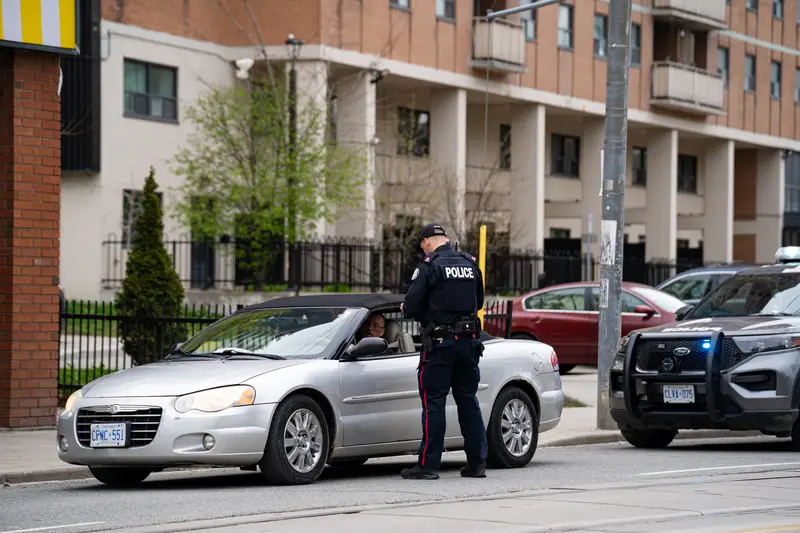
A cop walks up to your window, taps the glass, and asks the friendliest sounding question in America: “Do you know why I stopped you?” It sounds like idle chit chat. It is not. That one question is one of the oldest tricks in the book, and most drivers fall for it because nobody ever explained the game to them.
I got curious about this after a buddy caught a ticket he probably could have beaten. He blurted out “I think I was speeding” before the officer said a single word. That little sentence did most of the cop’s work for him. So I went digging into how these questions actually function, and why one state got so fed up it wrote an entire law to ban the classic opener.
The friendly opener that is anything but
“Do you know why I stopped you?” feels like a courtesy. It is bait. The whole point is to get you to admit fault before the officer ever explains the reason for the stop. Attorneys call this fishing for an admission, and it works scary well because people cannot stand awkward silence.
Say “I was probably going too fast” or “Did I run that stop sign?” and you have just handed over a confession in your own words. One defense team spells it out plainly: that information can be used against you. It will not automatically convict you, but it hands the prosecution a gift they never had to earn. The smarter play is to flip the question around and politely ask the officer to tell you why they pulled you over. That puts the burden back on them.
California got so annoyed it made the question illegal
Here is the fact that surprised me most. As of January 1, 2024, a police officer in California cannot legally ask you “Do you know why I pulled you over?” before telling you why. It is written into Vehicle Code Section 2806.5, passed through Assembly Bill 2773.
The rule is simple: every officer making a traffic or pedestrian stop has to state the reason for the stop before asking any investigative questions. Lawmakers basically looked at the old script, where a cop reveals nothing and waits for you to trip over your own tongue, and decided it was a trap dressed up as small talk. Officers also now have to document the stated reason in their reports. That is a wild flip from how it worked for decades.
Three states down, and California was not even first
Everybody credits California, but Connecticut beat them to it. Connecticut became the first state to ban the question back in 2023. California and Minnesota both followed in 2024. In February 2025, Colorado introduced a bill, HB25-1243, trying to join the club.
Supporters made an interesting argument. Some drivers get frightened when an officer walks up and refuses to say why they were stopped, and a scared person can do dumb things, including trying to drive off. There is also the odd scenario where a driver, panicking about why they got pulled over, admits to something completely unrelated that the cop was not even investigating. Now imagine you live in one of the other 47 states. The question is still perfectly legal there, which means the burden is entirely on you to keep your mouth shut.
“Where are you coming from?” is doing more than making conversation
This one sounds like your neighbor being nosy. It is actually a timeline builder. When an officer asks where you are coming from or where you are headed, they are getting you to volunteer a destination, a reason, and a schedule they can cross-check for holes.
Two problems with answering. First, stress scrambles your memory, and an honest “uh, I think around nine” can get written up as deceptive behavior in a report. Second, and this is the big one, if you say you are coming from brunch, a bar, or a club, an officer with a hunch about drinking is suddenly on high alert. You just gave them a reason to dig. Unless you are driving a commercial vehicle or you are in a state with a specific stop-and-identify law, you usually have no obligation to hand over a play-by-play of your day.
The search question is worded so you lose either way
Watch how a cop phrases this: “Do you mind if I search your car?” It sounds like a plain yes-or-no. It is a landmine. Say “No,” and an officer can claim you meant “No, I don’t mind, go ahead.” Say “Yes,” and you just agreed to the search. Both roads lead to the same place if you are not careful.
The fix is to be blunt and clear. Say “I do not consent to any searches,” and repeat it if you have to. Here is the part people get backwards: cops can only search your vehicle when they have probable cause, and there is no probable cause without either evidence or your consent. That is exactly why they ask so casually. If you agree, you basically hand them the legal grounds they were missing. Saying no does not give them a reason to search on its own.
Just going quiet can actually backfire
Most of us assume that clamming up is automatically protected. It is not, and the Supreme Court said so. In Salinas v. Texas, the Court ruled that if you simply go silent during a voluntary, pre-arrest conversation without actually claiming the Fifth Amendment, that silence can be used against you as evidence of guilt.
Justice Alito explained that the privilege against self-incrimination is not self-executing, which is a fancy way of saying it does not turn itself on. You have to speak up and claim it. Sitting there stone-faced while a cop asks a pointed question can read as you having something to hide. So the rule is almost backwards from what feels natural: to stay quiet the legal way, you first have to say out loud that you are invoking your rights.
“You seem nervous” is another baited hook
When an officer points out that you look nervous, they are nudging you to explain yourself. Offer up “I’m just tired” or “I’m running late,” and that line can get logged as consciousness of guilt. Almost everyone gets jittery around a badge. You do not owe anybody an emotional explanation for it.
There is also the bluff: “We already know what happened, just tell us your side.” Think about it for a second. If they truly knew exactly what happened, they would not be standing there asking you. And do not fall for the idea of an off-the-record chat. There is no such thing as an informal conversation with someone in uniform. Anything you say on the sidewalk, in a hallway, or in the back of a patrol car can show up in court.
What you actually have to answer, and what to say instead
You are not required to stonewall everything. In most places you do have to give your name, date of birth, and current address, plus your license and registration. Beyond that, you generally do not have to say where you are going, where you have been, or whether you have been drinking. If you are pulled over and asked “Have you been drinking?”, a calm “I’d rather not answer that without a lawyer” is a completely legal response. Admitting even one drink hands an officer probable cause to start sobriety testing.
If you want to invoke your rights, say something clear like “I am invoking my right to remain silent and I want a lawyer.” Asking for a lawyer is the strongest move, because once you do, questioning has to stop. If officers order you out of the car, step out, that part you must obey. But your right to refuse a warrantless search stays intact. And once you have invoked, actually stop talking. No nervous chatter, no trying to explain, no “but here’s what really happened.” The quiet after is the whole point.
The next time a friendly voice at your window opens with “Do you know why I stopped you?”, you will know exactly what game is being played. A polite question back, a clear boundary, and a closed mouth will serve you better than the most honest answer you could give.

