

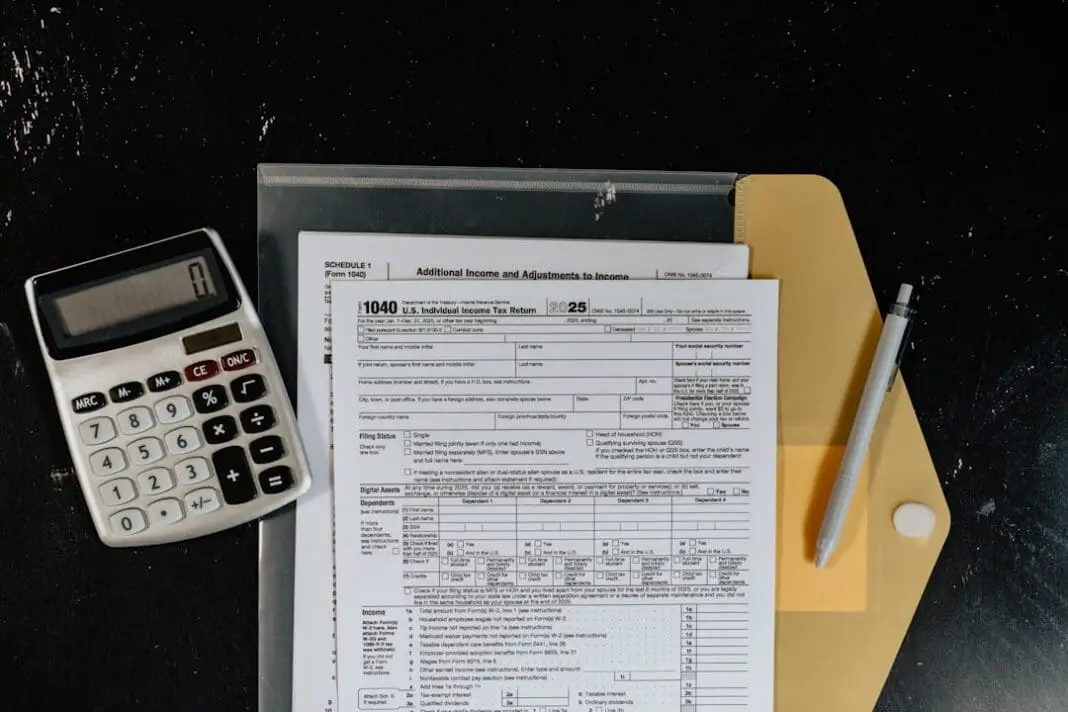
Nobody wakes up wanting to think about IRS audits. But here’s the thing — most people who get flagged didn’t do anything shady. They just made a dumb, avoidable mistake that a computer caught in about two seconds. And in 2025, the IRS has gotten weirdly good at catching these mistakes, even as the agency itself is falling apart internally.
Let me explain what’s actually going on, because most of what you’ve heard about audits is either outdated or flat-out wrong.
The Mistake That Gets More People Flagged Than Anything Else
It’s a mismatch. That’s it. When the numbers on your tax return don’t line up with the numbers the IRS already has on file — from your employer’s W-2, a client’s 1099, a brokerage’s reporting form — a computer catches it instantly. No human even has to look at your return. The IRS receives copies of every single 1099 form sent to you, and their machines run an automatic cross-reference against what you reported. If there’s a gap, you’re getting a letter.
This is the number one way audits start. Not because you claimed too many deductions. Not because you’re rich. Because a number didn’t match. Maybe you forgot about a freelance gig that paid you $3,200 through Venmo. Maybe your bank issued a 1099-INT for $47 in interest and you figured nobody cares about $47. The IRS cares about $47.
And here’s the kicker — most of these audits happen entirely through the mail. They’re called correspondence audits. You never sit in a room with an IRS agent. You just get a letter saying you owe more, plus interest, plus maybe a penalty. Most people don’t even realize they’ve been “audited” in the traditional sense.
The IRS Has a Secret Scoring System for Your Return
This part is genuinely wild. The IRS runs every single tax return through something called the Discriminant Inventory Function, or DIF. It’s a mathematical model that compares your return to statistical norms from millions of other filers. If your numbers look weird compared to people who earn what you earn, in the industry you work in, filing the way you file — your DIF score goes up.
Think of it like a credit score, but for how suspicious your tax return looks. The top 10% of returns with the highest DIF scores get pulled by the computer for a closer look. Then IRS examiners manually review those and pick roughly 10% of that group to actually audit. So about 1% of all returns filed end up getting examined — which lines up with the overall audit rate of about 0.4% to just under 1%, depending on the year.
The IRS also uses something called NAICS codes to compare your business to others in the same industry. So if you run a restaurant and you’re reporting unusually low food costs relative to your revenue, a flag goes up. They know what a normal restaurant spends on food. They know what a normal salon spends on supplies. They have benchmarks for everything.
Crypto Is Now Basically Impossible to Hide
If you thought crypto was still some kind of Wild West where the IRS couldn’t see what you were doing — that era is over. Starting in 2025, exchanges began issuing Form 1099-DA to report proceeds from digital asset transactions directly to the IRS. Every exchange, every broker, every payment platform that processes crypto files these reports. The IRS computers then match that data against your filed return.
There’s also a question right on your Form 1040 that asks whether you engaged in any digital asset transactions during the year. If you check “no” and the IRS gets a 1099-DA with your name on it, Stephen Weisberg, a lead attorney at W Tax Group in Detroit, says that inconsistency will “almost guarantee” you receive a correspondence audit.
The IRS even launched something called Operation Hidden Treasure — a joint effort between the Office of Financial Enforcement and the Criminal Investigation Department — to specifically hunt for unreported crypto income. They’ve contracted with blockchain analytics firms like Chainalysis to trace transactions and link supposedly anonymous wallets to real people. They’ve served John Doe Summonses on major exchanges like Coinbase and Kraken to get customer records.
One mistake a lot of people still make: they think swapping one cryptocurrency for another isn’t a taxable event. It is. Every crypto-to-crypto trade is treated as a sale of property, and any gain has to be reported.
The Home Office Deduction Is a Magnet for Trouble
This one trips up a shocking number of people, especially since COVID made remote work normal. Here’s the reality: if you’re a W-2 employee working from home, you cannot claim a home office deduction. Period. Even if your company closed the physical office and classified everyone as remote. Even if you bought your own desk, chair, and monitor. The deduction is only available to self-employed people.
And even if you are self-employed, the IRS has historically had a lot of success knocking down this deduction in audits. David Perez, an IRS enrolled agent and CEO of Tax Maverick in San Benito, Texas, puts it bluntly: “It can’t be your kitchen table, a spare bedroom, or a third of your house because you use part of your basement for work. Don’t overestimate. The IRS typically catches that.”
The space has to be used regularly and exclusively for business. Claiming $15,000 in home office deductions on $60,000 of income is going to raise eyebrows. Claiming 100% of your home’s square footage signals inflation to IRS algorithms. The safer route is the simplified method — a flat $5 per square foot, up to 300 square feet, which maxes out at $1,500. It triggers fewer audits.
Making More Than $10 Million? Good Luck
The IRS has openly said it’s going after high earners harder than ever. For people making over $10 million a year, the agency is aiming to push the audit rate to about 16.5% for the 2026 tax year. That’s up from 11% in 2019. So roughly one in six returns from ultra-high earners will get examined.
Even taxpayers with over $5 million in income were by far the most likely to be audited in 2022, according to the IRS’s own data book. The logic is simple: complex returns have more places for things to go wrong (or be deliberately fudged), and the dollar amounts involved make it worth the IRS’s time.
Meanwhile, if you’re a straight W-2 worker taking the standard deduction, your chances of being audited are almost nonexistent.
Self-Employed Filers Are in the Crosshairs
Schedule C — the form self-employed people attach to their 1040 — is described by one source as both “a treasure trove of tax deductions” and “a gold mine for IRS agents.” That pretty much sums it up. The IRS knows that self-employed people sometimes inflate deductions and underreport income, so they look at Schedule C filers with extra scrutiny.
If your deductions eat up 80% of your gross income and the industry average is 40%, that’s a massive red flag. Business meals, vehicle expenses, and charitable contributions are the categories that get the most side-eye. And if you claim vehicle deductions, you better have a mileage log — dates, destinations, business purpose, the whole thing. Without it, the deduction vanishes entirely if you’re audited.
The EITC Audit Rate Is Weirdly High
Here’s something that doesn’t get enough attention. The Earned Income Tax Credit is designed for lower-income workers with kids, but it has some of the highest audit rates of any category — between 0.7% and 1.5%. That’s actually higher than the audit rate for many wealthier filers.
Why? The IRS estimates that 21% to 26% of EITC claims contain errors, which adds up to billions in improper payments each year. The eligibility rules are genuinely confusing. A qualifying child has to meet tests for age, relationship, residency, and support. The child has to have lived with you more than half the year, be under 19 (or under 24 if a full-time student), and have a Social Security number. Get any of those details wrong and you’re flagged.
New Rules You Probably Haven’t Heard About
A few things changed recently that could affect your next return. Starting in 2026, if you itemize charitable deductions, you have to clear a 0.5% AGI floor first — meaning the first 0.5% of your adjusted gross income in charitable contributions doesn’t count. If you make $500,000, your first $2,500 in donations gives you zero deduction.
Also new: gamblers can now only deduct 90% of their losses against winnings starting in 2026. And the child tax credit is now worth $2,200 per kid under 17.
President Trump also signed the IRS Math Error Authority Termination (MATH) Act, which forces the IRS to give clear explanations of alleged math errors and gives taxpayers 60 days to challenge any adjustment. That’s actually a win for filers — previously, the IRS could just change your return and send you a bill without much explanation.
Big Swings in Income Get Noticed
If you made $200,000 last year and reported $80,000 this year, the IRS wants to know why. Big income fluctuations are a red flag because they sometimes signal underreported income — either in the current year or in previous years. A former IRS senior auditor recommends including a note with your return if there’s a legitimate reason for the drop, like losing a major client. Most tax software lets you attach supplemental documentation.
The IRS has been through chaos lately — seven commissioners or acting commissioners since January 2025, and the agency has lost roughly 25% of its workforce. But the computers don’t take days off. The automated matching systems and DIF scoring run whether there are enough humans at the IRS to answer the phone or not. So don’t mistake a gutted workforce for a free pass. The machines are still watching.

