

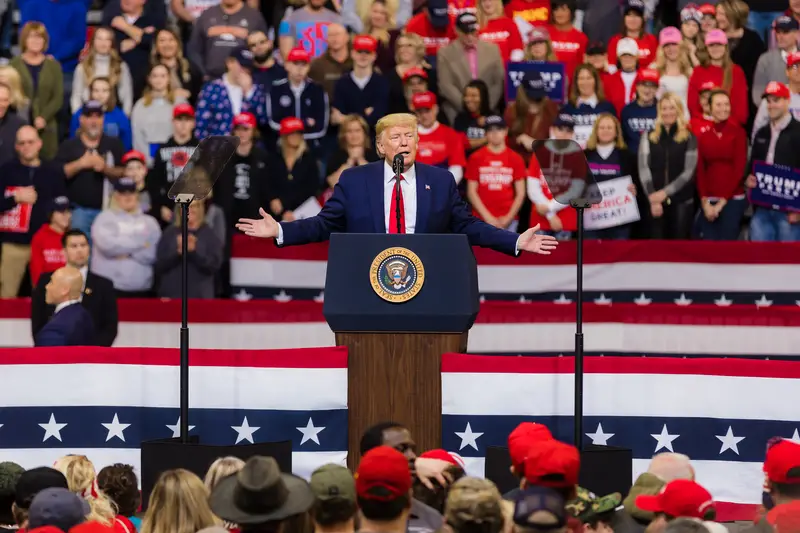
Most Americans know that presidents can only serve two terms, but recent conversations in Washington have stirred up some interesting questions about whether that rule is as solid as we think. President Trump has made several comments suggesting he might want to stick around for more than eight years, and some of his supporters in Congress have even drafted proposals to make that happen. While the idea might sound far-fetched, understanding what’s actually being discussed and what would need to happen can help make sense of all the headlines and heated debates flying around right now.
Trump has openly discussed serving beyond two terms
The president hasn’t been shy about the idea of staying in office longer than the Constitution currently allows. During a phone interview with NBC News in March, Trump said he was “not joking” when discussing a potential third term. He mentioned that many of his supporters have been asking him to consider it, though he acknowledged it was still early in his current administration to think seriously about it. Trump pointed to his poll numbers as evidence that Americans would support him serving longer than two terms.
What really caught people’s attention was when Trump told reporters that “there are methods” to make a third term possible, though he didn’t go into much detail. He mentioned one idea involving Vice President JD Vance potentially running for president and then passing the role back to Trump. The president hinted there were other approaches as well but declined to elaborate further. These comments have sparked serious discussions about what’s constitutionally possible and what’s just political theater designed to keep people talking.
A Tennessee congressman introduced an actual resolution for this
Representative Andy Ogles from Tennessee took things beyond just talk by crafting an official resolution that would extend presidential term limits. This isn’t just a casual suggestion or a social media post, but an actual legislative proposal that would need to go through the formal process of amending the Constitution. The resolution specifically aims to allow Trump to seek another term in office, which shows that at least some members of Congress are taking the idea seriously enough to put it in writing.
Creating such a resolution doesn’t mean it will become law anytime soon, but it does demonstrate that discussions about changing term limits have moved from hypothetical conversations to concrete political action. The proposal would need massive support from both Congress and state legislatures to have any chance of success. Still, the fact that a sitting member of Congress felt comfortable introducing this type of resolution signals that the conversation about Trump’s future in politics extends beyond just the president’s own comments and has found at least some support among his congressional allies.
The 22nd Amendment stands as the main obstacle
The Constitution’s 22nd Amendment, ratified back in 1951, clearly states that no person can be elected to the office of president more than twice. This amendment came about after Franklin D. Roosevelt won four consecutive presidential elections, serving from 1933 until his death in 1945. Congress and the states decided that limiting presidents to two terms would be healthier for American democracy, preventing anyone from accumulating too much power or becoming too entrenched in the office. The amendment applies to anyone being elected to the presidency, regardless of their popularity or circumstances.
When Trump said he’s “not allowed to run” again during an October conversation with reporters aboard Air Force One, he acknowledged this constitutional barrier. He told reporters that if you read the Constitution, “it’s pretty clear” about the two-term limit, adding that “it’s too bad” he can’t serve a third term. Despite these acknowledgments, the president has continued to suggest that methods might exist to work around this limitation. The constitutional amendment remains the biggest legal hurdle for anyone hoping to extend presidential terms, and it was specifically designed to be difficult to change.
Changing the Constitution requires extraordinary support across the country
Amending the Constitution isn’t something that happens easily or quickly, and that’s entirely by design. There are two possible paths to propose a constitutional amendment: either two-thirds of both the House and Senate must vote in favor, or two-thirds of state legislatures must call for a constitutional convention. Given the current political divisions in Congress and across the country, getting that level of agreement on something as controversial as extending presidential term limits would be incredibly challenging. Even if one of these hurdles were cleared, the process wouldn’t be over.
After an amendment is proposed through either method, it must then be ratified by three-quarters of the states, which currently means 38 out of 50 states would need to approve it. This high bar ensures that only changes with truly broad national support can alter the fundamental rules laid out in the Constitution. Historical precedent shows just how rare successful constitutional amendments are, with only 27 amendments ratified in over 230 years of American history. The last amendment to be ratified was back in 1992, and it dealt with congressional pay rather than anything as significant as presidential power. The process is deliberately slow and requires sustained consensus across different regions and political perspectives.
Steve Bannon believes Trump will run again in 2028
Trump’s former chief strategist Steve Bannon hasn’t been subtle about his expectations for the president’s political future. In an interview with NewsNation, Bannon stated his belief that Trump will “run and win again in 2028,” treating it as a foregone conclusion rather than a distant possibility. Bannon suggested in the same interview that there would be “a couple of alternatives” for figuring out how Trump could pursue a third term despite the constitutional maximum of two terms. These comments from someone who remains influential in Trump’s political circle suggest that serious conversations are happening behind the scenes.
Bannon’s confidence about Trump’s 2028 prospects indicates that at least some of the president’s closest allies are thinking strategically about how to make another term happen. Whether this represents realistic planning or wishful thinking depends largely on whether any of the proposed methods would actually pass legal and constitutional scrutiny. The fact that prominent Trump supporters are publicly discussing these scenarios keeps the conversation alive in political circles and among voters who might support or oppose such a move. These statements also serve to test public reaction and gauge how much appetite exists for extending Trump’s time in office beyond traditional limits.
Trump has compared himself to royalty in recent statements
The White House has amplified some of Trump’s more provocative comments about his role in American government, including language that sounds more fitting for a monarch than an elected official. After the administration blocked congestion pricing in New York City, the White House posted a picture to social media showing a fake magazine cover with Trump wearing a crown. The post quoted Trump’s own words from Truth Social: “LONG LIVE THE KING!” While supporters likely see this as playful trolling or humorous bravado, critics worry about what these statements signal regarding Trump’s view of presidential power and accountability.
These royal comparisons, whether meant seriously or in jest, add fuel to concerns about whether Trump genuinely respects the democratic norms and constitutional limitations that define American government. The imagery of kings and lifetime rule stands in stark contrast to the founding principles of the United States, which explicitly rejected hereditary monarchy in favor of regular elections and peaceful transfers of power. When combined with Trump’s comments about serving additional terms, these statements create a pattern that many Americans find either entertaining or deeply troubling, depending on their political perspective. The repetition of these themes suggests they’re not accidental slips but deliberate messaging choices.
Republican leaders view these comments as jokes or trolling
Not everyone in the Republican Party takes Trump’s third-term talk at face value. Senate Majority Leader John Thune has suggested that Trump is “having some fun” with reporters and critics when he brings up serving beyond two terms. Thune told reporters that he thinks Trump is “probably messing with you” when asked about the possibility, implying that the president enjoys stirring up controversy and keeping people guessing about his intentions. Thune also made clear that any third term would require “a change in the Constitution,” acknowledging the legal reality of the situation.
This interpretation that Trump is simply trolling his opponents gives Republican lawmakers a way to dismiss the third-term discussions without directly contradicting their party leader. It allows them to maintain that Trump isn’t seriously planning to overturn constitutional limits while also not criticizing him for bringing up the topic. Some Republicans have laughed along when Trump has joked about running again at party events, treating the comments as harmless humor rather than genuine policy proposals. Whether Trump actually intends these statements as jokes or is testing the waters for something more serious remains unclear, and different audiences interpret his words in vastly different ways depending on their existing views of his presidency.
Trump has given contradictory signals about his actual intentions
The president hasn’t been entirely consistent in his messaging about whether he genuinely wants or expects to serve a third term. In a May interview with NBC’s Kristen Welker, Trump downplayed the possibility, saying “this is not something I’m looking to do” and that he planned to have four great years before turning power over to “a great Republican” to continue his work. He acknowledged that while many people want him to run again, “to the best of my knowledge, you’re not allowed to do it.” Trump said he expected to be “an eight-year president” and “a two-term president,” which sounds like acceptance of constitutional limits.
Yet in other moments, Trump has been more ambiguous or even enthusiastic about the possibility. During a rally in Nevada back in 2020, he suggested that after winning four more years, “we’ll negotiate” about what comes next, adding that he was “probably entitled to another four after that” based on how he’d been treated. At a December 2024 White House Christmas party, Trump mentioned having “a little more than three years” left but added that “three years for Trump is an eternity,” which some interpreted as hinting at plans beyond his current term. These mixed messages make it difficult to pin down what Trump actually believes or intends, leaving both supporters and critics to interpret his words through their own political lenses.
Election law experts see this talk as showing strength
Some scholars who study elections and political communication suggest that Trump’s third-term comments serve a strategic purpose regardless of whether he genuinely plans to pursue another term. By talking about running again, Trump avoids being seen as a lame-duck president who has lost political power because he can’t seek reelection. Presidents in their second terms often struggle to maintain influence over Congress and their own party because everyone knows they’ll be gone in a few years. By keeping the possibility of another term alive in public conversation, Trump maintains some of the political leverage that typically drains away during a final term.
This interpretation suggests that Trump’s comments function more as political theater than as serious policy proposals. Whether or not a third term is legally possible or likely to happen, talking about it keeps Trump at the center of political discussions and maintains his image as someone who plays by his own rules. The speculation and debate generated by these comments also keep Trump’s supporters energized and engaged, believing their preferred leader might stick around longer than expected. For Trump’s critics, the talk provides evidence of what they see as authoritarian tendencies, which helps mobilize opposition. Either way, the conversation itself serves Trump’s interests by keeping everyone focused on him and his potential political future rather than treating him as a president whose time in office has a definite expiration date.
Whether Trump genuinely pursues a third term or not, the conversation reveals interesting tensions in American politics about presidential power, constitutional limits, and how seriously to take provocative statements from political leaders. The resolution introduced by Representative Ogles shows that at least some officials are willing to formally propose changing the rules, even if the chances of success seem remote. For now, the 22nd Amendment remains in place, and altering it would require the kind of overwhelming national consensus that seems unlikely in today’s divided political environment. What happens next will depend on whether Trump’s comments represent serious intentions or just another chapter in his unconventional approach to political communication.

