

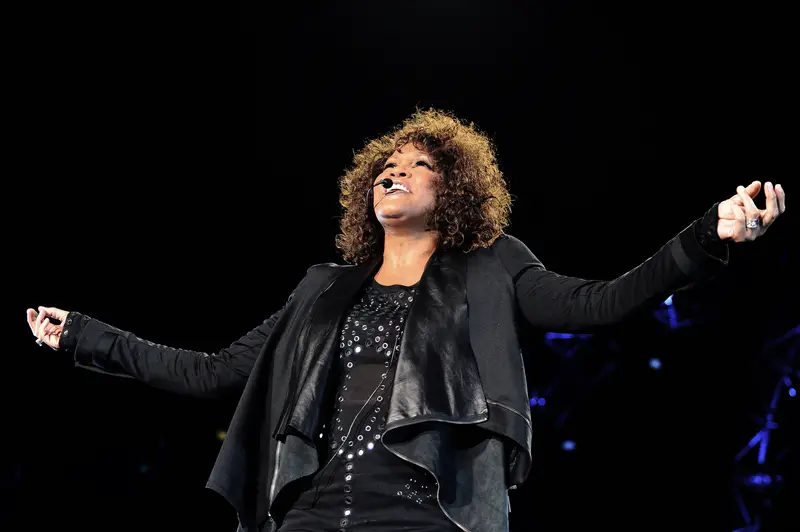
When Whitney Houston died in February 2012, the world mourned one of the greatest voices in music history. But as investigators pieced together the final days of her life, details began emerging that painted a complicated picture of the singer’s struggles and the circumstances surrounding her death. The coroner’s report and subsequent investigations revealed information that shocked fans and raised questions about the support system around the beloved star during her final week in Los Angeles.
Drug paraphernalia was discovered in her hotel bathroom
The scene in Room 434 at the Beverly Hilton told a disturbing story. Investigators found a small spoon containing white crystal-like substance and a rolled-up piece of white paper on the bathroom counter where Houston died. These items are commonly used for snorting cocaine, and their presence confirmed what many feared about the singer’s final hours. A law enforcement official involved in the case explained that such spoons are typically used as inhalation tools for drugs.
The toxicology results showed that Houston had used cocaine immediately before her death, indicating what forensic experts called “acute intoxication.” Blood tests also revealed she had smoked marijuana within two weeks of dying. Perhaps most troubling was the discovery of 12 different prescription medications in her room, prescribed by five different doctors. The collection included anti-anxiety medication Xanax and muscle relaxer Flexeril, though these drugs were found at mild levels and didn’t contribute to her drowning.
She arrived in Los Angeles a full week early
Houston checked into the Beverly Hilton under the fake name Elizabeth Collins, arriving seven days before she was scheduled to appear at Clive Davis’s pre-Grammy party. This early arrival raised red flags among friends and fellow recovering addicts after her death. Singer Chaka Khan publicly criticized whoever made the decision to fly Houston to Los Angeles so far in advance, calling out the lack of protection from what she termed the “vampires” of the music business. Only nine months out of rehab, Houston found herself in a city filled with temptation and dangerous influences.
The extended stay gave Houston ample time to reconnect with old habits and people who may not have had her best interests at heart. Khan questioned why no one provided proper supervision or security to keep “riffraff” and “dangerous people” away from the vulnerable star. The decision to send Houston to Los Angeles without adequate support would haunt those close to her, as the extra days in the city provided opportunities for relapse that might have been avoided with better planning and protection.
Her behavior at the hotel raised concerns days before her death
Guests and staff at the Beverly Hilton witnessed erratic behavior from Houston in the days leading up to her death. She complained loudly about watered-down drinks at the lobby bar and caused a scene in the hotel gift shop after spotting a National Enquirer headline that read “Whitney Collapses! Strung Out & Broke, It’s Worse Than Anyone Thought.” The singer was also spotted doing handstands by the pool, which some interpreted as celebratory energy but others saw as unusual behavior for someone supposedly maintaining sobriety.
Houston had been drinking vodka at Hollywood nightclubs to celebrate the 31st birthday of Ray J, the singer-actor she was allegedly dating. Her sister-in-law Pat Houston later admitted to Oprah Winfrey that she was concerned about Whitney’s behavior at a party two nights before her death. Despite these warning signs, Pat Houston insisted she didn’t believe the star was abusing drugs in those final days. The family chose to view Houston’s pool antics as proof of newfound stamina and dedication to exercise rather than signs of instability or intoxication.
Evidence mysteriously disappeared before investigators arrived
When the coroner reached Houston’s hotel room, he noticed something odd. The singer’s California driver’s license had been removed from her wallet, which remained inside her purse. Even stranger, someone had taken the majority of Houston’s prescription medication bottles out of a brown bag and placed them on top of a table before investigators arrived. These details raised questions about who had access to the room immediately after Houston’s death and what they might have been trying to hide or organize before official examination.
Despite these irregularities, authorities determined that no foul play was involved in the singer’s death. The coroner’s investigation concluded that the missing items and rearranged medications didn’t suggest criminal activity. However, the tampering with evidence before official arrival complicated the investigation and fueled speculation about what really happened in those final hours. The scene had been altered by well-meaning family members or staff, making it harder to establish a complete timeline of events leading to Houston’s drowning.
She had breast implants that few people knew about
The coroner’s report revealed physical details about Houston that had never been public knowledge. Investigators noted small scars on her breasts associated with breast implants, confirming that the singer had undergone cosmetic surgery at some point in her life. This detail surprised many fans who had followed Houston’s career for decades without knowing about any plastic surgery procedures. The revelation added to the portrait of a woman who faced intense pressure about her appearance throughout her time in the spotlight.
As a former model who appeared on the cover of Seventeen magazine and in multiple advertising campaigns, Houston understood the entertainment industry’s beauty standards. The discovery of implants showed that even someone born with extraordinary natural talent felt compelled to alter her physical appearance. It remained unclear when she had the surgery or how many other procedures she might have undergone. This private aspect of her life stayed hidden until the autopsy revealed details that would never have emerged otherwise.
Clive Davis held his party while her body remained in the building
Perhaps one of the most controversial decisions that night was Clive Davis’s choice to proceed with his annual pre-Grammy party at the Beverly Hilton. Houston was pronounced dead at 3:55 p.m., and the coroner didn’t remove her body from the hotel until 1:35 a.m. the following morning. This meant that while celebrities like Tom Hanks, Tony Bennett, Sean Combs, and Neil Young mingled in the lobby and ballrooms downstairs, Houston’s body remained on the fourth floor. The decision shocked many who felt the party should have been canceled out of respect.
Davis defended his choice by saying that Houston would have wanted the music to continue. At the start of the event, he delivered an emotional tribute, telling guests he didn’t have to mask his feelings in front of so many dear friends. He praised Houston’s voice and presence, noting she had been looking forward to the party even though she wasn’t scheduled to perform. The family asked that the celebration proceed as planned, but the image of a party happening floors below where Houston lay dead remained deeply unsettling for many observers and fans.
Her daughter attempted to reach the room while investigators worked
Eighteen-year-old Bobbi Kristina Brown desperately tried to gain access to her mother’s hotel room while police had it cordoned off as a crime scene. The hallway on the fourth floor became chaotic, with family members and friends demanding to know what happened and why Houston had drowned. Singer Brandy, who starred with Houston in the 1997 TV movie Cinderella and was the sister of Houston’s alleged boyfriend Ray J, stood crying in the corridor. Cousin Dionne Warwick remained remarkably composed, thanking the coroner for taking care of Whitney.
The scene became even more tragic when Bobbi Kristina became hysterical and had to be taken to the hospital, reportedly exhausted and inconsolable. Pat Houston also suffered an anxiety attack during the ordeal. The family had wanted to spend a few final minutes with Whitney before her body was removed, but the medical emergencies prevented this goodbye from happening. Three years later, Bobbi Kristina would die under eerily similar circumstances, found unresponsive in a bathtub at age 22.
She was working on new music and seemed energized before her death
In the days before she died, Houston appeared to be experiencing a professional resurgence. She arrived on time at the studio the Tuesday night before her death to record a duet called “Celebrate” with American Idol winner Jordin Sparks. Producer Harvey Mason Jr. remembered her as more energetic than the young people in the room, more excited to be there, and more passionate about creating something outstanding. She even played a CD of the song for Clive Davis at the Beverly Hills Hotel, seemingly proud of her work.
Houston had completed filming for Sparkle, a remake of the 1976 film that had captivated her as a teenager. Everyone on set agreed she was clean and sober during production. She had reportedly worked again with Warren Boyd, her drug counselor, and seemed committed to maintaining her recovery. Friends described a woman with new music projects, a new movie about to be released, and what appeared to be a new romantic relationship. The contrast between this hopeful momentum and her sudden death made the loss even more devastating for those who believed she was finally turning her life around.
The official cause revealed a deadly combination of factors
Six weeks after Houston’s death, the coroner released findings that attributed her passing to accidental drowning with contributing factors of atherosclerotic heart disease and cocaine use. The level of cocaine in her system wasn’t necessarily lethal on its own, but combined with her heart condition, it created a deadly situation. Water found in her lungs indicated she was alive when submerged, suggesting she either passed out from cocaine intoxication or suffered a heart attack before drowning in approximately one foot of water.
The coroner’s report painted a picture of long-term cocaine abuse that had damaged Houston’s heart over years of use. While prescription medications were present in her system, they didn’t contribute to her death. The findings crushed family members who had insisted they saw no evidence of recent drug use, though Bobby Brown’s family members appeared less surprised. Brown’s sister Leolah, who had worked as Houston’s assistant, told Dr. Drew she immediately suspected someone had given Whitney bad drugs when she first heard about the death.
The revelations about Whitney Houston’s final days showed a woman caught between hope and despair, surrounded by people who either couldn’t or wouldn’t protect her from herself. Her death at 48 robbed the world of an irreplaceable voice and reminded everyone that addiction doesn’t discriminate based on talent or success. The details that emerged painted a complicated portrait of a star who never fully escaped the demons that had haunted her for years, despite appearing ready for one more comeback.

