

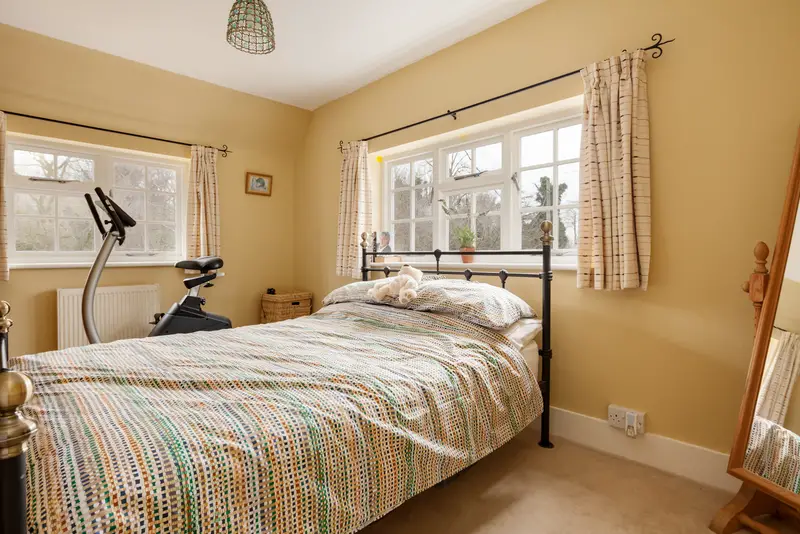
Your bedroom should be the most peaceful room in your home, but chances are it’s turned into a storage unit for random stuff that doesn’t belong there. Most people don’t realize how much the items scattered around their sleeping space affect their ability to relax and get a good night’s rest. Professional organizers agree that certain things have crept into our bedrooms over the years that create unnecessary stress and mess. From that treadmill covered in clothes to the pile of paperwork on your dresser, these items are quietly making your bedroom less functional and more chaotic than it needs to be.
That exercise bike is just a fancy clothes rack now
Walk into most bedrooms and you’ll find some piece of exercise equipment that hasn’t been used in months. Maybe it’s a treadmill, a stationary bike, or a set of weights collecting dust in the corner. These bulky items take up valuable floor space and often end up piled with yesterday’s outfit instead of serving their intended purpose. The problem isn’t just that they’re taking up room, it’s that seeing them creates a constant reminder of workouts you’re not doing, which adds guilt and stress to what should be a calming environment.
If you’re actually using your bedroom exercise equipment regularly, that’s one thing. But most people bought it with good intentions and then discovered they prefer working out somewhere else or at a gym. Professional organizers recommend moving these items to the garage, basement, or even selling them if they’ve become permanent clothing storage. Your bedroom is meant for sleeping and relaxing, not for housing equipment that makes you feel bad every time you look at it. If relocating isn’t an option because of space constraints, at least commit to using it regularly or finally admit it’s time to let it go.
Those decorative pillows are getting out of control
Decorative pillows can add color and personality to your bed, but there’s a point where they cross from stylish to annoying. If you’re spending five minutes every night removing pillows from your bed and another five minutes arranging them every morning, you’ve got too many. These accessories might look great in magazine spreads, but in real life they create unnecessary work and clutter. Most people end up tossing them on the floor or that chair in the corner, which defeats the whole purpose of having them in the first place.
Two or three throw pillows are plenty for adding visual interest without creating a hassle. Anything beyond that becomes excessive and takes away from the comfortable, inviting feeling you want in a bedroom. Design experts suggest that too many decorative pillows make a bed feel cluttered rather than cozy. Keep your favorites and donate or store the rest. Your back will thank you for not having to deal with a mountain of pillows every single day, and your bedroom will actually look cleaner and more put together with fewer accessories competing for attention.
Your nightstand has become a junk drawer
Look at your nightstand right now and count how many things are sitting on top of it or crammed inside the drawer. Old receipts, expired coupons, loose change, random chargers, half-empty water bottles, and maybe three different lip balms are probably all competing for space. This small surface becomes a dumping ground for everything we bring into the bedroom at the end of the day. The visual mess might seem minor, but having clutter right next to where you sleep affects how relaxed you feel when you’re trying to wind down for the night.
A nightstand should hold only what you actually need within arm’s reach while in bed. That means maybe a lamp, your current book, a glass of water, and your phone charger. Everything else can find a home somewhere else in your house. Organization professionals point out that even the clutter hidden inside nightstand drawers can affect your mental state because you know it’s there. Take ten minutes to clear out your nightstand completely, toss what’s trash, and relocate items that belong in other rooms. You’ll be surprised how much calmer you feel with a clean, organized bedside surface.
Work stuff needs to leave your sleeping space
Laptops, work papers, file folders, and office supplies have no business in your bedroom. When your sleeping space doubles as your workspace, your brain never gets the signal that it’s time to shut off and rest. Even if you close the laptop and put it on your dresser, knowing it’s there creates a mental connection between your bedroom and work stress. This makes it harder to fall asleep and stay asleep because your mind keeps circling back to tomorrow’s meetings or unfinished projects sitting five feet away from your pillow.
If you don’t have a dedicated home office, get creative about finding workspace elsewhere in your home. A corner of the kitchen, a closet converted into a mini office, or even the dining room table works better than keeping work materials in the bedroom. Store your laptop in a cabinet or drawer in another room after you’re done working for the day. File paperwork in a designated spot away from your sleeping area. Creating physical separation between work and rest spaces helps your brain make that mental separation too, which leads to better sleep and less stress overall.
Clothes you don’t wear are taking over your closet
Open your closet and be honest about how many items in there you haven’t worn in the past year. Jeans that don’t fit anymore, shirts from a job you left three years ago, dresses you bought for one specific occasion and never touched again—they’re all taking up valuable space. The same goes for shoes with broken straps, belts that don’t match anything you own, and bags that seemed like a good idea at the time. All of this unworn stuff makes your closet feel cramped and makes it harder to find the clothes you actually like wearing.
Set aside an afternoon to go through everything hanging in your closet and folded in your drawers. Professional organizers recommend pulling out anything that doesn’t fit, hasn’t been worn in a year, or is damaged beyond repair. Donate what’s in good condition and toss what’s not. Even though these clothes are hidden behind a closet door, knowing the mess is there prevents you from truly relaxing in your bedroom. A streamlined closet makes getting dressed easier and eliminates the daily frustration of digging through items you never wear to find the few pieces you actually put on your body.
All those charging cables are creating a tangled mess
Yes, you need to charge your phone overnight because it’s also your alarm clock. But do you really need to charge your laptop, tablet, smartwatch, earbuds, and backup phone all from your bedroom at the same time? Probably not. The result of charging everything in one spot is a tangled mess of cables snaking across your nightstand or dangling off the edge of your bed. This cord chaos looks messy and creates unnecessary visual clutter in a space that should feel calm and organized.
Limit bedside charging to just your phone and maybe one other essential device. Everything else can be charged in the kitchen, living room, or wherever you actually use those devices during the day. Design experts suggest using a charging drawer or station in another room to keep cords organized and out of sight. If you must keep multiple chargers in the bedroom, use cable organizers or velcro ties to keep them neat. Better yet, consider a wireless charging pad that eliminates some of the cord clutter altogether. Your bedroom will instantly feel less chaotic without the tangle of cables competing for space on your nightstand.
Random stuff from other rooms keeps piling up
Bedrooms have a way of becoming the default storage spot for things that don’t have a proper home anywhere else. Old receipts, mail you haven’t opened yet, shopping bags, gym bags, kids’ toys, random household items—they all migrate to the bedroom because it’s easier to close the door and deal with it later. Except later never comes, and suddenly your bedroom looks less like a peaceful retreat and more like a storage unit. This miscellaneous clutter creates decision fatigue because every time you walk into the room, you’re reminded of all the stuff you need to sort through and put away.
Make it a daily habit to spend just five minutes putting misplaced items back where they belong. That gym bag goes in the hall closet, mail gets sorted in the kitchen, and shopping bags get emptied and recycled. Organizing professionals stress the importance of returning items to their designated spots before clutter builds up. If something keeps ending up in your bedroom repeatedly, that’s a sign it needs a proper home somewhere else in your house. Creating specific zones for different types of items throughout your home prevents the bedroom from becoming the catch-all space for everything that doesn’t have a place.
Books and magazines are multiplying faster than you can read them
Having a book or two on your nightstand for bedtime reading is perfectly fine. But if you’ve got a growing stack of unread books, old magazines from six months ago, and newspapers you keep meaning to get to, that’s a problem. These piles create visual clutter and can actually make you feel guilty about not reading them. Every time you see that stack, it’s a reminder of good intentions that haven’t panned out. This kind of clutter might seem harmless, but it adds to the overall feeling of disorder in your bedroom.
Keep only what you’re currently reading on your nightstand and move the rest to a bookshelf in another room. Organization experts recommend creating a dedicated reading area outside the bedroom for your to-be-read pile. If you haven’t touched a magazine in more than a month, recycle it. Be realistic about what you’ll actually read and let go of the rest. You can always get another copy from the library if you decide you really want to read something later. A single book on your nightstand looks intentional and organized, while a towering stack just looks like more stuff you need to deal with.
Everything stored under your bed needs a second look
Under the bed seems like prime real estate for storage, especially in smaller homes where space is limited. But this convenient hiding spot often becomes a dumping ground for things we don’t want to deal with right now. Out-of-season clothes, old shoes, random boxes of who-knows-what, and items we’re keeping just in case all end up shoved under there. The problem is that once something goes under the bed, it’s easy to forget about it completely. Years can pass without ever looking at or using those items, but they’re still taking up space and collecting dust.
Pull everything out from under your bed and actually look at what’s been hiding there. You might be surprised by what you find. Organizing professionals suggest doing this at least once a year to clear out items you no longer need. Under-bed storage should be reserved for things you actually use seasonally, like extra blankets or off-season clothes, not random stuff you’re avoiding making decisions about. Donate, toss, or relocate items that have been under there collecting dust. If you need under-bed storage, use proper bins or containers that keep everything organized and protected rather than just shoving loose items underneath and hoping for the best.
Creating a bedroom that actually helps you relax doesn’t require a complete makeover or expensive new furniture. Most of the time, it just means removing the things that don’t belong there in the first place. Start with one category from this list and spend thirty minutes clearing it out. You’ll immediately notice how much calmer and more organized your bedroom feels without all that extra stuff competing for your attention. A peaceful bedroom is really just about keeping only what you need for sleep and relaxation, and finding better homes for everything else throughout your house.

